Understanding the Basics
Just as bloodwork requires fasting or the avoidance of certain medications to yield accurate results, soil analysis necessitates careful preparation to reflect true field conditions. Preliminary knowledge includes understanding nutrient levels, pH, and how external factors influence reading. General recommendations reduce any bias, but it is important to study the specific conditions, background, and how the soil is intended to be used (Crop, irrigation system, organic vs conventional) in order to address a better sampling procedure

Timing Your Sampling
Sampling timing shifts with weather and seasons, affecting nutrient availability and soil structure.
For instance, collect samples at the end of Florida’s summer rainy season, from August to October, before fall fertilization in citrus groves. Wet soil after heavy rain can skew pH readings lower, much like recent meals can alter blood sugar levels. Avoid sampling during dry spells when dust contamination is likely to occur in the cores.
Neglecting simple mistakes can lead to inaccurate estimations. Proper preparation and effective sampling are key.
The Sampling Procedure
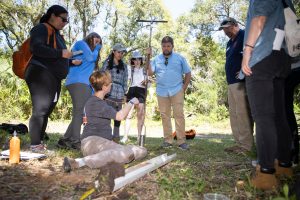
The sampling procedure holds equal weight to the lab results themselves. Use a soil probe to take cores 6 to 8 inches deep from 10 to 15 spots in a zigzag pattern across a uniform area, like a vegetable garden bed. Mix these in a plastic bucket, remove mulch, and air-dry the composite before bagging about one pint for submission.
Poor mixing may highlight a nutrient hotspot in one spot, leading to over-fertilization across the entire plot.
Avoiding False Positives and Abnormal Results
Watch for false positives or abnormal results that may stem from procedural errors. Recent fertilizer application within two weeks can inflate nutrient levels, mimicking a high reading that prompts unnecessary lime additions. Contaminated tools or wet samples may introduce errors, such as elevated salinity from road dust.
Always cross-check with calibrated methods suited to local soils, like those from UF/IFAS for Florida conditions.
When required, ask for Assistance
Contact your local extension agent for assistance in interpreting results or troubleshooting any unusual findings. Agents receive report copies and can clarify if a low pH stems from sampling errors or actual acidity needing lime. Use this map to find offices for direct assistance.
References and additional information
- SL253.04/SS531: Soil and Leaf Tissue Testing for Commercial Citrus Production
- SL452/SS665: Citrus Soil pH Testing Procedures
- Soil Testing – Solutions for Your Life – University of Florida, Institute of Food and Agricultural Sciences – UF/IFAS
- SL408/SS621: Soil Testing for Plant-Available Nutrients—What Is It and Why Do We Use It?
- https://www.canr.msu.edu/foodsystems/uploads/files/soil_test_interpretation.pdf
- SL454/SS667: Soil Sampling Procedures
- SL 190/SS402: UF/IFAS Nutrient Management Series: Soil Sampling Strategies for Precision Agriculture
Additional resources include the USDA Natural Resources Conservation Service’s soil databases, which provide broader geological data.
UF/IFAS is an equal opportunity institution.
 3
3