Blog post written by Laila Cohen, UF/IFAS Extension Brevard County intern
Monarch Butterflies
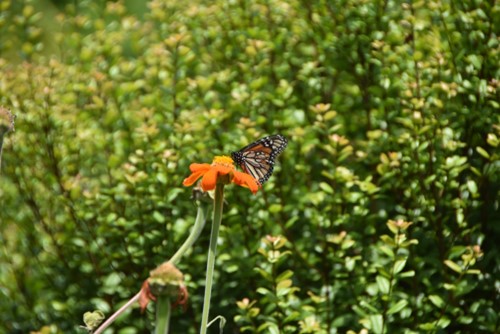
Monarch butterflies (Danaus plexippus) are one of the most well-known species of butterflies in North America. They are an orange and black migratory species that can be found all over North and South America. They begin as eggs, hatching into caterpillars that later pupate into a chrysalis, emerging as a butterfly. There are two lifespans for these pollinators. Breeding monarchs (spring/ summer born) live around 2-5 weeks, reproducing as soon as possible. Overwintering monarchs (fall/ winter born) go through a reproductive diapause and live up to 6-9 months.
Monarch caterpillars consume strictly milkweed plants, obtaining cardenolides, which make them toxic to predators. Adult butterflies consume a variety of flowers producing nectar. There are two main populations, the West and the East. The West population is located West of the Rocky Mountains and ranges from Southern Canada to Mexico, overwintering in California. The Eastern Population ranges from Mexico to Southern Canada, but migrates through Texas, Florida, and other Southern parts of the U.S. The Eastern population overwinters in the forested mountains of Michoacán, Mexico (Oyamel fir forests). There is also a smaller non-migratory population of monarchs located in South Florida.
Recently, there has been an alarming decline in the Monarch population due to multiple factors. Some of those factors include climate change and habitat loss. With the concern for monarchs’ continual decline, there have been proposals for them to be listed as threatened under the Endangered Species Act and for Critical Habitat designation in coastal California.
What is OE?
Another factor in the declining populations of Monarchs is OE (Ophryocystis elektroscirrha). OE is a protozoan parasite that infects monarchs and a few other species of butterflies. Their spores are “shed” onto milkweed leaves from infected adults. The spores are then consumed by the caterpillars, infecting them. OE spores can only grow and reproduce within a host. Once infected, the individual becomes a breeding ground for the parasite, spreading its spores from milkweed to milkweed.
There is no recovery for butterflies once they are infected. Of the three populations in the United States, the non-migratory population in South Florida is the most infected, with over 70% of the population carrying the spores. Symptoms of the OE parasite include:
- Dark spots or blotches on the pupa
- Deformed, crumbled wings
- Smaller size
- Decreased flight endurance
- Impaired mating


How can you help?
There are many ways to help monarch butterflies against the spread of OE.
- Planting native milkweed: There is a link between tropical milkweeds and higher OE transmission rates. Planting native milkweed promotes habitat restoration and encourages normal reproduction cycles for monarchs with blooming seasons.
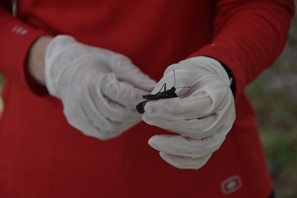
- Join Project Monarch Health: This is a community science project that can be done by anyone to track the spread of OE in wild monarchs. Volunteers catch wild monarchs, and follow the instructions provided by the kit to identify OE spores on the monarchs found in their community.
Sources
https://www.monarchparasites.org/
https://www.flawildflowers.org/monarchs-and-milkweed/
https://www.fws.gov/species/monarch-danaus-plexippus
https://www.fs.usda.gov/wildflowers/pollinators/Monarch_Butterfly/migration/index.shtml
 0
0