Financial Education Matters: Insights from CFPB & Extension

The Consumer Financial Protection Bureau (CFPB) recently released its Financial Literacy Annual Report (2025), highlighting the importance of financial education for youth and providing valuable resources for educators and families. As someone passionate about financial literacy, I’m excited to share the four actionable strategies that align with CFPB’s framework and our work at the UF/IFAS Extension.

Why Financial Education Matters

Financial stability starts early. CFPB emphasizes that youth financial education should build three key capabilities:
  • Executive Function – Skills like planning, self-control, and problem-solving.
  • Financial Habits and Norms – Developing positive money habits and understanding social expectations.
  • Financial Knowledge and Decision-Making Skills – Learning how to make informed financial choices.

    Figure from the CFPB showcasing how students learn financial education in school and out of school.
    Figure 1: Typical Sources of Financial Education. Located on page 8 of the CPFB December 2025 Financial Literacy
    Annual Report.
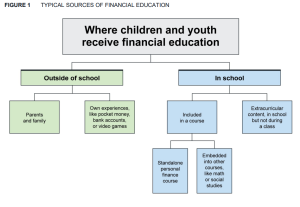
These building blocks guide how we design programs for young people. Youth learn about money from many sources—including social media. The challenge? Making sure the information they see is accurate and helpful.  (See Figure 1: Typical Sources of Financial Education on page 8 of the CFPB December 2025 Financial Literacy Annual Report.)

Strategy 1: Use Research-Based Frameworks

Research from the University of Florida and other universities, along with Extension programs, is essential for creating effective financial education. CFPB’s framework helps us plan classes that teach youth not just facts about money, but how to think critically and make sound decisions. In Florida, the standards for Personal Finance and Money Management emphasize the student should learn personal financial decision making through a variety of ways.

Strategy 2: Share Opportunities & Collaborate

Collaboration is key! I’ve partnered with nonprofits to host Living On My Own (LOMO) simulations for students—an interactive way to teach budgeting and real-world financial choices. CFPB encourages research to inform best practices, and working with University Extension ensures we provide research-based education to our communities.

Strategy 3: Train Educators

Josey is teaching youth during a LOMO Program
Josey is engaging with youth during a LOMO Program. Photo by Katherine Westenhaver.
Helping teachers bring financial literacy into classrooms is a game-changer. Over the summer, in partnership with the Florida Council on Economic Education (FCEE), I trained K-12 educators and introduced LOMO as a resource.
Learn more about these programs:
  • LOMO – https://blogs.ifas.ufl.edu/stlucieco/2025/04/02/national-financial-literacy-month-learn-about-lomo/
  • Get Fin Lit! – https://blogs.ifas.ufl.edu/stlucieco/2025/05/30/get-fin-lit-this-july/

Strategy 4: Engage Families

Financial education doesn’t stop at school—it starts at home. During financial counseling sessions, I encourage parents to involve their children in money conversations. For example, one client set a goal to eat out less. I suggested sharing the goal with their kids and asking for their help. The result? More family engagement and meaningful conversations about money.
Tip for Parents:
  • Set a family financial goal together.
  • Talk about why it matters and involve your children in tracking progress.

Call to Action

Take a moment to skim the report at https://files.consumerfinance.gov/f/documents/cfpb_financial-literacy-annual-report_2025-12.pdf. If you’re a parent, start the conversation today—financial stability begins with small steps and open dialogue.
Featured image by: UF/IFAS Photo by Tyler Jones
0

Avatar photo
Posted: January 7, 2026


Category: Money Matters
Tags: CFPB, Finance, Josey Pearce Keener, LOMO, Youth Financial Literacy


Subscribe For More Great Content

IFAS Blogs Categories