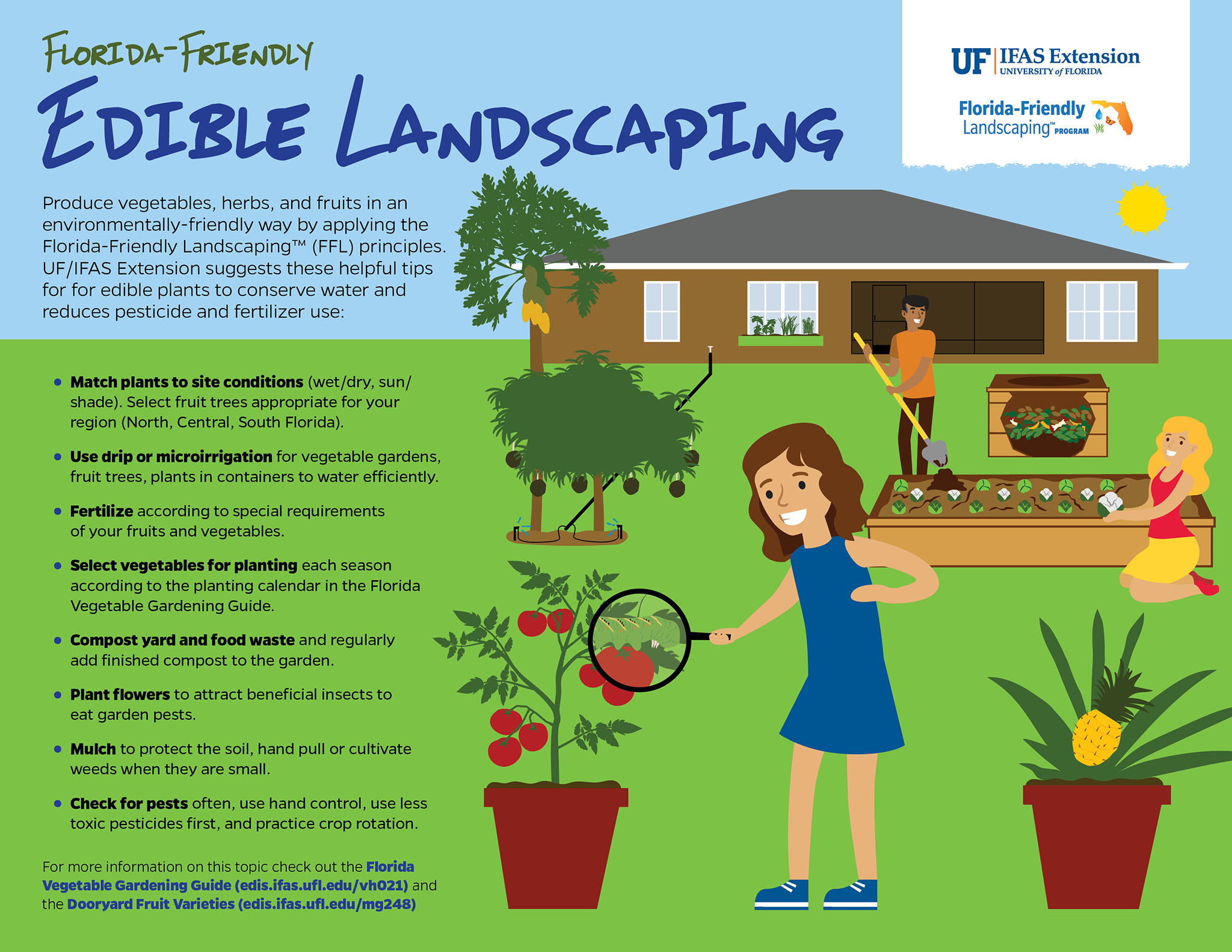
Florida-Friendly Landscaping™ (FFL) encourages homeowners and communities to use research-based practices that conserve water, reduce pollution, and protect natural resources. These nine principles are often applied to traditional residential landscapes, but they are just as valuable when planning an edible landscape filled with herbs, vegetables, and fruits.
A Florida-Friendly edible garden—sometimes called a “kitchen garden”—can complement your yard while providing fresh, healthy food for your family. Thanks to Florida’s mild climate, you can grow and harvest nearly year-round. Whether you choose raised beds, in-ground plots, or containers on your patio, you don’t need a large or expensive setup. Even a modest container garden can yield a satisfying harvest with the right care.
Beyond food production, edible landscapes bring other benefits. Flowering herbs and vegetable blossoms naturally attract bees, butterflies, and other pollinators, increasing biodiversity in your yard. On a larger scale, community edible gardens can transform neighborhoods into spaces where residents share knowledge, connect with nature, and inspire one another through sustainable practices.
By integrating edible plants into your Florida-Friendly landscape, you create a space that is beautiful, productive, and environmentally responsible. You’ll save water, support pollinators, and enjoy the rewards of fresh, homegrown food—all while protecting Florida’s unique natural resources.
Learn more about FFL principles and edible landscaping here: UF/IFAS EDIS Publication
Stay tuned and be sure to check our page for upcoming basic gardening classes!
 4
4