From Spanish explorers to cowboy cookouts, County Line Camp guided 4-Hers through centuries of Florida’s rich heritage—one bite at a time. This thoughtfully designed multi-county camp emphasized both food safety and cultural history, bringing together youth and agents from Highlands, Okeechobee, and St. Lucie Counties.
Where History Meets the Kitchen
County Line Camp creates a unique opportunity for 4-H members from different counties to connect and collaborate. Each morning, excitement built as the Highlands County campers passed the “Entering Okeechobee County” sign on Highway 98—a daily reminder of the shared journey ahead.
The camp’s goal was to help students understand how Florida’s diverse cultures have shaped its food traditions. Campers explored where food comes from, how it’s prepared, and the cultural stories behind each dish.
The Dream Team
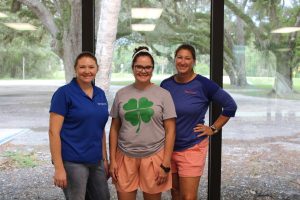
Josey Pearce Keener, Family and Consumer Sciences Agent, St. Lucie County
“My favorite part of camp is sharing my family’s history with students and teaching them how to safely prepare their food. These are lifelong skills they’ll carry forward. I was proud to highlight my family’s contributions to the cattle industry, the Kissimmee River, and our relationship with the Seminole Tribe of Florida. This camp is truly a dream come true!”
Kati Lawson, 4-H Agent, Highlands County
“I loved watching our 4-H campers develop skills throughout the week. They learned to cook and clean their workspaces, create and read maps, and saw Florida history first-hand. I also loved seeing the 4-H camp counselors experience all of the fun camp had to offer.”
Lauren Butler, Livestock Agent, Okeechobee County
“I really enjoyed helping to facilitate County Line Camp this year. My background is in livestock, so it was a unique experience to help youth connect the full pasture-to-plate process. We explored how cattle and agriculture are tied to the foods we eat and highlighted local cultural influences like Spanish, Native American, and cowboy traditions. It was a great way to blend industry knowledge with hands-on cooking and history.”
A Week of Heritage & Hands-On Learning
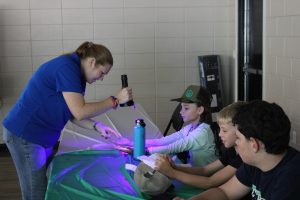
Monday – Spanish Heritage
Camp kicked off with a food safety lesson led by Josey, including a fun handwashing activity. Kati followed with a knife skills demo using tomatoes, onions, avocados, and limes. The scent of fresh tortillas sizzling on the flat top filled the Basinger Civic Center. Ms. Beth Box joined to teach about Spanish explorers, and students acted out scenes from their assigned historical figures.
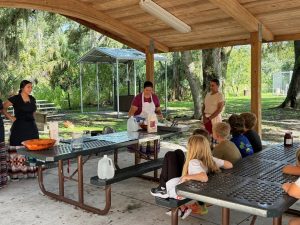
Tuesday – Native American Heritage
Kati guided students through bread-making and the science of yeast. Josey demonstrated how to cut swamp cabbage, while Lauren taught proper frying techniques. The Seminole Tribe of Florida’s (https://www.semtribe.com/) Brighton Cultural Center joined to demonstrate how to make fry bread. Dressed in traditional skirts and beadwork, their presence brought cultural depth and meaning to the day’s lessons.
Wednesday – Homesteading
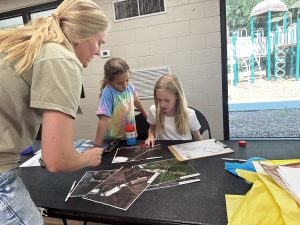
Katie Britt introduced students to geomatics and the environmental changes along the Kissimmee River through hands-on activities. Learn more about Katie’s activity here: 4-H Campers Learn Geospatial Skills or at https://blogs.ifas.ufl.edu/ffgs/2025/07/21/4-h-campers-learn-geospatial-skills/. Later, campers visited the Edna Pearce Lockett Estate to see the river firsthand and learn about homesteading practices. They even made their own PB&J sandwiches for lunch!

Thursday – Cowboy Heritage
Lauren presented “Adopt a Cowboy” where students learned about cattle brands, beef nutrition, and how cattle started in Florida. Campers learned how to patty hamburgers, season them, slice potatoes, and bread okra with Kati. Later, a real cowboy stopped by with a horse and working cattle dogs to give a live demonstration, bringing the cowboy lifestyle to the campers.
Friday – Putting It All Together
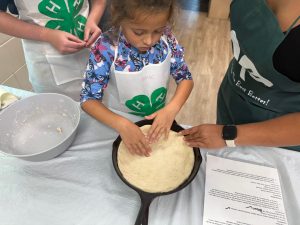
On the final day, 4-Hers put their skills to the test by making pizza dough and peanut butter pies from scratch. They successfully prepared their own lunch and dessert using everything they’d learned. While the food cooked, students played a life-sized board game, rolling dice and answering trivia questions about the week’s lessons.
What We Learned, Loved, and Look Forward To
Throughout the week, 4-Hers gained valuable cooking skills, food safety knowledge, and a deeper appreciation for Florida’s cultural heritage. From mastering knife skills to understanding the health benefits of beef, campers left with both practical knowledge and lasting memories. We’re already looking forward to next summer’s County Line Camp!
This blog was cowritten by Josey Pearce Keener, Kati Lawson, and Lauren Butler.
Featured Image by Lauren Butler.
 2
2