It’s that time of year again, air potato vines are starting to sprout, and many of us are wondering: how can we get rid of them?
What is the air potato?
The air potato (Dioscorea bulbifera) is a fast-growing, invasive vine originally from Africa and Asia. It was introduced to Florida in the early 1900s as an ornamental plant, but it quickly became a serious environmental problem. This aggressive vine invades natural habitats like state parks and preserves, and it also climbs over fences, sheds, and trees in neighborhoods, parks, and schoolyards. It’s common across urban and suburban areas in St. Lucie County.
Biological control: Nature to the rescue
Biological control is a key part of Integrated Pest Management (IPM), which uses natural enemies instead of chemicals to manage pests. For the air potato vine, scientists have introduced two helpful insects from its native range: the air potato leaf beetle (Lilioceris cheni) and Lilioceris egena.
Lilioceris cheni feeds exclusively on the leaves of the air potato vine, weakening the plant and slowing its spread without harming native species. L. egena, on the other hand, targets the bulbils (the “potatoes”)—the main way the vine reproduces and spreads—making it a valuable new ally in the fight against this invasive plant.
Meet the beetles
Lilioceris cheni a.k.a. the air potato beetle
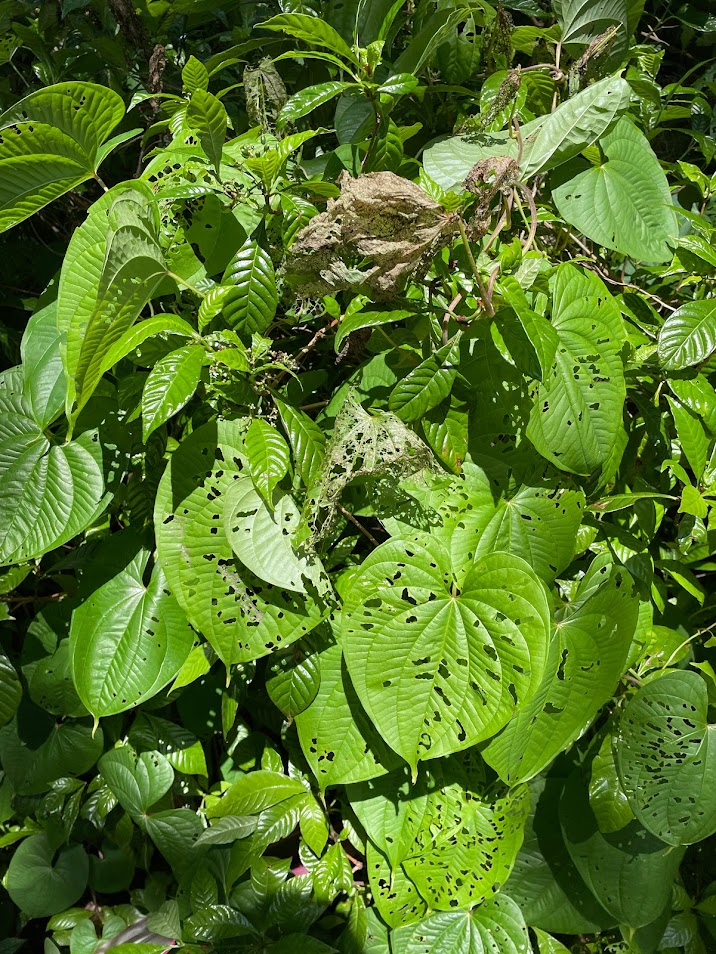

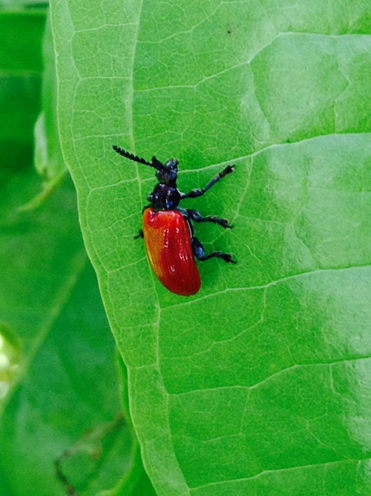
Released in Florida in 2012, L. cheni feeds on air potato leaves, creating small holes that reduce the plant’s ability to grow and spread. It’s been highly effective and is now well established throughout the state.
You may not always spot these bright red beetles, but you can look for signs of their feeding damage on the leaves. If you notice holes or browning, try flipping a leaf over; you might find their hungry larvae munching away underneath.
Lilioceris egena, the new beetle on the block
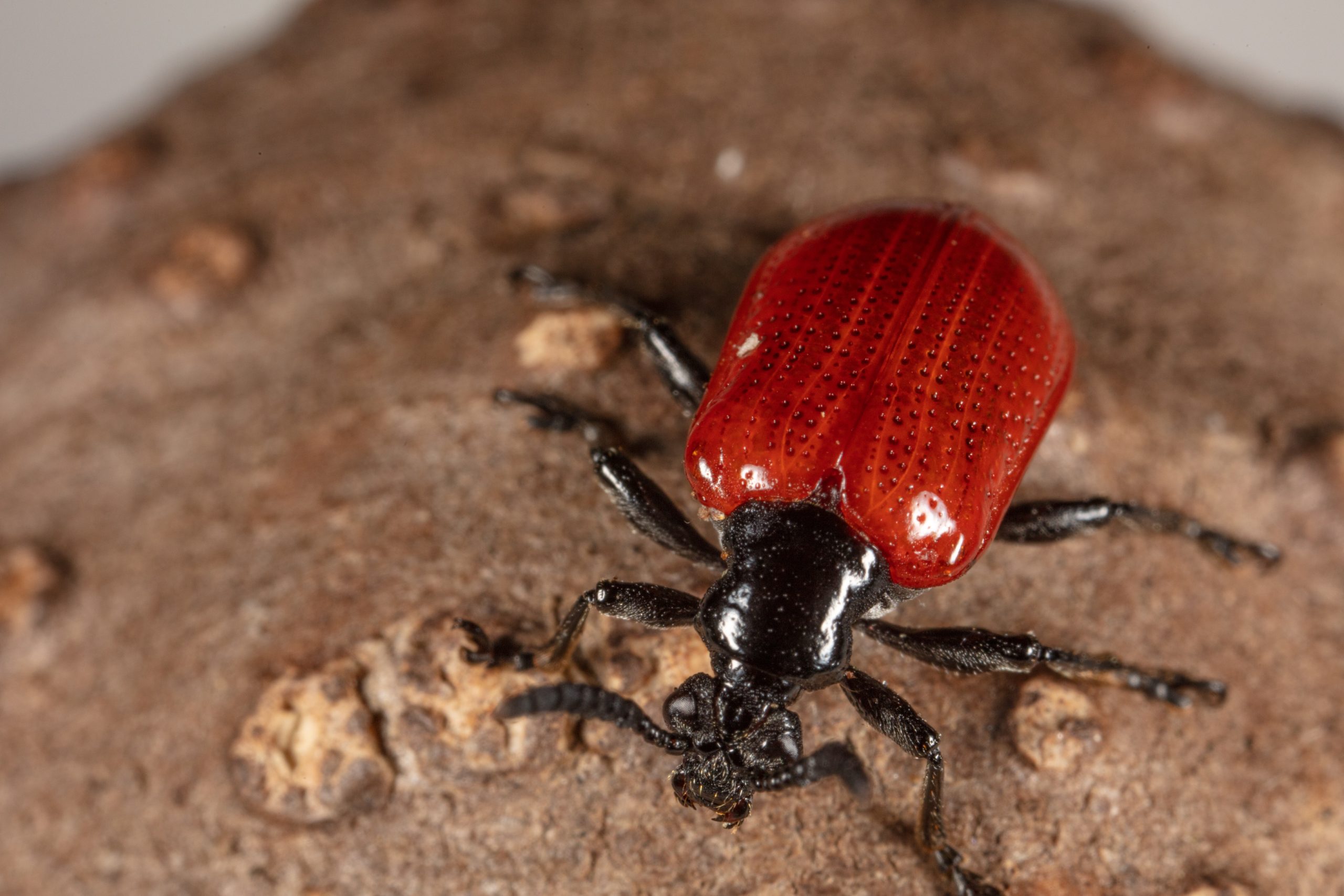
Newly introduced to Florida, L. egena targets a different part of the vine: the bulbils. These potato-like structures are responsible for most of the plant’s reproduction and spread. By feeding on and inside the bulbils, L. egena helps reduce the vine’s ability to propagate. Together, L. egena and L. cheni provide a powerful one-two punch against this invasive species.
Requesting beetles: What you need to know
The FDACS breeding program raises and distributes beetles to support air potato management efforts. Here’s how you can support the program responsibly:
Should you request beetles?
Whether the infestation is in a natural preserve or creeping over a backyard pergola or community garden, reporting matters. Air potato thrive in both wild and urban settings, and beetles can help control large infestations wherever they occur.
Report on air potato and request beetles
Use this form to report air potato vine and request beetles
How to participate in the Biocontrol Program
Before submitting your request, please follow these steps:
- Confirm the plant
Make sure you’re dealing with air potato before requesting beetles. It can be overtaking trees in a city park or smothering hedges in your front yard. - Wait for growth
Let the vine grow for at least 6 weeks so it can support a beetle population. - Check for beetles
Inspect the vine for beetles before submitting your request. Watch this video to learn what to look for. - Submit photos with your report
Upload clear photos to help FDACS verify your report and assess vine maturity.
Note: Submitting a report does not guarantee beetle delivery. FDACS prioritizes sites based on vine size, need, and likelihood of beetle success.
Why it matters for St. Lucie County?
Air potato infestations threaten native landscapes like savannas, hammocks, and wetlands, as well as urban green spaces, parks, and backyards. These areas support local wildlife and community well-being.
In neighborhoods, the vine climbs over fences, crowds out ornamental plants, damages trees, and reduces curb appeal. It has spread into schools, community gardens, and city parks, creating maintenance challenges and disrupting ecosystems. Managing infestations in both rural and urban areas is essential for protecting our shared environment.
No matter if it’s in your backyard or the backwoods, your report makes a difference. For questions or support in St. Lucie County, contact your local Extension office.
 11
11