You may have seen media reports about the various snakes found in Florida’s water bodies. This may be overwhelming or even scary to consider. However, while it’s not unusual to see a snake near water, University of Florida Institute of Food and Agricultural Sciences (UF/IFAS) experts suggest very little cause for alarm when enjoying our lakes.
How many snakes do we have?
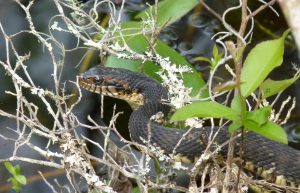
Florida hosts 46 native snake species, only six of which are venomous enough to be dangerous to humans or pets. Furthermore, only four of these venomous species are found in Central Florida. Most snakes seen near lakes are a species of water snake (genus Nerodia), which may be mislabeled as dangerous due to their size or patterning. These snakes are not venomous and generally avoid human interaction.
Snake‑bite incidents in open water, such as the lakes you may love to swim in, are virtually nonexistent. The odds of anything more than a fleeting glance of a snake, let alone a bite or close encounter, are quite low.
Some snake species, such as the Burmese python (Python bivittatus), tend to capture attention due to their size and invasive status. While these constrictors are indeed present in our state, they are concentrated in the Southern Everglades – far from Central Florida’s recreational lakes.
However, a lack of adequate research-based knowledge may fuel unwarranted fear of snakes, overshadowing the everyday reality. Misconceptions and misidentifications can also lead to the unnecessary persecution of harmless or environmentally beneficial snake species.
Why do we have snakes?
Ecologically, snakes function as a natural form of pest control, keeping the populations of rats and mice in balance. For example, constrictors such as ratsnakes (Genus Pantherophis), kingsnakes (Genus Lampropeltis), and black racers (Coluber constrictor) eat rats and mice. This also benefits human health, as these rodents are prominent vectors for disease.
Check out this podcast episode to learn more about these helpful snake species.

Our kingsnakes (Genus Lampropeltis) even prey on venomous snakes, making their presence particularly beneficial. Therefore, killing snakes may actually cause more harm than benefit, both to the environment and to us.
What to do if you encounter a snake?
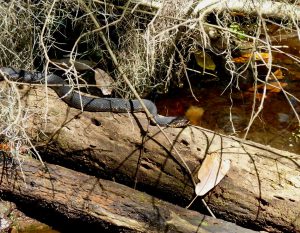
The best way to prepare for an unlikely snake encounter is to practice safe identification skills. Understanding which Florida snakes are venomous can help you act more rationally during a snake encounter, rather than immediately jumping to kill the snake, potentially creating a greater hazard.
If you see a snake, it’s best to keep a respectful distance while you attempt to determine what type of snake it is, as getting too close may increase your risk of a bite or injury. It may slither quickly to the closest area of cover, which can be alarming, but remember that snakes are not aggressive unless provoked or cornered. Even once you’ve identified the snake, the best course of action is simply to let it be, and it will likely soon be on its way!
Yes, snakes exist in Florida. Some are venomous and most are harmless – but that doesn’t mean our lakes are overrun or unsafe due to the presence of snakes. With science-based knowledge and basic identification skills, we can become more informed, cautious (not scared!), and confident when jumping into our beautiful Florida lakes.
If you’re curious to learn more, check out the Florida Museum’s guide to Florida snakes: https://go.ufl.edu/snakeid. The guide has photos and identification tips to help you feel more confident around Florida’s native snakes.
Ms. Hanley Renney, Natural Resources Extension Program Intern, wrote this blog post under supervision of Natural Resources and Conservation Extension Agent, Mrs. Shannon Carnevale.
UF/IFAS Extension is an Equal Opportunity Institution.
 2
2