Milkweed is a flowering Florida native that supports pollinators, like the monarch butterfly. It is the only plant on which Monarch butterflies can reproduce. But, beyond their critical role in supporting monarch butterfly populations, milkweed is a beautiful, Florida Friendly plant that could be the perfect choice for your garden. Is Asclepias tuberosa right for your garden?
Origins of Butterfly weed
There are many species of milkweed, with 24 native to Florida. There are two endemic species, meaning they are only naturally found in the state of Florida. The three most commonly grown native milkweed species are Asclepias incarnata, A. perennis, and A. tuberosa.
Ascelepias incarnata, also known as butterfly weed, was referred to by indigenous American communities as “pleurisy root” due to its historical use as a remedy for pleurisy, an inflammation of the lungs. Historically, the raw roots have been consumed to help with respiratory issues, particularly bronchial conditions, and have also been used to treat intestinal gas, bleeding, and a range of other health problems. This information is provided for educational purposes only and is not recommended as medical treatment. It’s always important to consult with a healthcare professional before considering any treatments for health concerns.
Growing conditions and Characteristics
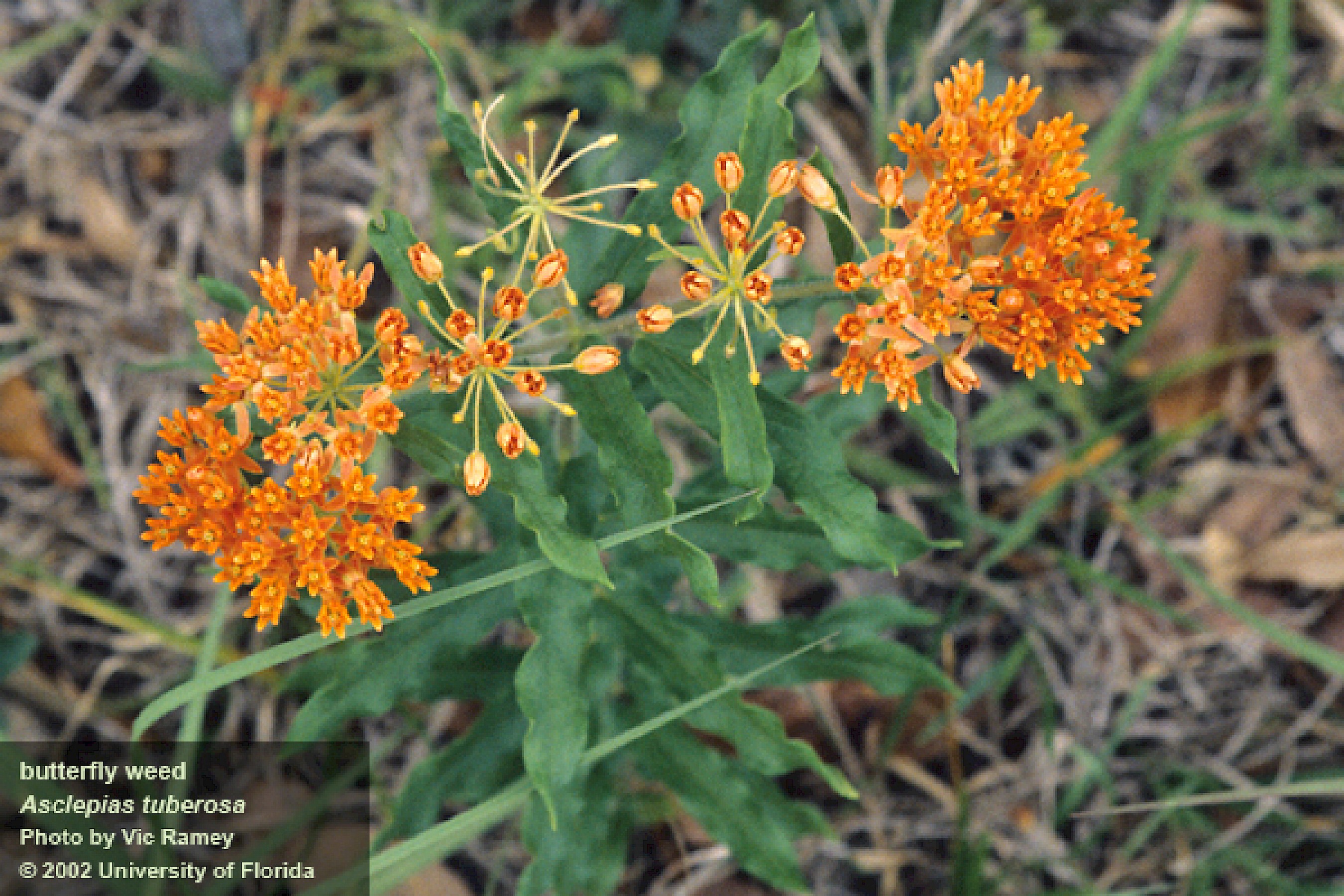
Butterfly weed is an annual herbaceous milkweed that will thrive in USDA Zones 8-10, preferring full sun to partial shade. This native is commonly found growing naturally in sandhills, pine flatwoods, other sandy uplands, and along sunny roadsides. Once established, butterfly weed prefers dry, sandy soils. It is moderately drought-tolerant but is sensitive to salt concentrations. This species is one of the more popular and commonly found in nurseries.
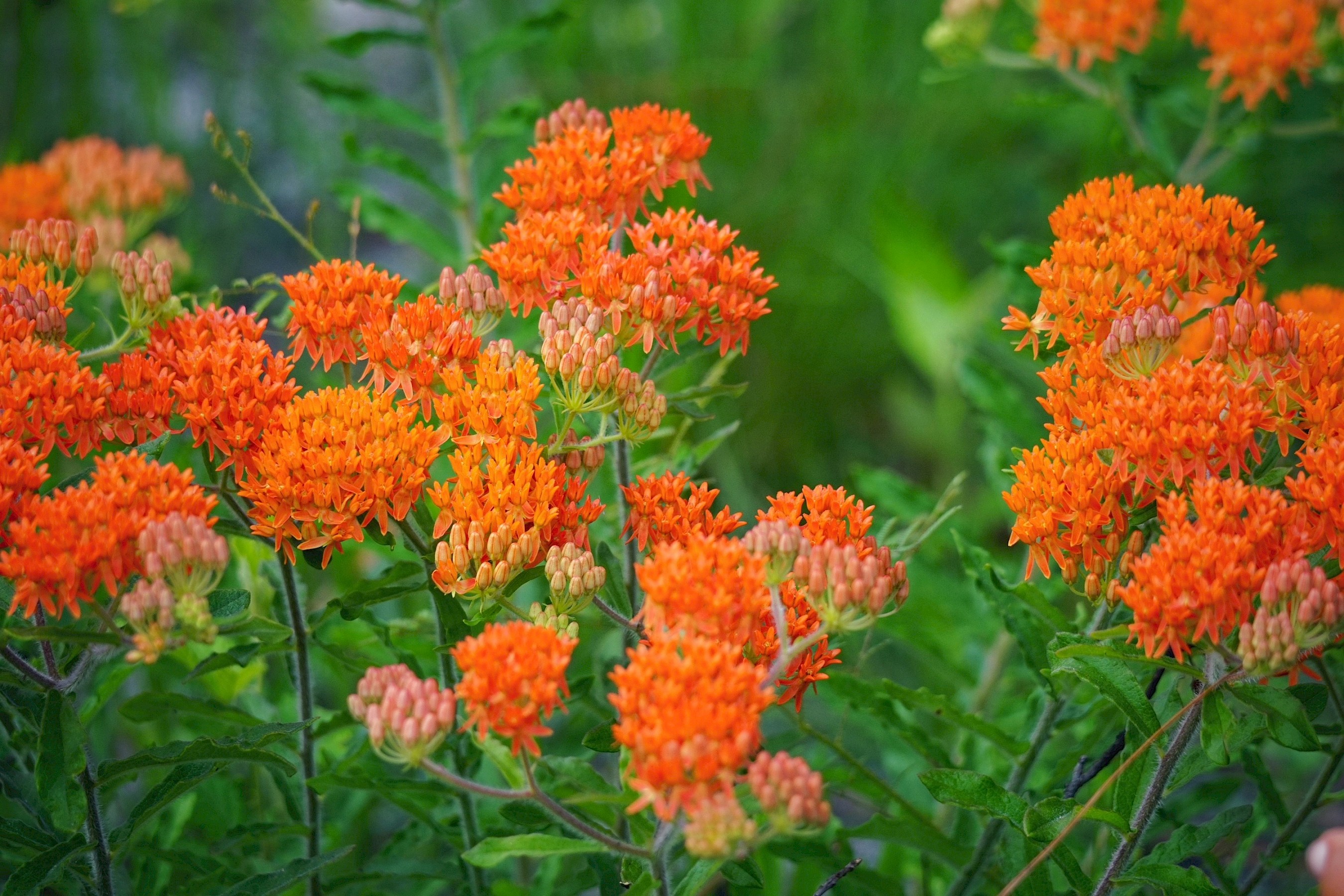
Butterfly weed is generally a small plant, growing up to three feet tall and wide. It is an outstanding ornamental suitable for use in landscapes for naturalizing, as cut flowers, as a butterfly & hummingbird garden, and for mass plantings. Butterfly weed produces beautiful orange, red, and yellow blooms from July to September that attract bees, butterflies, hummingbirds, and other wildlife. While monarch butterflies are associated with milkweed, butterfly weed supports several species. It functions as a larval host, like in the case of the queen and soldier butterflies, and a source of food for many others, a few being the spicebush and eastern swallowtail, bees, leafcutter bees, native sweat bees, and yellow-faced bees.
Luckily, Asclepias tuberosa is an exception to the Asclepias genus. Its stem does not contain the milky latex that distinguishes the rest of the genus and gives it the common name “milkweed.” If you have another species of milkweed, wear protective clothing to avoid the toxic milk sap the plant produces. This sap is a skin irritant and can be toxic to humans and pets if consumed.
Pests and Diseases
Butterfly weed is susceptible to aphids and leaf spot diseases, though these typically don’t cause major harm. Rust can create reddish spots on the plant, and cucumber mosaic virus causes mottled leaves. While there is no chemical control for these two diseases, they are not extremely common and don’t usually result in plant death. Read about how to handle garden pests here.
Why Plant Native Species?
Native species typically require less water and maintenance compared to non-native plants, making them more sustainable choices for landscaping. By planting butterfly weed, gardeners support local wildlife and promote biodiversity.
Have a question?
If you have any questions about gardening in Central Florida, please contact UF/IFAS Extension Pasco County at 352-518-0156. For more information on UF/IFAS Extension Pasco County Community Gardens, and how you can join one, visit http://sfyl.ifas.ufl.edu/pasco. Supervising Authors: Dr. Whitney Elmore
Follow us!
We have several ways to connect. Visit our Facebook, Instagram, Eventbrite, Blogs, UF IFAS Extension Pasco County Master Gardeners | Dade City FL | Facebook, Florida-Friendly Facebook, & Website.
Other Blogs in the Series
- Exploring Florida’s Natives: The Prickly Pear
- Exploring Florida’s Natives: Grass Pink Orchids
- Exploring Florida’s Native Gems: Carolina Jessamine
- Exploring Florida’s Natives: The Florida Violet
More resources
- UF/IFAS Extension Pasco County
- Dr. Whitney Elmore’s Podcast: Rooted in Florida
- Center for Aquatic and Invasive Plants | University of Florida, IFAS
- Asclepias tuberosa Butterfly Weed, Indian Paintbrush
- Asclepias tuberosa
- Butterfly Gardens
- Butterflyweed, Asclepias tuberosa — Florida Museum
- Native Habitats for Monarch Butterflies in South Florida
- Monarchs and Milkweed: Six Things You Can Do to Help–UF/IFAS Extension Columbia County
Other Sites
 0
0