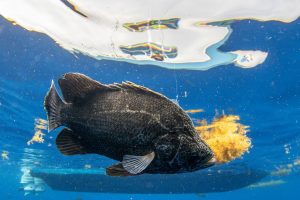
The featured Gulf Coast Catch and cook species for October 2025 is the Atlantic Tripletail!
Tripletail are fun to catch and delicious to eat! October is the perfect time to catch tripletail as they are open year-round and they are most commonly caught in the Gulf around the early fall.
Read on to learn how to catch tripletail and make a delicious and healthy meal!
Fun Facts
- Tripletail are known for their three fins forming a tri-looking tail.
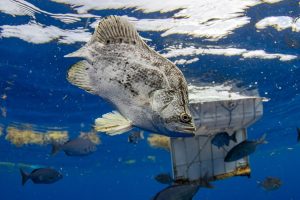
- They are great at camouflage, often lying on their sides to resemble floating seagrass or debris to hide from predators.
Species Profile

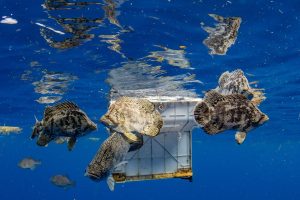
The Atlantic tripletail (Lobotes surinamensis) is a unique-looking fish species that is found in all tropical to subtropical waters, apart from the eastern Pacific due to the habitation by the Pacific tripletail (Lobotes pacifica). In the Gulf of America (formerly the Gulf of Mexico), the tripletail is most commonly caught from April through October, where they tend to migrate more southward in the winter months. They are typically a migratory pelagic fish, living primarily in the water column; however, they can be found closer to shore around inlets and bays. They are almost always found near floating objects such as seagrass, buoys, pilings, or near other structures, and are known for their unique behavior of mimicking floating debris, lying on their sides near the water surface.
Appearance
The tripletail had an oblong, but compressed body with a large, rounded dorsal fin and matching rounded anal fins, giving the appearance of a tri-tail, hence its name. Their pectoral fins are rather small compared to their pelvic fins, and can be yellow in color. They have a triangular-shaped head, which can become concave in shape with age. A large mouth, protruding jaw, and small eyes are set forward on their heads, and they have small scales that cover the body and extend into the anal and dorsal fins. They have a sharp serrated preoperculum and spines hidden under the operculum, both structures associated with the cheek and gills. These can be very sharp and cut your if you’re not careful!
Juvenile tripletail will have a mottled green-yellow to brown color, helping them to camouflage. They will often lay on their side with other debris near the surface to blend in, mimicking the look of a mangrove leaf. As they grow they will maintain a mottled coloration but shift to darker browns, reds, and greys.
Biology
Tripletail are a medium sized fish, reaching a maximum size of around 35 inches and weights around 40 pounds. On average the triple tail will weigh around 15 pounds, while the largest has weighed in at 42 pounds. They grow very quickly in the first year of life then slow down, likely to avoid early predation.
Triple tail are opportunistic feeders, often targeting smaller bait fish and invertebrates. They act as ambush predators, hiding in debris rafts and camouflaging themselves until prey is close enough to eat. They often eat anchovies, shrimp, crabs, and other small fish. Tripletail do not have many natural predators, however larger species such as sharks and barracudas may target them if they are not well hidden. Juveniles are more common targets of predation, where birds are a major predator as they are often attracted to the floating debris.
Life cycle
Triple tail tend to live to around 5 to 10 years of age. They spawn primarily in the summer, often in open water. While this species is usually not found in groups they will school to spawn. Males often mature younger than females and females can produce over 700,000 eggs per spawn. The juvenile larvae go through several stages of transformation as they grow, typically resembling the adult characteristics by 4mm in size. The fry (baby fish) are often found in deep waters (more than 230 feet), with high salinity (>33 ppt) and warm water temperatures (>84 degrees F).
Habitat
Juveniles tend to be associated with larger sargassum algae rafts floating at the surface of the open gulf or can be found near wrecks, jetties, buoys, or other floating objects. Adults are also often associated with open water, but are almost always found near a floating object. They have been found in bays, inlets, and river moths as well. A common characteristic of tripletail is to lay on their sides near the surface, trying to mimic floating debris. This trait is though to serve both as a hiding mechanism for the juveniles and a way for the fish to ambush their prey. Fishers have observed this habit and now often target tripletail by looking for floating structures.
Catch
To maintain a healthy fishery, it is important to use sustainable fishing practices when catching and releasing fish. A Florida fishing license is required to land all saltwater species in Florida regardless of where they are caught (state or federal waters). Florida fishing licenses require a fee, however, fishing licenses from a shoreline are free. Both types require you to register for the license on the FWC website which can be found here: https://license.gooutdoorsflorida.com/
Habitat
- Common in 10 – 230 ft water depth
- Often found near floating structure (buoys, floating debris, markers or pilings) although they can be found near wrecks
Season and Regulations
- Tripletail fishing in the Gulf State waters are open year-round.
- You are allowed to keep 2 tripletail per person, per day.
- The minimum size limit is 18 inches in total length. Tripletail must be 18 inches or greater to keep.
Fishing regulations can change frequently, always check current FWC regulations before fishing. Regulations can be found here: myFWC
While you always hope to catch “The Big One” small fish are often caught during a fishing trip. If your catch is smaller than the regulations allow make sure you return them right. Fish should be returned to the water as quickly as possible and resuscitated. Learn more about the Return ‘em Right program here.
Methods
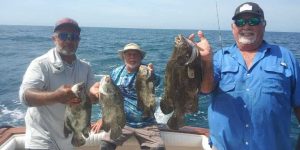
Hook and line fishing is the most common way to catch tripletail. Spear fishing, netting, or snatching is not allowed to catch tripletail. Harvest is also prohibited by the use of multiple hooks in conjunction with live or dead natural bait.
Hook and line fishing
Tripletail are a highly sought after fish as they are fun to find and have firm white meat. They are often found by fishers when searching near pilings, channel markers, oilrigs, floating seagrass, buoys or other floating debris, although they can be caught around deeper wrecks as well. As they are opportunistic feeders they can be targeted with live, dead, or artificial baits.
Bait
Tripletail will eat small bait fish, such as minnows however shrimp are another good choice. Slower swimming baits like shrimp are often easier for the tripletail to target. Artificial or cut bait can also be used to catch them!
Below are some great bait choices for targeting tripletail:
- Minnow
- Pinfish
- sardine
- Shrimp
- Crab
- Artificial Jig
- Cut bait
Tips and Tackle
When fishing for reef fish in the Gulf it is required to use non-stainless steel, non-offset circle hooks when using natural bait. A dehooking tool and descending device are also required for fishing in federal waters.
Tripletail can be skittish and will often prefer the bait to come to them. Try to make your bait look as natural as possible and cast as close to them as you can! They will also try to dart away and hid in structure as soon as they have been hooked so make sure to reel them in a quickly as you can! Late spring to early fall is the best time to target tripletail in the gulf!
- Look for areas with floating debris, objects or structure.
- Try to see dark floating objects near the surface, remember they are great at camouflaging as debris
- Cast as close to the fish as you can without disturbing them. Try casting up current and let your bait float to them.
- Use light tackle and even try freelining your bait to make it look natural
For best fishing practices and to learn more fishing tips, tricks, and regulations check out the free Florida Friendly Angler course: Florida Friendly Angler Certification Program
If you want to go fishing but don’t have a boat of your own, fishing charters are a great option! You can find a list of certified Florida Friendly Fishing Guides here: FFA Guides
Clean
Learn how to fillet your tripletail Catch with Florida Sea Grant Agent Michael Sipos!
Cook
Tripletail is a delicious fish to eat with firm white meat and large filets. It can be prepared in a variety of ways, fried, grilled, sautéed, steamed, and more! Below is a recipe for cooking up your fresh catch:
In the Gulf, U.S. wild-caught tripletail is a smart seafood choice because it is considered to be a sustainable seafood choice. Due to the migration of the species and association with debris, however, it can be difficult for researchers to asses accurate populations. Following harvest regulations and fishing gear rules will help to keep the fishery sustainable.
Below is a healthy recipe from Mayo Clinic for cooking up your fresh catch:
Parmesan and Cracker Crusted Tripletail
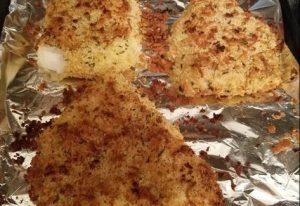
Serving size: 1/2 fillet (serves 4)
Ingredients:
- 2 tripletail fillets
- 1/4 cup butter (melted)
- 1 cup saltine crackers (crushed)
- 1/3 cup grated parmesan cheese
- 1 teaspoon blackening seasoning
- 1 Lemon (wedges)
Instructions:
- Cut each fillet into 2 equal sized pieces.
- Mix crushed crackers, parmesan cheese, and blackening seasoning in a bowl.
- Coat each fillet in melted butter and then coat in cracker mixture. Press mixture into fillets to ensure they are well coated.
- Preheat oven to 350 degrees F. Lay each fillet on a backing sheet. Cooked for 15-20 minutes until the fish is not transparent, also called opaque, throughout when tested with a tip of a knife, and the crackers are golden brown.
- Serve each fillet with a lemon wedge and squeeze over the fish before eating.
*Serve with rice and veggies for a complete meal!
Next month sneak peek!
Our featured Gulf Catch for October is the Stone crab!
- Stone crabs have a favorite claw and can be left or right “clawed”!
- The claws from stone crabs are harvested without killing the crabs and will grow back!
Do you have a favorite stonecrab recipe or a photo of you with your Triple tail catch? Share it with us for a chance to be featured as a photo or recipe of the month! Submit here
More information on the Stock assessment for the Gulf can be found here: NOAA Stock Assessment
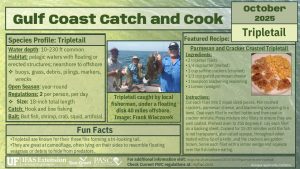
Check out the other Gulf Coast Catch and Cook blog posts!

Have a question? Ask the Author!
For more detailed information, contact your local University of Florida Extension Office.
Follow us!
An Equal Opportunity Institution.
 0
0