You may not recognize the name, but you have certainly seen the seagrape before. This broad-leaf evergreen is a coastal plant that brings beauty and ecological value to your landscape. If you live along the coast and you’re looking for a hardy, low-maintenance plant, consider the seagrape (Coccoloba uvifera).
Origins of the Seagrape
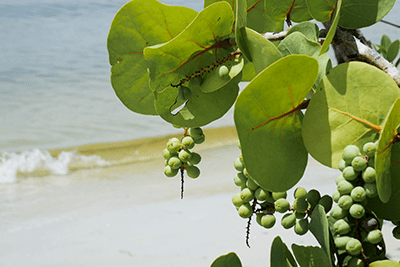
The seagrape is native to coastal areas of Florida, the Caribbean, and parts of Central and South America. The plant gets its name from the clustered fruit it produces, which resembles grapes. While the fruit is not a true grape, it can be eaten fresh or made into jelly. The plant plays an important role in dune stabilization and habitat conservation. The seagrape is protected by the Department of Environmental Protection to help preserve endangered native salt-tolerant plants and Florida’s coastal ecology.
Growing Conditions and Characteristics
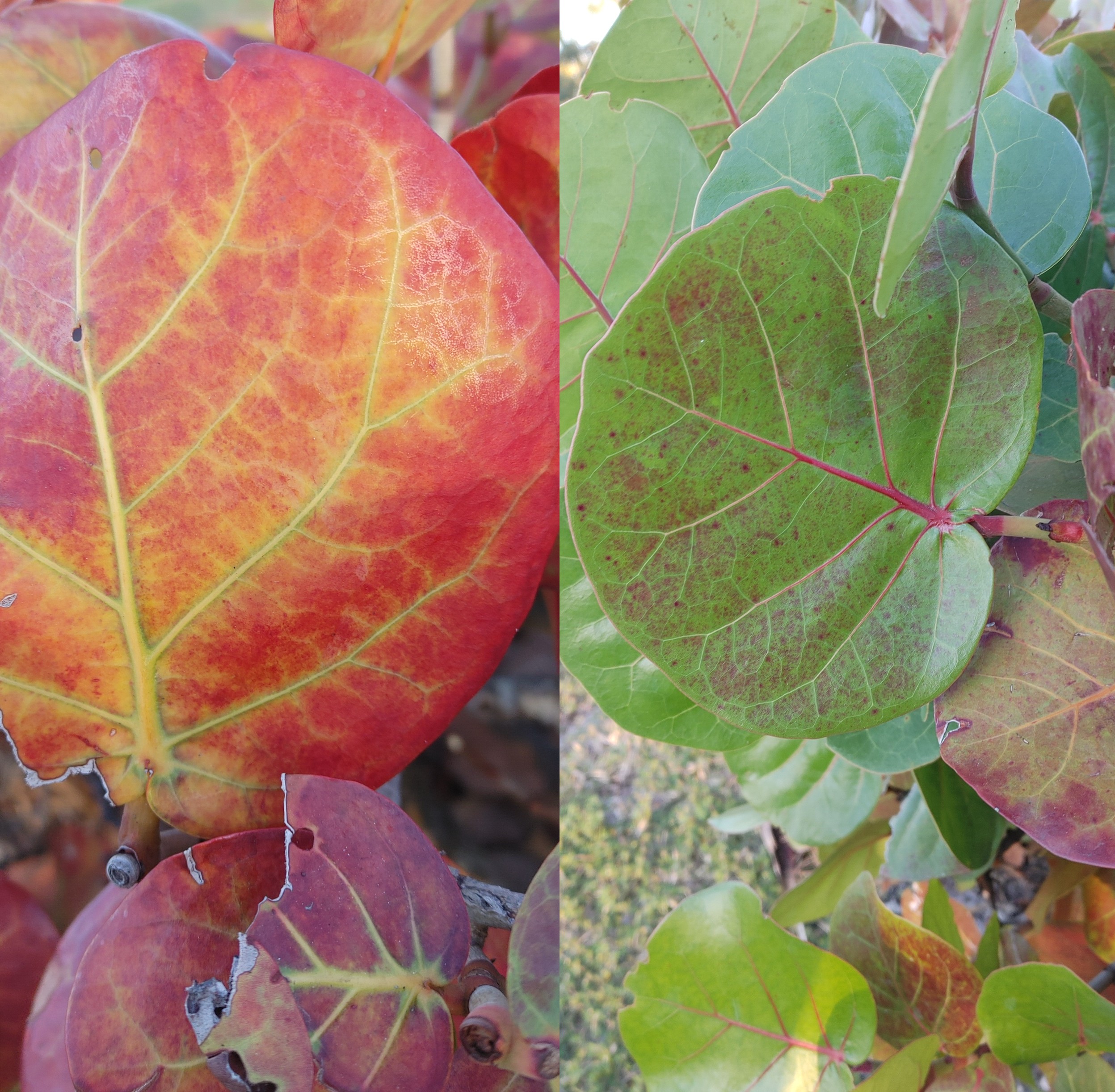
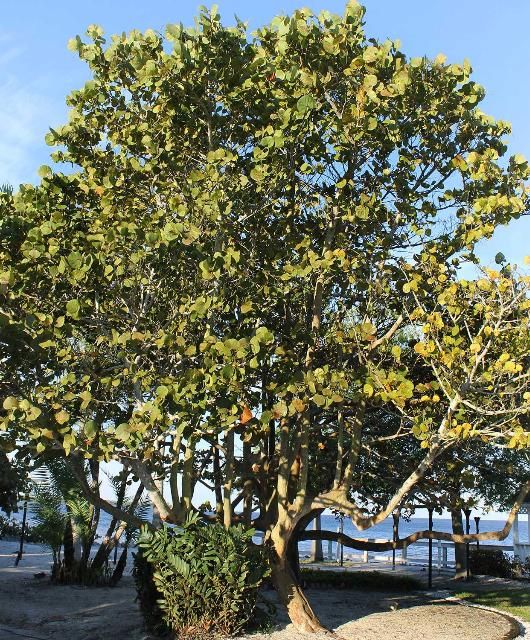
The seagrape thrives in USDA Hardiness Zones 10A-11 and can grow as a shrub or small tree, reaching heights of 35 feet or more. This plant prefers warmer tropical temperatures and is cold-sensitive, so it may need protection in the winter months. Its broad, leathery leaves often turn shades of red and orange in the winter, adding a tropical twist of seasonal color to the Florida landscape.
The seagrape is well-suited to sandy, coastal soils and is extremely tolerant of salt spray and high winds. It prefers full sun to partial shade and is highly drought-tolerant once established. Like other native species, seagrape requires minimal maintenance. While the plant rarely suffers from diseases, it is susceptible to the seagrape borer and nipple gall. These pests cause minor damage, making it an excellent choice for Florida-Friendly Landscaping™.
In the wild, seagrape plays a crucial role in coastal ecosystems. It is found along beaches, dunes, and hammock edges, where it helps reduce erosion and provides shelter for wildlife. Florida law protects sand dunes and their vegetation. Specifically, Florida Statute 161.053(2)(a) prohibits any individual, business, or government entity from damaging sand dunes or the plants growing on them. This includes trampling, crushing, digging up, or excessively cutting the vegetation.
- Any sort of activity in and around dunes and the plants that inhabit them will require a permit from the Florida Department of Environmental Protection. To enjoy a seagrape harvest, or to use it as a manicured hedge or privacy screen, you can plant them on your coastal property or simply allow them to grow naturally for a more relaxed, tropical vibe without the need for a permit.
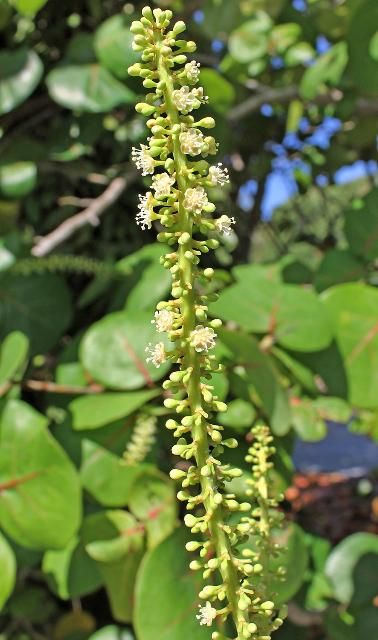
The large, rounded leaves of the seagrape can reach up to 10 inches across and feature prominent red veins. In spring to early summer (or year-round if you’re lucky), the seagrape produces long clusters of small white flowers, which are highly attractive to pollinators. These flowers develop into green fruit clusters that ripen to a deep purple in late summer.
The fruit is enjoyed by birds and other wildlife and is important for nesting and hatching turtles. The seagrape is dioecious, meaning there are separate male and female plants. Male plants do not produce fruit, so if that’s important to you, you’ll want to ensure you plant a female plant. With male plants close by in coastal areas, it may not be necessary to plant a male on your property, but it will increase your chances of fruit production.
Why Plant Native Species?
Native species typically require less water and maintenance compared to non-native plants, making them more sustainable choices for landscaping. By planting the seagrape, gardeners support local wildlife and promote biodiversity. Want to know more about natives? Read our native series.
Have a question?
For more information, contact your local county Extension office.
Supervising Agent: Dr. Whitney Elmore
Other Blogs in the Series
- Exploring Florida’s Natives: The Prickly Pear
- Exploring Florida’s Natives: Grass Pink Orchids
- Exploring Florida’s Native Gems: Carolina Jessamine
- Exploring Florida’s Native Gems: The Coontie
- Exploring Florida’s Natives: The Florida Violet
More resources
- UF/IFAS Extension Pasco County
- Dr. Whitney Elmore’s Podcast: Rooted in Florida
- Coccoloba uvifera
- Seagrape
- Coccoloba uvifera: Seagrape
- Coccoloba uvifera Seagrape1
- Center for Aquatic and Invasive Plants | University of Florida, IFAS
Featured Image Credit: sea grape, Coccoloba uvifera, Photo by Vic Ramey, @ 2003 University of Florida
 2
2