PALM BEACH, CO. – The hurricane season is in full swing. Right now, the National Hurricane Center is watching Tropical Storm Erin as it develops in the East Atlantic.
Create your emergency plan now! Make sure you are preparing while supplies are readily available, before a storm approaches Florida.
What is an Emergency Plan?
An emergency plan outlines what actions you need to take before, during, and after a disaster to ensure your family’s safety. An emergency plan is vital to have in place prior to an imminent disaster. In this case, prior to a hurricane approaching Florida.
Creating an Emergency Plan
Think of important questions, both general and specific to your family, such as:
- How do I plan to receive emergency alerts and weather updates?
- What is my evacuation route? And what are my alternate routes?
- Do I know my shelter? Do I have a plan if I need to go to a shelter?
- What is my family communication plan? Do I have a designated out-of-town emergency contact?
- Is my emergency kit up to date, well-stocked, and accessible?
All of these and more are questions that you and your family should go through together to prepare for any disaster. That way, there is a concrete plan and a backup plan that everyone in the family is aware of.
Creating a Communication Plan
A communication plan is an essential part of creating the ultimate emergency plan. Your family or household needs to have a plan for when a hurricane approaches. Creating a group chat with all members of your household will help with the coordination and logistics of gathering supplies.
Make sure to have a designated out-of-town contact who is a trusted family member or friend. This person can be a go between for you and the rest of your family who may not be in the path of the storm. They would also be the contact that your children should know. Have your children memorize this person’s number in case they are separated from you and need a trusted adult to contact if they cannot reach you.
Sign up for your local county alert system to receive hurricane alerts and evacuation orders! AlertPBC is Palm Beach County’s emergency alert notification system. AlertPBC will send a phone call or text message to you when there are weather hazards for your address or any location you register to receive alerts for including your work and your children’s schools.
Why an Emergency Kit Matters
An emergency kit is an essential part of preparing for hurricanes. Hurricanes and tropical storms can damage power infrastructure, leading to power outages. Officials can also announce evacuations to get residents out of the path of a hurricane or out of danger caused by a hurricane such as storm surges and floods. Hurricane Milton caused 3.4 million Floridians to lose power and for some, power was not restored for several days. Therefore, being hurricane ready with an emergency kit is vital to your family’s safety.
Governor DeSantis and the Florida Legislature have designated that certain hurricane and disaster preparation supplies are now permanently tax-free as of August 1st. This tax exemption includes batteries (AA, AAA, C, D, 6-volt, and 9-volt), carbon monoxide and smoke detectors, fire extinguishers, waterproof tarps of 1,000 square feet or less, portable generators, and portable gas cans that are 5 gallons or less in size. Other items that are essential parts of an emergency kit such as non-perishable food items, bottled water and common personal hygiene and health items are already tax-free.
Key Parts of an Emergency Kit
Below is a checklist of all key parts of a emergency plan that you can print out as you create your emergency kit. Remember this is just an outline, customize the plan to fit your specific needs to create the ultimate emergency plan and kit for your family!
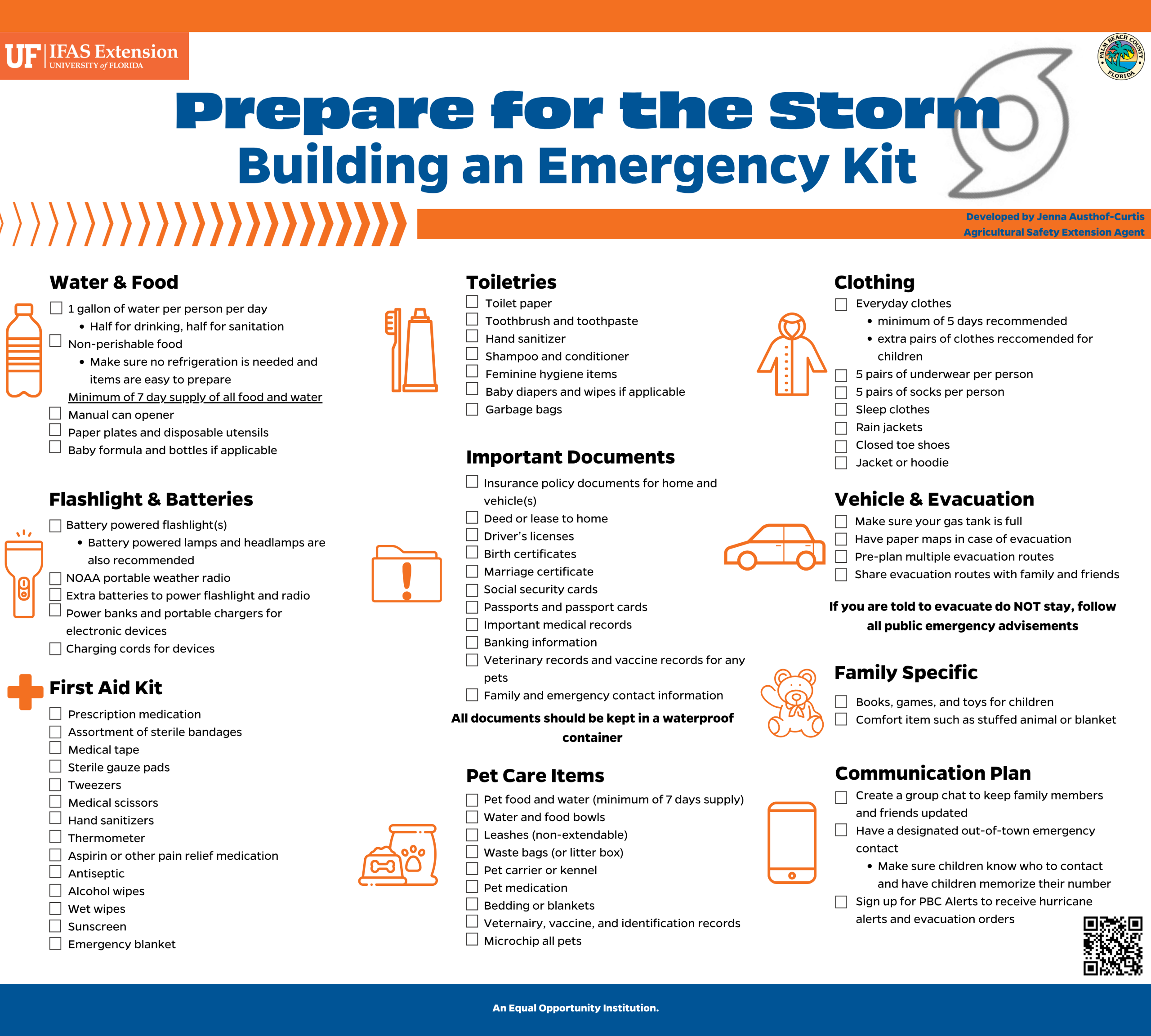
Water and Food:
-
- Water: 1 gallon per person, per day. It is recommended to have a 3-day supply in case of evacuation and at least a 7-day supply for sheltering in place at home.
-
- Food: Non-perishable food that does not require refrigeration and is easy to prepare. Minimum of 7 days of food is recommended per person.
-
- If you have canned food as a part of your emergency kit, then make sure to also pack a manual can opener
-
- If you have a child who needs formula or bottles, pack formula then make sure to pack additional water as well as plenty of clean bottles for them, again aiming for a minimum of 7 days supply.
Flashlights and Batteries:
-
- Battery power flashlights, headlamps, and general camping lamps.
-
- A NOAA portable weather radio. This is essential to stay up to date on weather conditions. Cell towers may not always have signal during a storm and preserving battery life of cell phones for emergencies is important.
-
- Extra batteries for the weather radio and all battery powered lamps and light sources.
-
- Power banks and portable chargers for your phone and electronic. Make sure these are full charged prior to the storm arriving.
-
- Charging cords for your devices that are compatible with the power banks.
First Aid Kit:
-
- There are lots of good pre-stocked first aid kits available. The key thing is to also make sure it is fully stocked if you have used it in the past.
-
- Additional supplies like wet wipes and sunscreen are also good items to add to your emergency first aid kit.
-
- Make sure to have plenty of hand sanitizer.
-
- Make sure you have enough of your prescription medication if you do have any. When a storm is imminent and the Governor declares a state of emergency, residents are allowed to request an advance refill of their medication and have it filled by their doctor and pharmacist.
Toiletries and hygiene:
-
- Make sure you have essentials like toothbrushes, toothpaste, soaps.
-
- Toilet paper and garbage bags are needed for any waste management as for disposable of items such as used wet wipes and diapers.
-
- If you have a child who needs diapers make sure to add at least a 7 day supply of diapers and wipes for the baby.
Important Documents:
-
- This includes insurance documents, drivers licenses, birth certificates and other important records like your medical records.
- If you have a pet, include veterinary and vaccine records.
- Make sure all documents are stored in a waterproof container.
Clothing:
-
- Have a minimum of 5 days of clothes, 7 minimum for children due to any potential messes.
- At least 5 pairs of socks and underwear, however 7 pairs are preferred.
- Closed toe shoes are essential for protecting your feet in case of debris.
Vehicle and Evacuation:
-
- Make sure your gas tank is full.
- Have paper maps in case of evacuation and if cell service is down.
- Pre-plan multiple evacuation routes. Roads may become congested during evacuations so having multiple routes is advised.
Pet Care:
-
- A minimum of 7 days of pet food and water along with their water and food bowls.
- All veterinary records and any medication for your pet.
- Non-extendable leashes, you want to have more control over your pet during a potentially stressful time. A pet carrier or kennel that the pet is familiar with in case you need to contain them for their safety either during the storm or when evacuating.
- Waste bags for any pet waste.
- Microchip all pets in case they run away or get lost so they can be more easily reunited with you.
Family Specific:
-
- Books, games, and toys for children.
- Comfort items such as a stuffed animal or blanket. A hurricane can be a stressful and scary time for children so having a comfort item may help calm them.
Remember, preparation is key to your safety during a hurricane or tropical storm. Checking that your supplies are stocked and in good working order will help to ensure you are hurricane ready!
Emergency Kit Handout Printout
 2
2