Before you begin growing in your garden, it’s important to have a plan. Once you’ve picked your garden site, the next step is building your garden plan, which consists of three major questions: What are you planting? When are you planting? Where are you planting?
What are you planting?
Start by choosing the right varieties for Florida’s hot climate, which need to be prepared to handle heat and humidity. Page 8 of the Florida Vegetable Gardening Guide from UF/IFAS Extension (download the pdf version) lists heat-tolerant options like ‘speedy’ arugula, which is ideal for our hot climate. A simple search of the vegetable and its variety name on the web will help you find reputable vendors to purchase seeds from.

When are you planting?
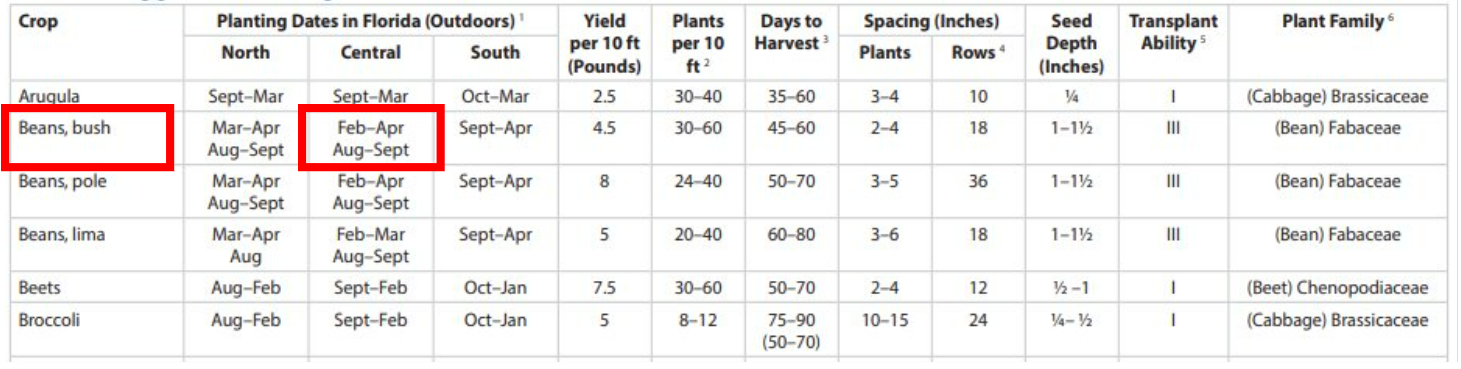
Next, check your planting dates on page 6 of the Florida Vegetable Gardening Guide and find your region of Florida. Timing is crucial, as it determines the correct weather conditions for your plants to thrive. For example, arugula thrives from September to March, while bush beans do best in spring and fall. If we planted these plants during their off season, they would get more pests and disease issues.
Where to plant?
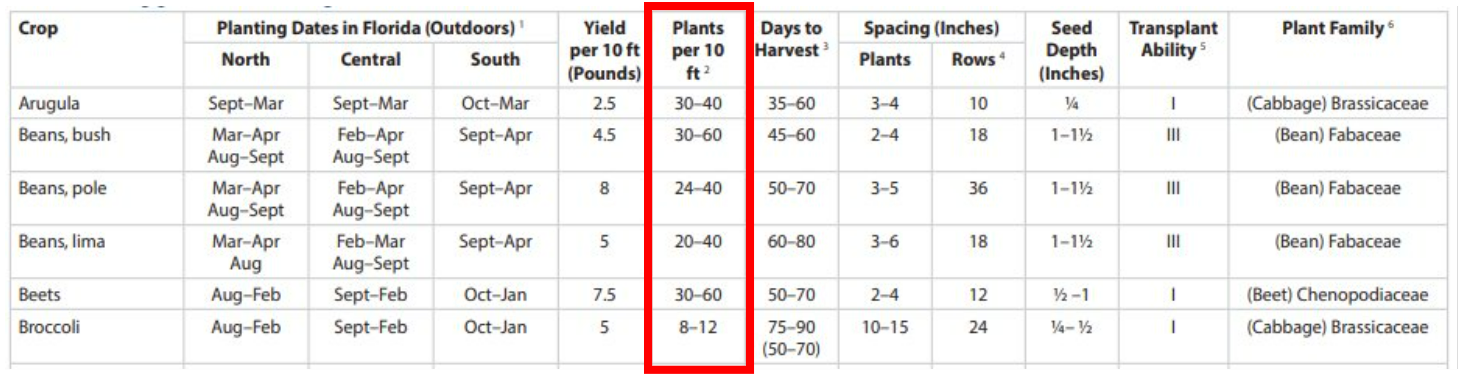
Then decide where to plant using the square foot gardening method. Where we calculate how many of each plant can fit in a single square foot. We can use the table on page 6 under “Plants per 10 ft²” and divide the number by 10 to get plants per 1 ft². Look out for larger plants; some crops, like broccoli, need more room and should be grouped together to avoid shading smaller neighbors like arugula.
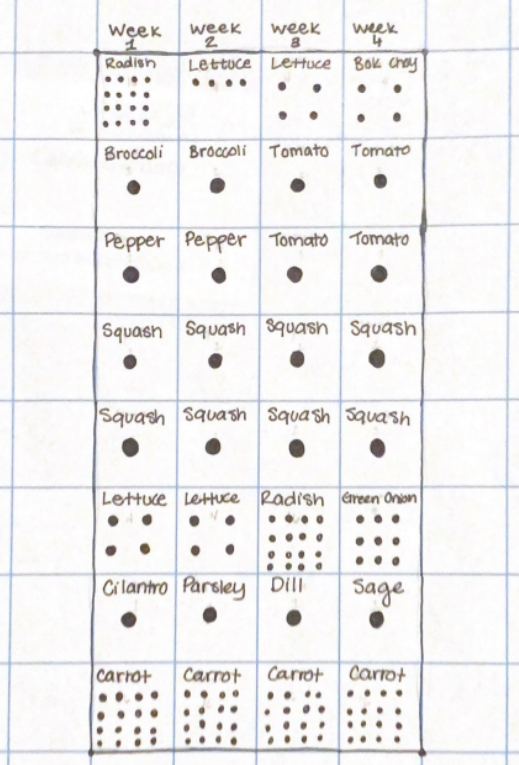
You can then use this information to create a square foot gardening plan using some 1 inch graph paper to mark each square foot. Use dots to depict how many each vegetable can fit into each square foot.
Planning is key to having a healthy and successful garden with fewer disease and pest issues. If you have any questions about planning, please reach out to your local UF/IFAS Extension office!
 0
0