About four years ago, a small cohort of ambitious young scientists stepped into uncharted territory as the first students in the University of Florida’s new plant breeding Ph.D. program in the College of Agricultural and Life Sciences, part of the UF Institute of Food and Agricultural Sciences (UF/IFAS).
Today, that pioneering group has blossomed into a new generation of experts. Eight have crossed the finish line – with another scheduled to defend his dissertation this spring.
Meet the newest doctors of plant breeding:
Blueberries that stay healthier longer — Estefania Flores
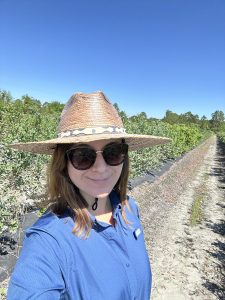

Flores focused her doctoral research on making blueberries not just delicious, but extra healthy.
“Blueberries naturally have special, colorful compounds that help protect our bodies, kind of like tiny shields that keep our cells strong,” Flores said. “I studied these compounds in many different types of blueberries, including wild ones, older varieties and new ones that plant breeders are creating for the future.”
She discovered that some blueberry types are naturally better at keeping these beneficial compounds — even after they are picked and stored.
“This is important because blueberries are often shipped far away, sometimes across the world, and it can take weeks for them to arrive at grocery stores,” Flores said. “During that time, the fruit can lose some of those healthy nutrients. My research shows which blueberry types stay nutritious for longer, which means farmers can grow varieties that keep their health benefits all the way from the farm to the family fridge.”
She also found ways to help breeders choose the best parent plants faster, using genetic tools — kind of like reading a plant’s instruction book.
“This lets us develop blueberries that are healthy, tasty, big, firm and sweet — all at once, without having to give up flavor to get more nutrients,” Flores said. “In short, my research helps make sure that when people buy blueberries—whether in Florida, Europe, or Asia — they get fruit that is not only yummy, but also really good for their bodies, even after the fruit makes a long journey.”
Flores is continuing her journey as a post-doctoral researcher in Muñoz’s lab.
From importer to producer: New findings boost America’s vanilla potential — Manuel Gastelbondo
The United States is the world’s largest importer of natural vanilla, even though vanilla can be grown in places such as South Florida, Puerto Rico, Hawaii, and the U.S. Virgin Islands. One major challenge has been the high cost of domestic production, especially due to labor expenses.
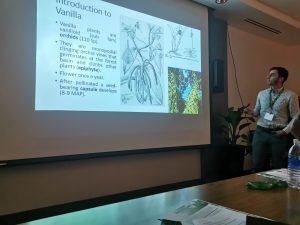
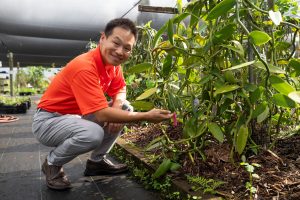
Gastelbondo’s research helps address this by identifying plants that produce larger, more flavorful beans. These improvements could make U.S. vanilla production more competitive and economically viable. His work has helped show high-quality, natural vanilla can be successfully grown in the United States.
“By improving bean quality, stability and long-term supply, my research supports American growers and U.S. flavor companies while benefiting consumers,” he said. “I also developed tools that allow researchers to predict vanilla bean quality early in the plant’s growth. This reduces the cost of producing improved vanilla varieties and makes the process more efficient.”
In addition, his work to accurately identify vanilla species helps prevent mislabeling and protects both growers and flavor companies. Overall, this research strengthens domestic vanilla production, supports American agriculture, and contributes to a U.S. grown vanilla supply.
Gastelbondo now works as the in vitro breeding team leader for Patricio Muñoz in the Blueberry Breeding Program.
From years to moments: Modern tools transform how breeders pick the best plants — Pablo Sipowicz
Traditionally, plant breeders have evaluated plants in the field and later crossed them to develop better cultivars for growers. With forage breeding, it takes a long time to collect the information needed to make selections.
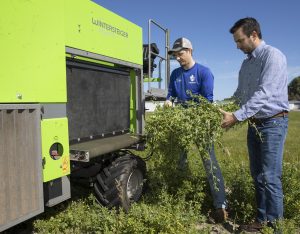
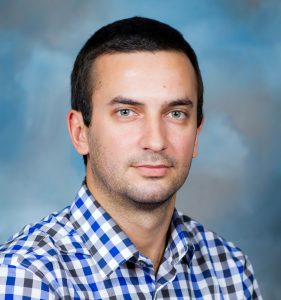
Now, researchers like Pablo Sipowicz use modern tools to speed up the breeding process. Genetic data and drone images help breeders identify the best plants to develop improved varieties without years of field testing.
“My research focused on ways to use these modern tools in a smarter and less expensive way in alfalfa and annual ryegrass,” Sipowicz said. “Our team found that if we use drones, we can reduce our field labor by 80%, and we can accurately predict yield and plant survival. We also found out that we don’t need to use a lot of genetic information to select plants, which makes this technology more accessible for small programs. By lowering costs, forage breeders can evaluate more plants, which increases the chances of identifying outstanding plants for animal feed.”
Sipowicz now works as a post-doctoral researcher for Rios in the UF/IFAS Forage Breeding and Genetics lab.
Battling Fusarium wilt: Scientist develops tomatoes that defend themselves — Samuel Ipinyomi
Florida produces most of the fresh tomatoes we eat in the United States. However, Florida’s warm, humid weather makes it easy for plant diseases to spread. One of the problematic tomato diseases is Fusarium wilt, which can destroy an entire farm’s harvest.
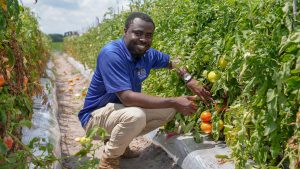
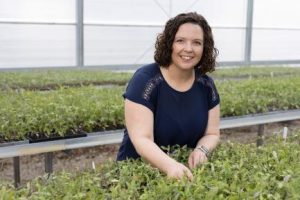
Ipinyomi focused his doctoral research on helping farmers protect tomato plants from this disease.
“Instead of relying on expensive chemicals or treatments that don’t always work, I focused on breeding tomatoes that can naturally fight the disease, just as some people don’t get sick as easily as others. Thankfully, tomatoes already have some ‘defensive genes,’ but the disease can evolve over time and bypass them.”
“So, I searched for new defense genes and figured out how to combine several of them into a single tomato plant,” Ipinyomi said. “This makes it much harder for the disease to win. I also developed simple tools called molecular markers that help plant breeders quickly identify which plants are strong and healthy. My work helps farmers grow better tomatoes and ensures we continue to see tomatoes in grocery stores year-round.”
Drones reveal the toughest wheat: New tech helps farmers face a hotter future — Sudip Kunwar
Growing enough food for the global population is becoming harder as weather becomes hotter, drier and more unpredictable. Wheat, one of the world’s most important food crops, is especially impacted by these challenges.
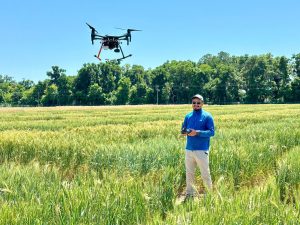

Sudip Kunwar focused his doctoral research on a simple but important question: How can we identify which wheat plants are best at turning their growth into grain under adverse conditions? Traditionally, figuring this out required cutting plants, drying them and weighing each part. This process is slow and limits how many plants can be evaluated. Kunwar developed a faster and smarter approach.
Special cameras attached to drones captured signals beyond normal human eyesight, including how plants reflect light and how warm they are.
“These signals reveal how well plants are performing and how efficiently they are turning growth into grain,” Kunwar said. “With this method, thousands of wheat plants can be evaluated quickly. By combining the camera-based information with genetics and weather data, Kunwar developed a methodology that provides a much clearer picture of which wheat lines are most efficient.”
Kunwar now works as an assistant professor of precision agriculture at the Sherman Lewis School of Agriculture and Applied Sciences at Langston University.
Unlocking strawberries’ secret defenses: Researcher identifies genes for disease resistance — Elissar Alam
Breeding crops that naturally resist infection is an effective and sustainable way to manage plant diseases. Elissar Alam’s doctoral research focused on finding genes to resist two serious strawberry diseases.
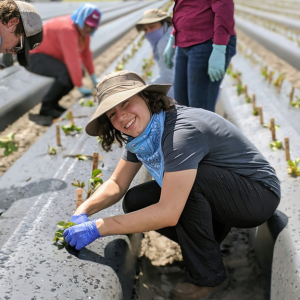
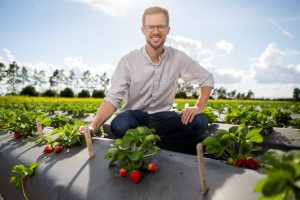
Alam began by testing a wide range of strawberry plants in the field to identify those that could remain healthy under disease pressure. Once she found resistant plants, Alam studied them further by growing new populations and analyzing their DNA to uncover genetic factors that help strawberries defend themselves and to understand how these factors are inherited.
“Using this knowledge, I developed lab tests and models that allow breeders to predict disease resistance using DNA alone,” Alam said. “This makes it possible to select resistant plants early in the breeding process, saving time and resources. Ultimately, this work helps breeders efficiently develop strawberry varieties that combine disease resistance with other important traits, such as high yield and good flavor, protecting growers’ harvests in Florida and beyond.”
Alam now works as a postdoctoral researcher at KU Leuven in Belgium.
From tiny tissues to full plants: Research unlocks gene-editing potential in blueberries — Anandi Karn
For years, plant breeders focused on conventional breeding to improve crops. But new techniques accelerate the process and make it more precise. Karn’s work begins where traditional breeding meets cutting‑edge biotechnology.
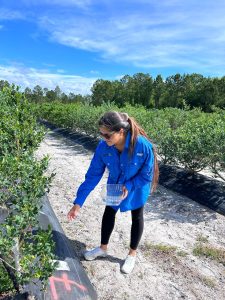
Her research focuses on Southern Highbush blueberries, the main variety grown in Florida. In her research, she built methods so that genome editing can be used in blueberries.
Karn’s work helped standardize laboratory protocols that allow tiny blueberry tissue to grow back into full plants under laboratory conditions, an essential step before any gene can be precisely edited. Around the world, scientists are already exploring similar genome‑editing tools to improve other crops for yield and quality.
“By creating a solid foundation for these techniques in blueberries, my work opens the door to future blueberry varieties that are more resilient, productive and flavorful, benefiting both growers and consumers,” she said.
Karn now works as a post-doctoral researcher in Alfred Huo’s lab at the UF/IFAS Crop Transformation Center.
 0
0

