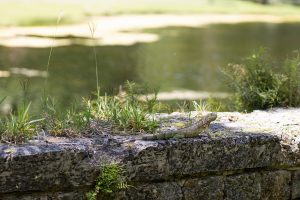
Just in time for the holiday season — and the start of the iguana mating period — the University of Florida Institute of Food and Agricultural Sciences (UF/IFAS) has unwrapped a bilingual resource for living with one of Florida’s most visible cold-blooded neighbors.
In Ask IFAS, the latest edition of Dealing with Iguanas in the South Florida Landscape is also now available in Spanish, offering timely, science-based insights from UF/IFAS scientists and Extension agents for understanding and managing iguanas, whether it’s on personal property or property you manage.
Here is what to expect from this month’s featured resource:
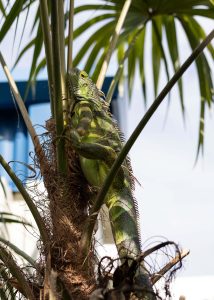
What they are: Green iguanas and spiny-tailed iguanas now live in many parts of Florida, largely due to pets escaping or being released into the wild.
Identification made easy: The guide helps readers distinguish between iguanas and similar-looking reptiles — an essential step for proper management.
Behavior basics: Iguanas are mostly herbivores, with adults eating leaves, flowers and fruits. Juveniles rely more heavily on insects and adult iguana droppings to build necessary gut bacteria.
Potential impacts: Iguanas can damage landscape plants, undermine structures through burrowing, eat fruits and ornamental plants and leave droppings that may carry salmonella. They can also defend themselves with strong bites, sharp nails and tail strikes.
Management strategies: Several options are available to manage and steer them from your property. For example, avoid feeding iguanas by keeping food out of their reach, and prevent them from attracting more iguanas to your property. Crate vulnerable plants, wrap tree trunks with sheet metal, reduce dense vegetation, seal unused burrows and use visual or sound deterrents.
Legal considerations: Iguanas are non-native and unprotected in Florida. Florida law provides guidelines on what is permitted when controlling iguanas. For example, while homeowners may legally trap them on private property, poisons and inhumane traps are prohibited.
###
By Lourdes Mederos, rodriguezl@ufl.edu
Para accesar a esta comunicación en español, por favor utilice este enlace.
ABOUT UF/IFAS
The mission of the University of Florida Institute of Food and Agricultural Sciences (UF/IFAS) is to develop knowledge relevant to agricultural, human and natural resources and to make that knowledge available to sustain and enhance the quality of human life. With more than a dozen research facilities, 67 county Extension offices, and award-winning students and faculty in the UF College of Agricultural and Life Sciences, UF/IFAS brings science-based solutions to the state’s agricultural and natural resources industries, and all Florida residents.
 1
1

