The University of Florida just made plant pathology history. Its Plant Diagnostic Center is now the first university-based lab in the nation to earn accreditation from the prestigious National Plant Diagnostic Network (NPDN) — a recognition likened to receiving a “gold-medal seal of approval” for plant health.

Mathews Paret, chair of the UF/IFAS plant pathology department, applauded the accreditation.
“The NPDN accreditation is a perfect example of how federal funding is vital to protecting U.S agriculture,” Paret said. “We are proud that our plant diagnostic center has a major role to play in protecting crop security, which is indeed highly relevant to national security.”
The NPDN is a national team of plant doctors that works to figure out why plants are sick – whether from diseases, insects or even stress from weather or soil nutrients, said Stephanie Shea, associate director of the Northeast Plant Diagnostic Network and accreditation program manager.
UF’s Plant Diagnostic Center and its six affiliated sites across the state diagnose plant diseases quickly and accurately so farmers can make sure their crops stay as safe and therefore, plentiful, as possible.
To gain accreditation the UF Institute of Food and Agricultural Sciences (UF/IFAS) center went through a review by its peers nationwide – the NPDN. That peer panel found proof that pathologists use the best and most appropriate science, consistently, carefully and always.
Accreditation signifies a gold star for quality, Shea said.
“It means a lab has proven it follows strict rules and high standards, so everyone can trust the results,” Shea said. “When a lab earns NPDN accreditation, it shows it’s ready to catch plant problems quickly and accurately before they spread and cause big trouble.”
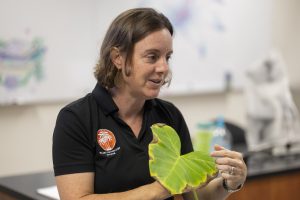
This leads to accurate and trusted test results, reduces risk of testing errors and promotes faster turnaround times for results, said Carrie Harmon, Extension plant pathologist and director of the Plant Diagnostic Center at the UF Institute of Food and Agricultural Sciences (UF/IFAS).
“Or as we say in the lab – get it right – every sample, every time,” Harmon said.
She compared the plant diagnostic lab in Gainesville – and its satellite clinics at UF/IFAS research and education centers statewide – to a health-care system for growers and their crops.
“If you think of our plant hospital here like a human hospital system, the parallel would be that the doctor sees you, listens to you, orders the correct tests and gets those test results really quickly so they can write a prescription for you that will work, and you feel better faster, with a minimum of medicine and treatment,” Harmon said.
“Fast, accurate diagnoses mean preventing disease spread, eliminating unnecessary pesticide application and promoting a healthy crop,” she said. “The end result is supporting a healthy bottom line for Florida’s farms and businesses, along with protecting human and environmental health.”
Work performed by plant disease diagnosticians can impact food across the globe, Shea said.
“Because plants are the foundation of our food and natural systems, protecting them is protecting all of us,” she said. “This accreditation means NPDN labs are not only doing their job, they’re doing it at the very highest level — like an elite team ready to protect U.S. agriculture and natural ecosystems from threats.”
###
Para accesar a esta información en español, por favor utilice este enlace.
ABOUT UF/IFAS
The mission of the University of Florida Institute of Food and Agricultural Sciences (UF/IFAS) is to develop knowledge relevant to agricultural, human and natural resources and to make that knowledge available to sustain and enhance the quality of human life. With more than a dozen research facilities, 67 county Extension offices, and award-winning students and faculty in the UF College of Agricultural and Life Sciences, UF/IFAS brings science-based solutions to the state’s agricultural and natural resources industries, and all Florida residents.
 3
3

