Written by Amelia Sewell, 2025 undergraduate summer intern hosted by Emily Ducker of the Suwannee River Water Management District (SRWMD)
Overview
This summer, I had the privilege of interning with the Office of Water Supply at the Suwannee River Water Management District (SRWMD) through the Nature Coast Biological Station (NCBS). Under the guidance of Emily Ducker and Ron Fox, I led a new initiative focused on estimating water use for small commercial, institutional, and industrial (CII) water users that are below the reporting thresholds for permitting.

Before this internship, I had learned about water management practices through courses in sustainability such as natural resource law and water resource sustainability, but the real-world complexity of water management was far greater than I imagined. Over the past few months, I’ve gained a deeper understanding of sustainability, discovered the often overlooked and unique springs and landscapes of North Florida, and developed a greater appreciation for the challenge of allocating water to meet both human needs and natural system requirements.
Fieldwork Highlights
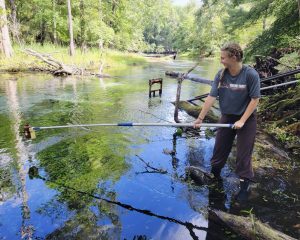
Although my primary project in the Office of Water Supply involved in-office data analysis, I was fortunate to take part in several field experiences throughout the summer. I conducted site visits to better understand the commercial parcels tied to my research in water supply, and I also joined other SRWMD teams in the field.
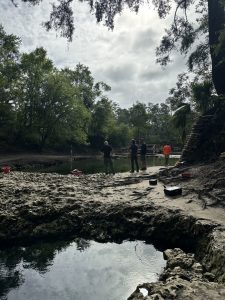
I participated in water quality monitoring across many springs such as Ichetucknee, Peacock, and Gilchrist Blue springs as part of continuous monitoring efforts. I also joined the Hydrological Data Services and Minimum Flows and Levels teams for advanced flow measurements at Lafayette Blue and Little Fanning springs. These outings helped me see firsthand how field data collection informs analytical modeling for water resources.
Beyond technical skills, these experiences gave me a new appreciation for North Florida’s natural landscapes. I’ve spent years studying natural resource systems academically, but as an economics major, most of my work stays behind a desk. Getting out into the field was a rare and special experience that reminded me why I want to use my economics background to help solve environmental and water management challenges.
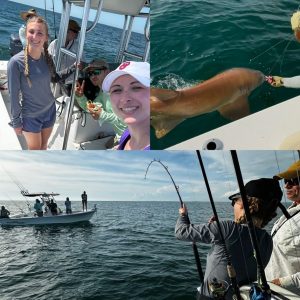
One of the highlights of my summer was participating in NCBS research on an inshore fishing trip. While attempting to catch snook for egg extraction to help track their mating patterns, I unexpectedly reeled in my very first shark—a nurse shark estimated at eight feet long! After a long fight, we safely released it after snapping a quick picture, and although I didn’t manage to catch a snook, the experience was unforgettable and exciting.
Water Use Estimation Project
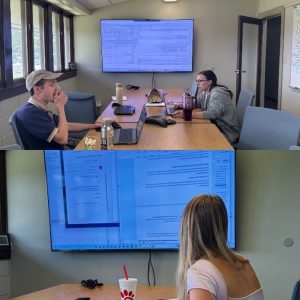
My main project involved developing water use estimates for small CII properties not currently permitted under the Water Use Permitting (WUP) program. These users were previously thought to have negligible water use. A typical day-in-the-life for me involved digging through and cleaning large datasets, mapping water use in ArcGIS, running statistical analyses in R, and meeting with Emily and Ron to talk through results and next steps. Through this process, I calculated new water use estimates and applied them to small CII wells across the District. The results amounted to roughly 3.5 million gallons per day of previously unaccounted for water use.
This documented process will help improve the District’s ability to more accurately predict water demand and can be replicated in future planning efforts. Ultimately, this project supports long-term sustainable water management in the region.

This internship has been one of the most fulfilling and educational experiences of my college career. I’ve developed technical skills in data analysis, RStudio, and ArcGIS, deepened my understanding of environmental policy, and gained insight into the collaborative nature of water resource management.
Final Words
Thank you to UF/IFAS and NCBS for this opportunity. I care deeply about water, and it was an honor to contribute to my community in this way. I felt welcomed and supported, and I’m grateful to everyone at the district for making this experience so positive. This internship taught me so much about data collection and analysis while strengthening my resolve to balance human needs with sustaining natural systems. A special thanks to Emily and Ron for sharing their skills, knowledge, and guidance—I had so much fun, learned so much, and will carry the memories and advice with me throughout my future endeavors. And I will of course miss the District cats who I be became very fond of.
| Follow the link to learn more about the UF/IFAS NCBS Undergraduate Summer Internship program. Read more intern blogs here. |
Featured image credit: UF/IFAS Photo by Cat Wofford
 0
0