Written by Mallory Willem, Operation TRAP’s Summer 2025 UF Undergraduate Gulf Scholar
Thoughts from Operation TRAP’s UF Undergraduate Gulf Scholar: Mallory Willem
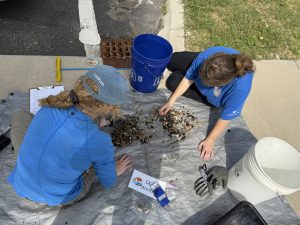
This experience was all about taking part in the small tasks that contribute to the bigger goal, which is the prevention of single use plastics and other litter from entering Aquatic Preserve waterways along Florida’s Gulf Coast.
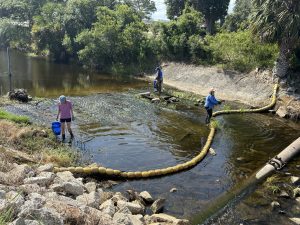
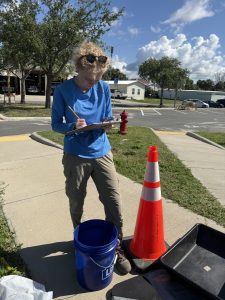
As the summer intern my primary responsibilities were the cleaning of our storm drain litter interception devices and collecting the necessary data from each site. Using a j-hook we start by removing the metal grates and our devices within the drain. The contents of these traps are emptied on a tarp and then the sorting begins. Step one is to separate layers of natural debris like soil, leaves and grass clippings, from the litter. The collected litter is grouped by material, such as paper, plastic, and glass. It’s then categorized further into specific items including food wrappers, bottle caps, toys, tobacco products, and fishing gear. To get a better understanding of what we are keeping out of our coastal waters we collect data (amounts and weights of litter found) that we can then share with the local government, residents and any interested parties. This information we gather is used in community outreach and education to help us work together on increasing awareness and hopefully reducing littering.
A Rewarding Experience
On day one, repeating this process at each cleanout site felt daunting. But as the weeks passed, I found the process to be rewarding and satisfying. This role has made me feel as if I am doing tangible good; I know that every piece of litter this device catches and I sort will now be properly disposed of. This quiet act of public service will make a difference.
Sorting through litter that is both accidentally lost and intentionally thrown out gives us an insight into the surrounding community. We would often zone our clean up locations. In suburban areas we tended to find a decrease in the number of mishandled litter. While in other areas of heavier traffic we found food packaging, beverage bottles, cigarette butts and so much more. Unfortunately, at each site our devices are the last thing stopping all these items from entering Florida’s coastal waters. This pattern shows that when people make an effort to keep their property clean a difference is made. If only we had the same respect for our shared community spaces. As a Floridian myself, there are few places I visit that have un-littered public areas. Projects like this are essential in preventing the pieces that slip through the cracks from entering our waterways.
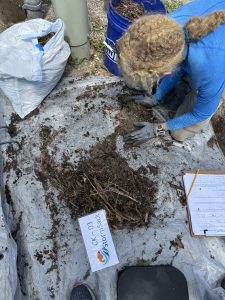
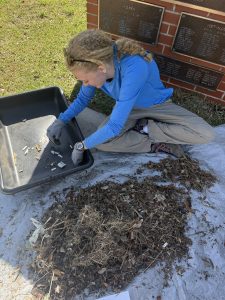
In a perfect world our litter trap devices would no longer need to exist. But for that to be the case people need to understand the waste they create and what happens even if it is disposed of properly. Through this role I have stepped back to look at my own consumption and waste habits. There are changes that can and should be made in my daily life and yours. We all have a responsibility to prevent the pollution of our environment. I hope to see this project spread to more communities. During one clean out we had a volunteer named John who really made an impression on me. He drove down early one morning to assist in a Cedar Key cleanout because it’s a town he enjoys fishing in. His volunteer work is a prime example of taking the time to give back to the areas you love. Be like John, do your part in protecting your local community, even if what you can give is small. Small actions will add up to big results.
While I cannot describe my role in this operation as glamorous, I can honestly say it feels important. Walking away with dirt deep under my nails feels like success.
Operation TRAP is supported by NOAA’s Marine Debris Program and in partnership with FDEP’s Aquatic Preserves, Florida Sea Grant, Pasco County, Keep Pasco Beautiful, and the City of Cedar Key.
 2
2