Introduction
Florida-Friendly LandscapingTM (FFL) promotes nine principles to protect water resources in designing and maintaining landscapes. The practices can be applied at scales ranging from individual yards to parks to communities. Landscapes designed around the FFL principles can satisfy a range of aesthetics, work well across sites inland and coastal, and suit properties large and small. The more examples we have of FFL, the better we can picture the possibilities it offers.
Ripple Stormwater Eco-Art Project
UF/IFAS Extension Martin County recognized the Ripple Stormwater Eco-Art project this year as a FFL Gold project in Martin County. The project was led by environmental artist Lucy Keshavarz, in partnership with the Martin County Community Redevelopment Agency (CRA) and the Public Works Department. Sunshine Land Design, Inc. led by project manager Judy Robinson, collaborated on the project and handled the landscape installation scope of this project from 2021-2022, while XGD Systems served as the primary contractor. Among the nine FFL principles, the Ripple Stormwater Eco-Art project highlights the FFL principles of “reduce stormwater runoff“, “attract wildlife“, “right plant, right place“, and “protect the waterfront“. Reducing stormwater runoff is vital to improving water quality for swimming, fishing, wildlife, and natural systems.
Water quality is impaired in our St. Lucie River and Estuary Basin, which stretches across Martin, St. Lucie, and Okeechobee counties. The basin flows into the Indian River Lagoon, carrying stormwater pollutants into the estuary. The St. Lucie River and Estuary Basin Management Action Plan (BMAP) calls for reductions in stormwater loading of 21-70%. The Ripple EcoArt Project emerged from a BMAP project to capture and treat stormwater discharge flowing from the Old Palm City neighborhood into the St. Lucie River. By engaging the community and external funding through the National Endowment for the Arts and the Florida Department of Environmental Protection, the project became a community centerpiece! Water that had contributed to residential flooding and water quality impairment is now a community asset.
Our Interconnected Watershed
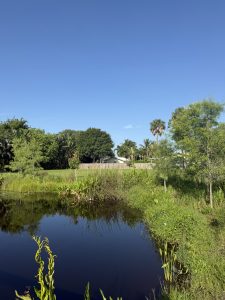
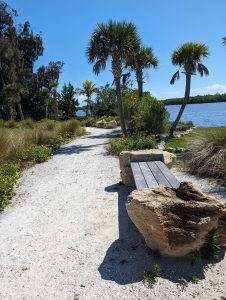
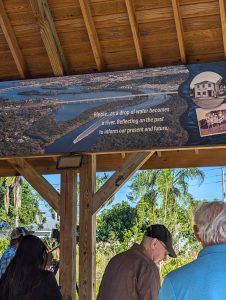
The Ripple Eco-Art project illustrates the interconnectedness of our watershed, from our neighborhood parcels, swales, and stormwater ponds to our natural waterways. The project elements of native plantings, nature-based artwork, public access, stormwater detention, and waterfront protection span four hydrologically-connected sites. The water flowing across the four sites supports native upland and wetland plantings, a neighborhood pond, and a waterside park with marsh grasses, shrubs and trees. The design team carefully chose plantings, based on each site’s characteristics (e.g., sunlight, soil moisture), available space to accommodate the plant when full-grown, ease of maintenance, and intended function (e.g. shoreline protection, shade for visitors, bird/butterfly habitat, etc.). Artwork at each site encourages public access, with shaded gazebos, educational signage, benches, and trails. On a recent visit, we were greeted by the calls of frogs and birds. Butterflies, including the rare atala butterfly, and other pollinators were found foraging among the flowering plants.
To hear from the artist about the design and community engagement process, check out her 2021 Water Ambassador webinar series presentation.
What do people have to say about their FFL properties?
After completing our review of the FFL checklist, Dr. Encomio and I asked the County and their current landscape maintenance contractor what they most appreciated about the project. The contractor, Kerner Environmental, wishes more of our area’s waterbodies included living shorelines, like those at Ripple sites 3 and 4. Living shorelines are those that use mangroves, marsh grasses, oyster reefs, and other natural materials to protect the shoreline and adjacent properties (Barry et al. 2023). Living shorelines also provide habitat for fish and wildlife, sequester carbon, and filter/uptake stormwater pollutants (Smyth et al. 2025). Even inland, living shorelines buffer the stormwater ponds they surround from direct inputs of grass clippings and stormwater pollutants. By reducing the flow of pollutants into stormwater ponds, living shorelines in turn lessen the pollutant load on downstream waterbodies.
We asked the County’s Horticultural Technician Michael Murphy, what aspect of the project he felt was most beneficial. For him, the public access to the project stood out. Seeing how the residents have made the sites a valued part of life in their neighborhood has made him look on other county stormwater management sites differently. Typically separate from neighborhood life, our County’s stormwater treatment areas offer an under-utilized quiet refuge for humans and wildlife alike.
The team designed Ripple as a natural landscape, planted mostly with native vegetation in a low-maintenance design. One of the Kerner Environmental staff noted that this project has broadened his perspective on what constitutes a beautiful landscape. He reflected that he now has an appreciation for the beauty of restored habitats as landscape features.
Sunshine Land Design Vice President Magen Fenton also expressed pride in the positive impact the project has had on the community. She would like to see more projects using native plants, low-maintenance landscape design, and effective stormwater management. Proper maintenance and community use and enjoyment of the project sites will make a lasting impact.
Be Recognized!
Contact your local UF/IFAS Extension office to learn more about the FFL principles and apply them in your yard or community. If you’re in Martin County, reach out to our UF/IFAS Extension Martin County FFL Yard Advisors at (772) 288-5654 or MCMasterGardenerFFL@yahoo.com, led by County Extension Director Jennifer Pelham. Our knowledgeable Master Gardener Volunteers will review the FFL recognition checklist with you on your property. Together, you will identify practices that would qualify for Gold or Silver status!
Seek or Become a FFL Certified Professional
Property owners seeking to incorporate FFL can find certified professionals in the FFL Certified Professional (FFLCP) Directory. FFLCPs earn their qualification by completing six hours of instruction, participating in a field module, and passing the certification exam.
Landscape professionals, if you are seeking FFL certification, contact your local Extension office. In Martin County, contact Yvette Goodiel, 772-419-6962 or goodiel@ufl.edu. You can also learn more in the blog, “Landscape professionals: Add Florida-Friendly to your resume.”
 6
6