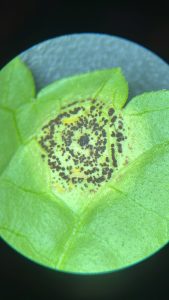
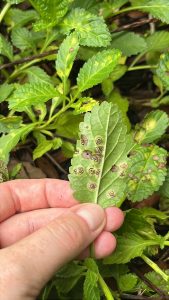
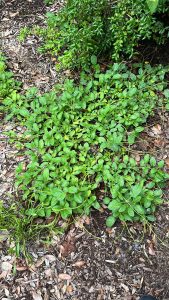
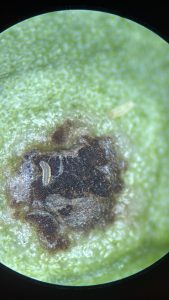
Sometimes nature can be quite beautiful. This is rust (Puccinia urbaniana) infecting native porterweed (Stachytarpheta jamaicensis). If you look closely, you can even see tiny fly larvae feeding on the spores of the rust fungus.
Rust is a type of fungus that infects the leaves and stems of plants. Each rust species tends to infect only a specific host plant species. Some rusts can be economically damaging—for example, sugarcane rust (Puccinia melanocephala) can significantly impact Florida’s sugarcane industry—but most are not. Many are simply fascinating to observe and admire.
Rust-Fungus Life-Cycle
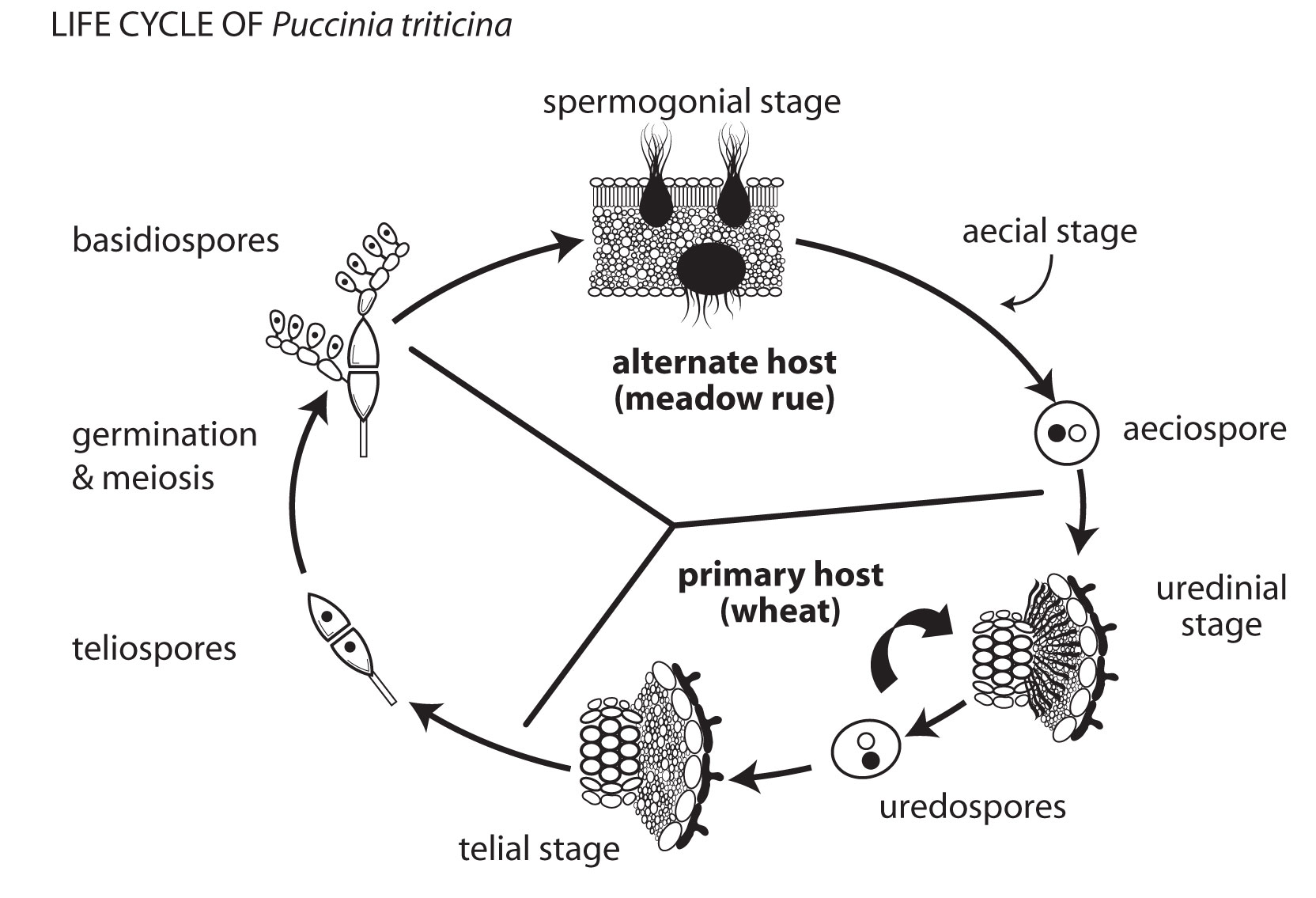
Rust fungi often have complex life-cycles. Some key points:
-
Many rust species produce multiple spore types (sometimes up to five) over their life-span and may involve alternate host plants (two different plant species) to complete the cycle.
-
Typical spore types you might encounter include:
-
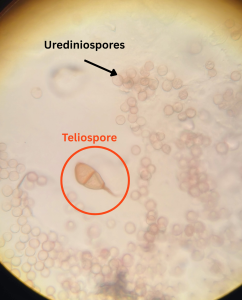
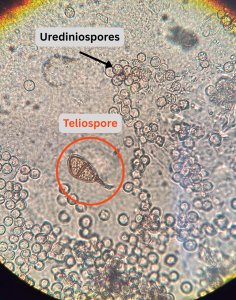
Urediniospores (often orange/yellow, repeating, spreading the infection during the growing season)
-
Teliospores (darker, thick-walled, often the overwintering or survival stage)
-
-
Rust is an obligate parasite, meaning it needs living tissue of its host to survive and reproduce.
-
When conditions are favorable (moist leaf surfaces, right temperature range, host plant present), spores germinate, penetrate the host’s tissues, and generate new pustules. These pustules release spores that spread by wind, water splash, or other means.
-
Because of high host specificity, a rust species like Puccinia urbaniana infecting porterweed typically won’t “jump” to unrelated plant species — you’re seeing a specialized interaction rather than a generalist pathogen outbreak.
In this example, I found two spore types on the porterweed: the larger teliospores and the smaller urediniospores. Both can go on to infect new porterweed plants — but remember, rusts are highly specialized and don’t typically jump to unrelated plant species.
A Fungus Feast
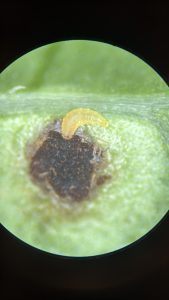
If you look closely at this rust through a hand lens or microscope, you might notice something moving — small midge fly larvae feeding on the rust spores themselves. Several species of gall midges (family Cecidomyiidae) have larvae that graze on fungal spores, including those of rust fungi.
It’s a reminder that even a single infected leaf can host a miniature ecosystem: the plant, the fungus, and an insect interacting in balance.
Side note from the author: Most rust fungi are a brilliant orange color (Google “frangipani rust” for a classic example), which also happens to be my favorite color in the whole wide world. In this case, the porterweed rust is darker, so you can’t quite see it — but sometimes the fly larvae feeding on it actually turn bright orange themselves, matching the fungus they’re eating.
Final Thought
Next time you see a fungus on a leaf, take a moment to ask yourself:
Is this actually harming my plant, or is it just another layer of the complex ecosystem around us?
If it is causing damage, reach out to your local UF/IFAS Extension office—we can help you find ways to manage the problem with minimal off-target effects on other organisms.
And if it’s not harming anything, take a step back (or a step closer—with a microscope, preferably) and appreciate the beauty in these tiny interactions.
See the rust and larvae in action on Instagram.
Or watch it on YouTube:
https://youtube.com/shorts/yV4rGLcoRq8?feature=share
Sources
Harmon, P. F., Harmon, C. L., Palmateer, A. J., & Brown, S. H. (n.d.). Rusts on ornamentals in Florida. University of Florida IFAS Extension. https://edis.ifas.ufl.edu/publication/PP172
University of Florida IFAS Extension. (n.d.). Blue porterweed (Stachytarpheta jamaicensis). https://edis.ifas.ufl.edu/publication/FP559
New Mexico State University Extension. (2017). Understanding plant rust diseases. NMSU Cooperative Extension Service Publication A-415. https://pubs.nmsu.edu/_a/A415/
 1
1