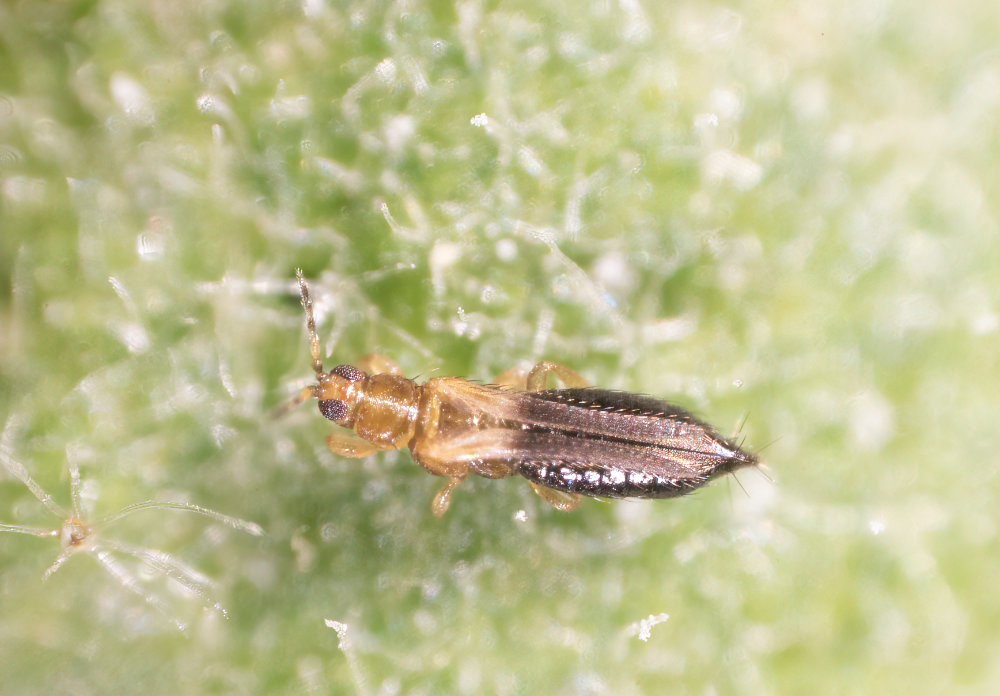
Thrips parvispinus: What We’re Learning About Management in Ornamentals
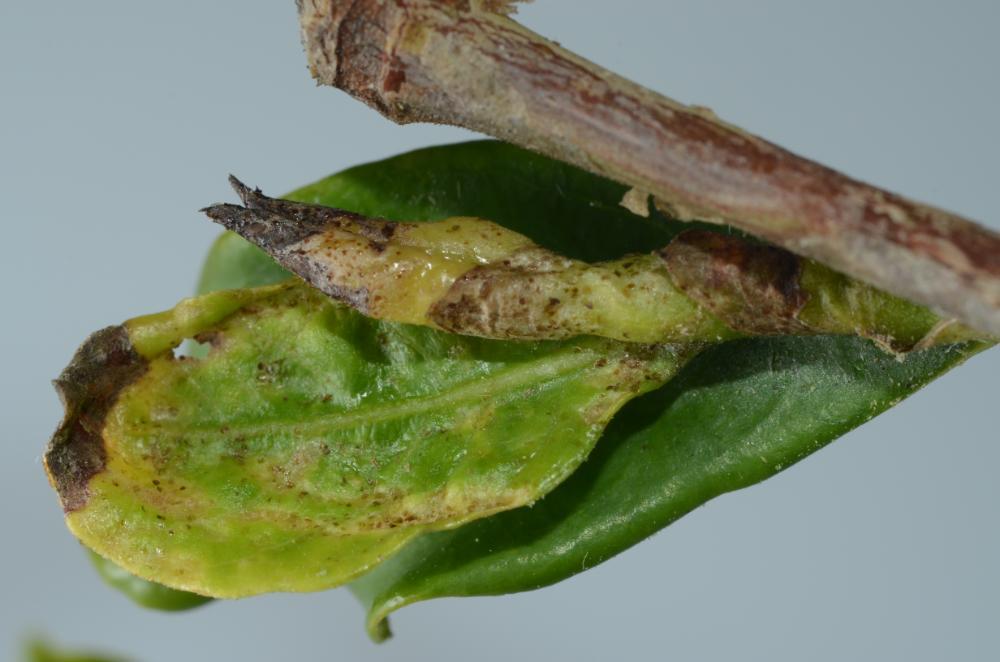
A relatively new invasive pest in Florida, Thrips parvispinus, has quickly gained attention due to its ability to damage a wide range of ornamental and vegetable crops. Managing Thrips parvispinus can be challenging because this tiny insect causes leaf scarring, flower drop, and curling, which severely impacts plant quality and marketability. To better understand Thrips parvispinus management, a recent study at the UF/IFAS Tropical Research and Education Center (TREC) evaluated how different insecticides performed against Thrips parvispinus in greenhouse conditions. I found this paper to be interesting and informative, and I thought I would share some highlights with those of you less inclined to read 12 pages of riveting academic literature. This study builds on earlier laboratory screening in the same lab, where researchers tested 32 products for efficacy. The researchers selected the products evaluated here from the most promising candidates in that initial work (Ataide et al., 2024).
Background & Global Spread
But first, for those of you unfamiliar with Thrips parvispinus and how we got to where we are today, let’s go into a little background. Thrips parvispinus is a highly invasive pest that has spread across more than 30 countries over the past three decades, largely due to the international trade of ornamental plants. Native to South and Southeast Asia, it has quickly established itself across three continents. In Florida, Thrips parvispinus was first detected in 2020 on greenhouse ornamentals such as Hoya and Anthurium, then found on gardenia in residential landscapes in 2021, and on peppers (Capsicum) in open field crops by 2022. Genetic studies reveal that a single haplotype (Hap1) is responsible for most global invasions, including those in Florida, suggesting that Florida’s population likely originated from the same source population driving global spread (Ahmed et al., 2024).
Different Plants, Different Outcomes:
One of the most interesting takeaways is that the success of treatments varied depending on the plant. The researchers tested nine products on mandevilla and gardenia, two major hosts of Thrips Parvispinus, and found differences between the responses.
On mandevilla, several conventional insecticides (chlorfenapyr, spinosad, and abamectin) led to significant thrips mortality. Chlorfenapyr stood out, causing up to 80–100% mortality.
In contrast, on gardenia, none of the treatments produced strong control.
This suggests that the plant itself influences how well these products work. The researchers hypothesized that factors like leaf surface characteristics, plant chemistry, and how easily thrips establish all play a role. For the ornamental producers growing a mix of hosts (which is most ornamental producers), this is something to keep in mind – Thrips parvispinus management may look different crop to crop.
Where Thrips Are on the Plant:
The study also noted that larvae concentrated toward the top of the mandevilla canopy, while adults were distributed more randomly across the plant. This means that scouting efforts should include a close look at the upper growth, where larvae are most likely to be feeding and causing damage. Better spray coverage on these upper leaves could also improve control results. On gardenia, thrips weren’t strongly concentrated in any part of the canopy, unlike mandevilla. This is yet another area where hosts differ.
Conventional Insecticides:
Here’s a quick overview of the conventional products that performed best on mandevilla:
- Chlorfenapyr (IRAC 13): Provided strong residual and contact control.
Important Use Note: Chlorfenapyr is approved for greenhouse use only, not for outdoor nursery or landscape applications. Make sure to check the label and confirm your use site before including it in your rotation plan. - Spinosad (IRAC 5): Effective but variable in mortality rates (10–50%). Widely used, though resistance is a concern over time.
- Abamectin (IRAC 6): Also effective but degrades quickly in sunlight and can harm beneficial insects. Best used as part of a rotation.
For all these products, rotating modes of action is essential to slow resistance.
Biorational Options:
Two biorational products, mineral oil and sesame oil, showed promise, especially when used prophylactically (before infestation). These oils work mostly by smothering or disrupting thrips, and while they didn’t produce high mortality on their own, they can be a useful part of an integrated approach.
A key advantage is their lower impact on beneficial insects. However, they do need careful timing and application to avoid phytotoxicity and maximize contact with the pest.
Dipping Cuttings:
The researchers highlighted dip treatments as a way to clean plant cuttings before planting or shipping. Some biorational products, such as mineral oil or Beauveria bassiana-based products, can effectively dislodge and kill larvae on infested cuttings without harming the plant. While dipping isn’t a standalone strategy, it can be a valuable step to prevent spreading thrips between crops or into new production areas.
-
Suffoil-X (mineral oil) and BotaniGard-ES (Beauveria bassiana) dislodged 80–100% of second-instar larvae.
-
No phytotoxicity was observed on mandevilla or gardenia with Suffoil-X, but BotaniGard-ES caused phytotoxicity on beans.
-
Eggs are unaffected because they are embedded in leaf tissue, so dips are most useful for mobile stages (larvae and adults).
IPM is Key:
No single product is a silver bullet. This pest reproduces quickly, moves easily between plants, and has shown the potential to develop resistance. An effective management plan should combine:
- Regular monitoring and early detection
- Rotation among insecticides with different modes of action
- Careful timing and coverage of sprays
- Integration of biorational products and, where feasible, biological control
A thoughtful IPM program is the foundation of successful Thrips parvispinus management. Remember, what works in greenhouse tests may perform differently in your specific conditions, so consider small-scale trials before widespread use. As always, this information is evolving. UF/IFAS Extension and research partners are working to evaluate additional options and update recommendations as new data becomes available.
If you’d like help sorting through options for your operation, UF/IFAS Extension is here to help and connect you with the right resources.
More Resources on Thrips parvispinus Management:
References:
-
Ahmed, M. Z., Roberts, J. W., Soto-Adames, F. N., McKenzie, C. L., & Osborne, L. S. (2024). Global invasion of Thrips parvispinus (Karny) (Thysanoptera: Thripidae) across three continents associated with its one haplotype. Journal of Applied Entomology, 149, 237–247. https://doi.org/10.1111/jen.13376
-
Ataide, L.M.S., Vargas, G., Velazquez-Hernandez, Y., Reyes-Arauz, I., Villamarin, P., Canon, M.A., Yang, X., Riley, S.S., Revynthi, A.M. (2024a). Efficacy of Conventional and Biorational Insecticides against the Invasive Pest Thrips parvispinus (Thysanoptera: Thripidae) under Containment Conditions. Insects, 15(1), 48. https://doi.org/10.3390/insects15010048
-
Ataide, L.M.S., Velazquez-Hernandez, Y., Reyes-Arauz, I., Villamarin, P., Canon, M.A., Revynthi, A.M. (2024b). Potential of dip treatments to disinfest cuttings of the invasive Thrips parvispinus (Thysanoptera: Thripidae). Journal of Economic Entomology, 118(2), 780–786. https://doi.org/10.1093/jee/toae265
-
Ataide, L.M.S., et al. (2025). Greenhouse evaluation of conventional and biorational insecticides for managing the invasive Thrips parvispinus. Agriculture, 15(13), 1451. https://doi.org/10.3390/agriculture15131451
- Banner Image Credit: Lyle Buss, UF
 6
6