Mangroves are among the most abundant and important plant species growing along Florida’s extensive coastline and associated estuaries. The three mangrove species found in Florida are the red (Rhizophora mangle), black (Avicennia germinans) and white (Laguncularia racemosa) mangroves. The red mangrove is easily identified by its tangles, which are reddish “prop roots” that arch into the water from the trunk. The black mangrove is characterized by numerous fingerlike-projections, called pneumatophores, that rise from the soil around the base of the tree. White mangrove differs from red and black mangroves by having no prominent aerial roots. Its leaves are typically light green and have a slight notch at the tip.
Red mangroves extend along Florida’s coastlines from Levy County on the Gulf and from St. Johns on the Atlantic, south through the Florida Keys. They are salt-tolerant, small-to-medium sized trees restricted to coastal areas. They are vital for coastal protection, habitat creation and water quality improvement. In addition, they provide abundant detrital material that is the foundation for an estuarine food chain that directly benefits both commercial and sport fisheries.
Mangroves are affected by few diseases. Mangrove CNP was identified in 2024. It is a combination of three fungal pathogens: Curvularia, Neopestalotiopsis and Pestalotiopsis. These pathogens are normally benign in healthy mangroves. It is speculated that aggressive and persistent trimmings and environmental stress can induce Mangrove CNP in all three mangrove species.
A long-standing fungal pathogen, Neonectria rugulosa, formerly known as Cylindrocarpon rugulosum, has been associated with red mangroves in Florida. The disease is not an important cause of mortality statewide, even though nearly 100% of the trees have galls in some localized areas.
SYMPTOMS AND INFECTION BIOLOGY
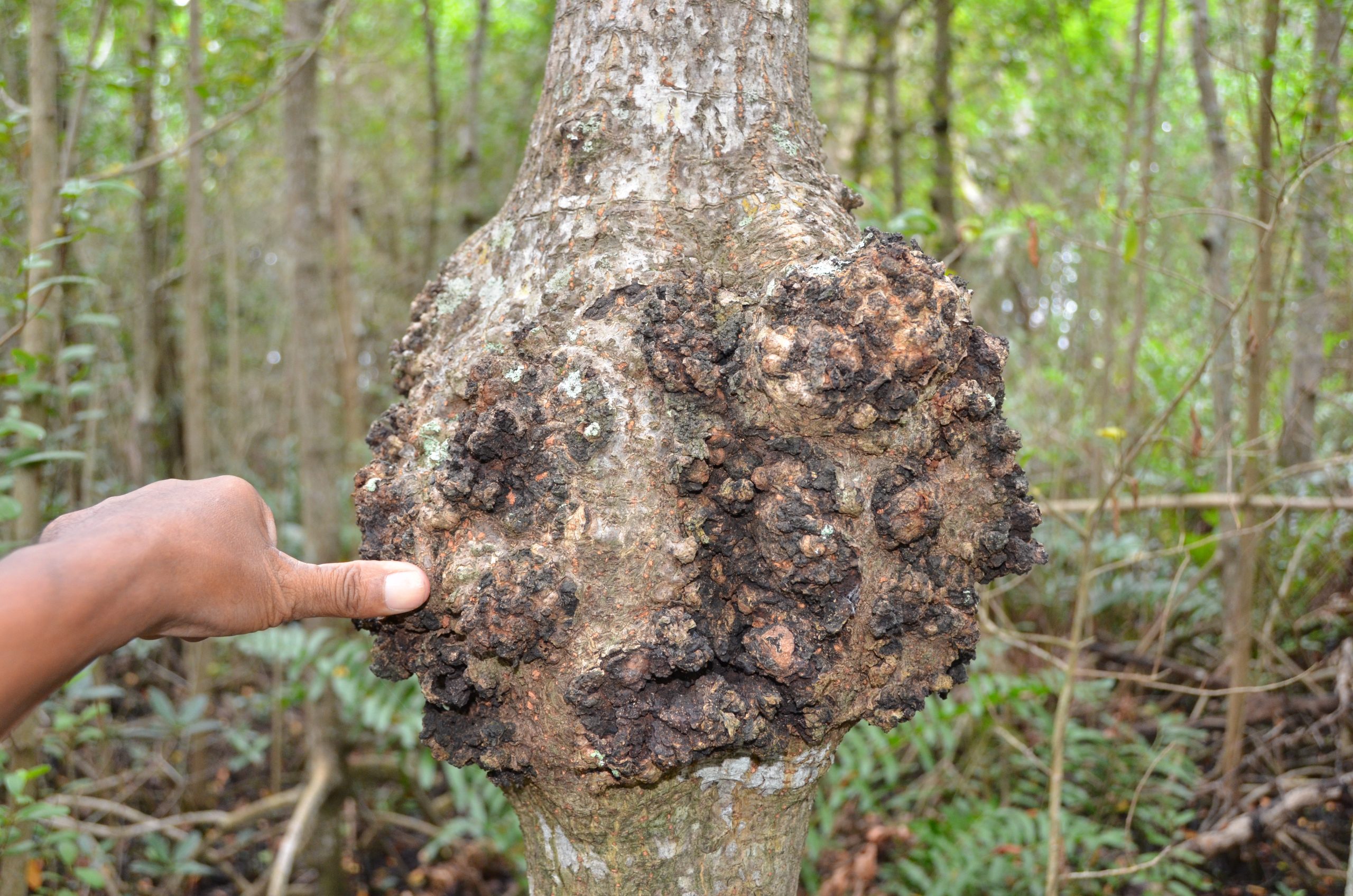
Galls on the bark of trunks, branches and prop roots are characteristically globose to irregular shaped, darkened and rough, especially with age (Fig. 1). Large galls are commonly up to eight inches in diameter and just as long. Most galls occupy less than 50% of the branch circumference. Nearby galls often merge to form galls up to 20 inches long.
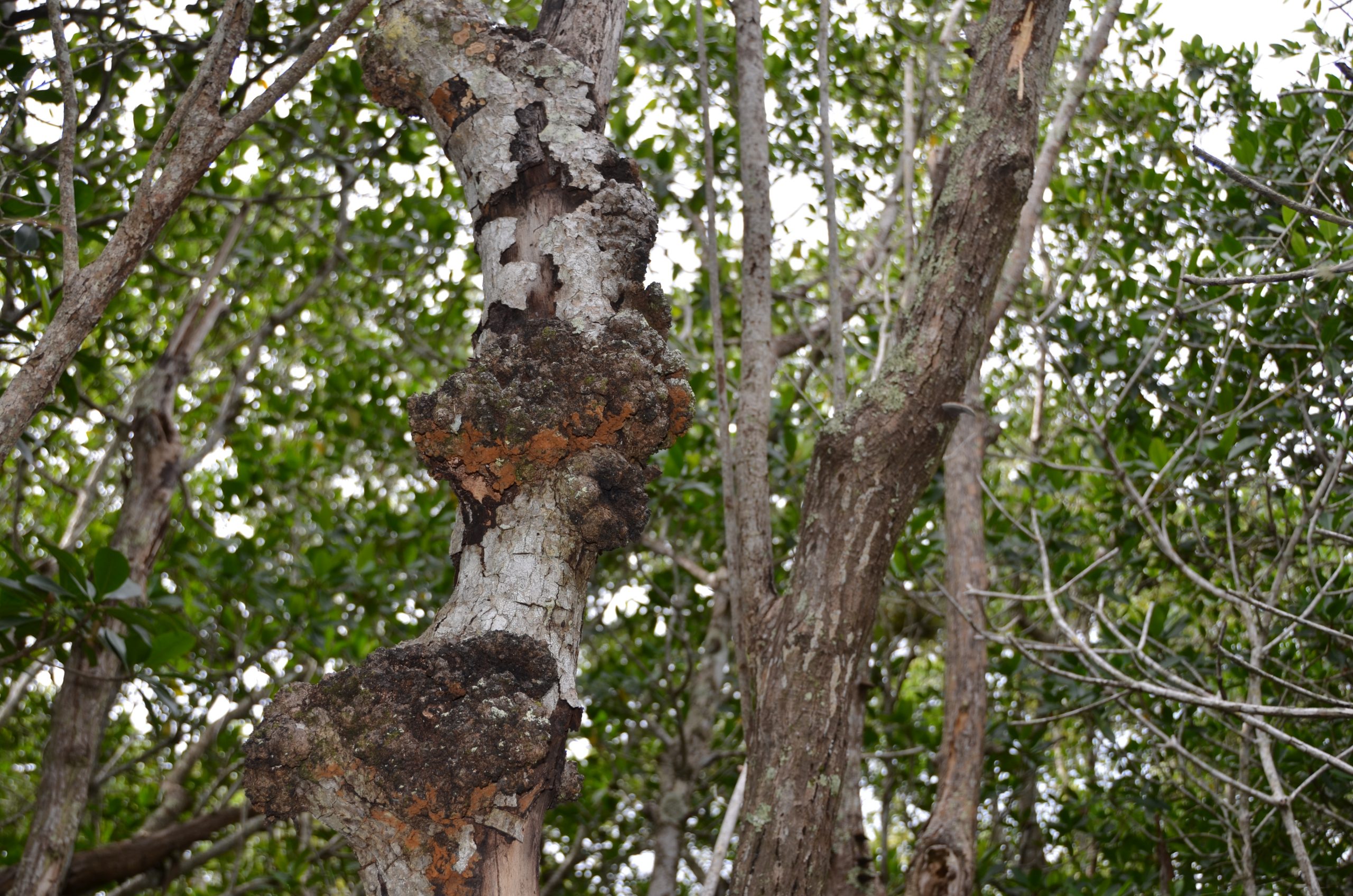
Infection apparently occurs when the pathogen enters the host through the lenticels in the bark. The pathogen rarely penetrates the wood, but if it does, the result is a dry-rot (Fig. 2). Death of the host is gradual and occurs when cracked bark dissociate and sheds from the wood sometimes along the entire length of the trunk (Fig. 3).

SURVEY OF AN ECOLOGICAL PRESERVE
Neonectira rugulosa was identified by the Florida Department of Agriculture and Consumer Services (FDACS) Division of Plant Industry as the galls on the red mangroves at the Four Mile Cove Ecological Preserve in Cape Coral. The ecological preserve encompasses 365 acres, a significant portion of which is taken up by mangroves. In 2013, the predominant mangrove species was red mangrove, followed by a significant number of white mangroves mixing freely with the former. Only a few black mangroves were observed. Almost all the red mangroves had numerous galls caused by Neonectria rugulosa.
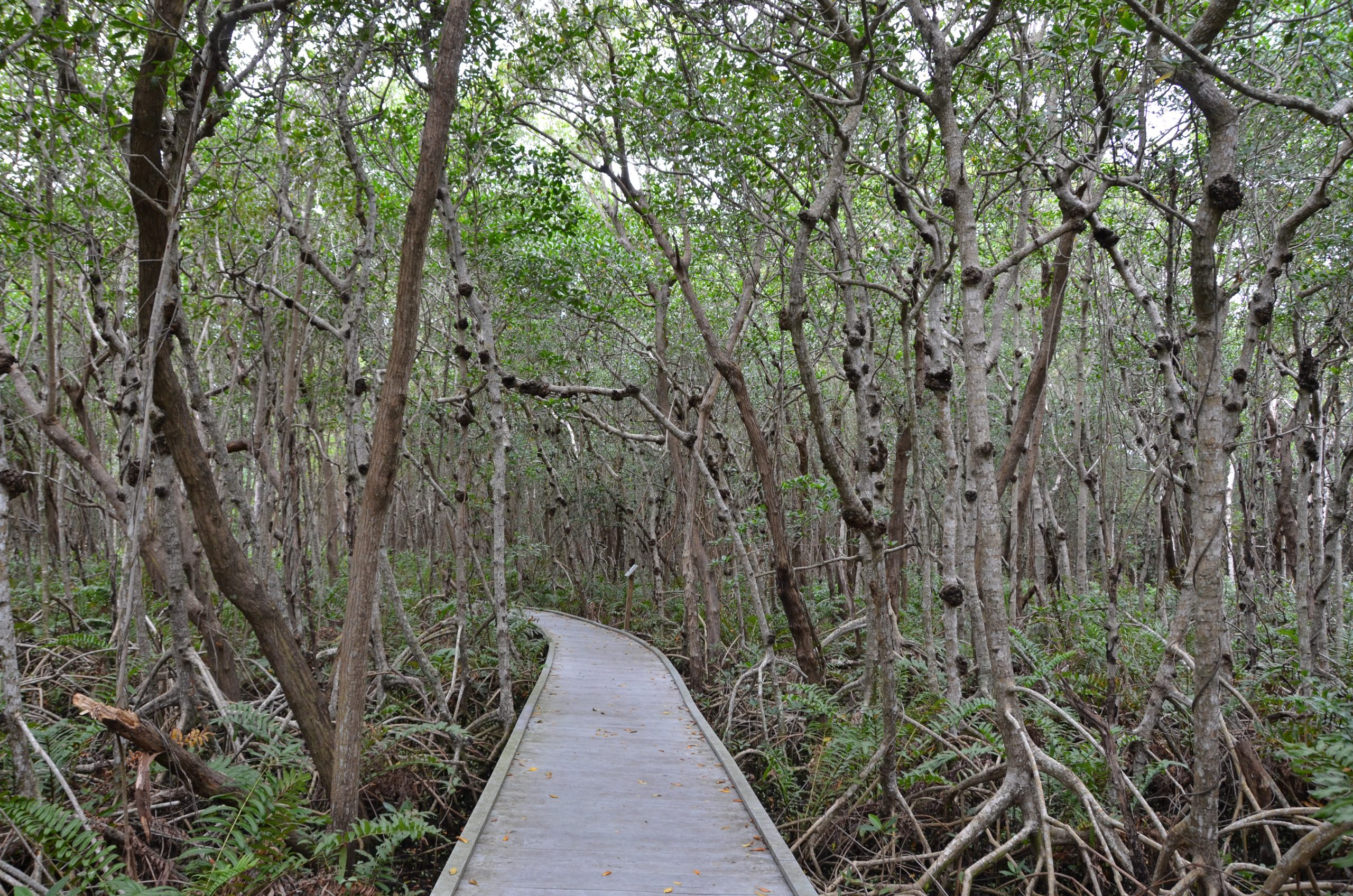
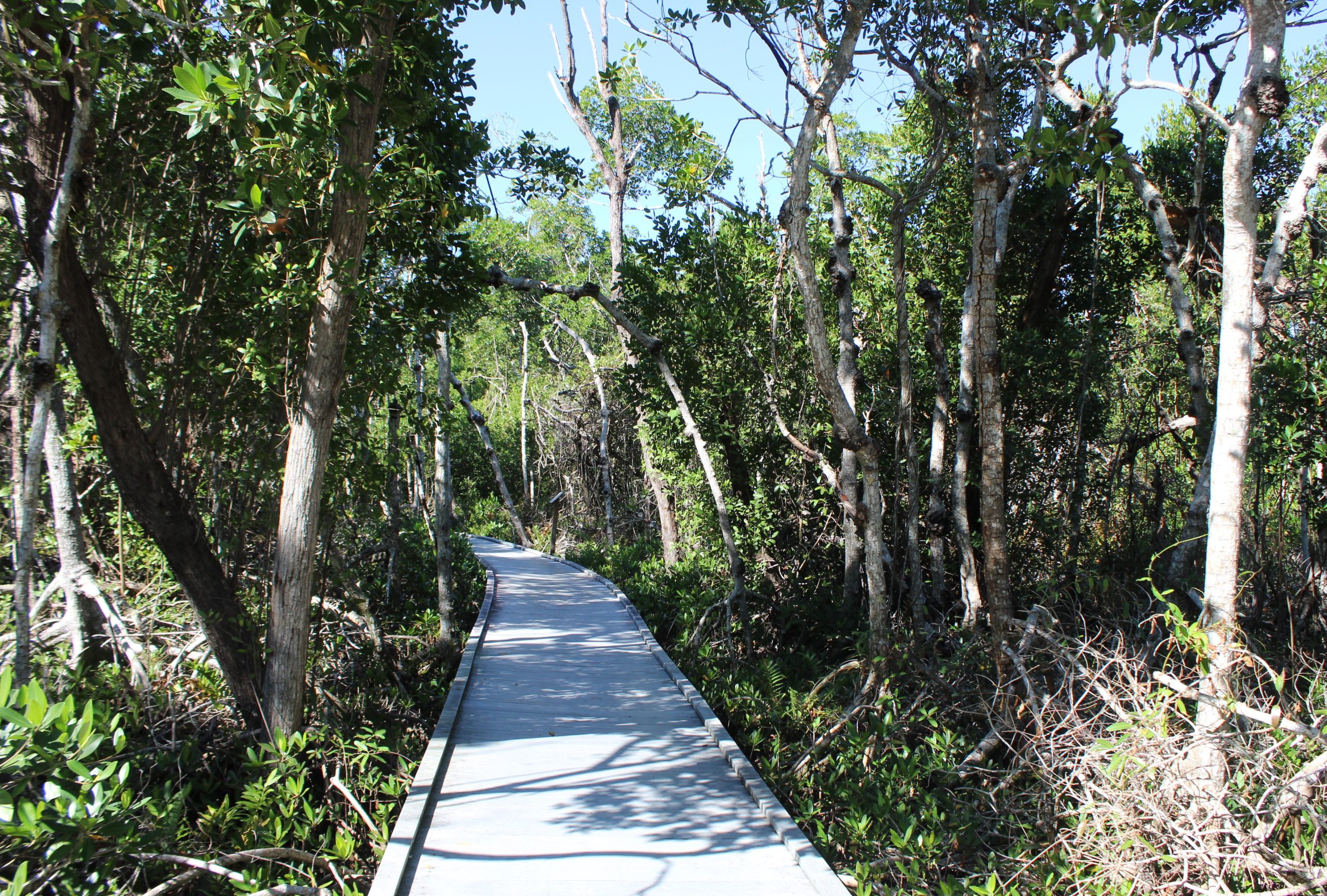
A few casual observations of Neonectira rugulosa were made over a period of 13 years. The initial observation occurred in December 2013 (Fig. 4). The last observation was made in November 2025 (Fig. 5). By the time of the last observation, the numbers of mature red mangroves had noticeably decreased, although still the dominant species. They were replaced by an abundance of red mangrove saplings and a growing number of white mangroves. The population of black mangroves remained few in numbers. The cause of the decline of older red mangroves is attributed to the presence of Neonectria rugulosa. All dead red mangroves observed were populated by the pathogen.
The report from FDACS states that the pathogen is known to attack trees that are in decline from numerous sources. In the last 25 years at least four major hurricanes have made landfall in southwest Florida and others have struck nearby. Damage from wind and surges originating in the Gulf may have contributed to the long-term stress of the mangroves.
Interestingly, the sign along the boardwalk (Figs. 4 and 5) theorized the cause of gall formation presumably before Neonectria rugulosa was identified as the causal agent.
“The large round growths you see on some of the mangrove trees are called burls. It is commonly found in the form of a rounded outgrowth on a tree trunk or branch that is filled with small knots from dormant buds. They do no harm to the tree and slowly grow larger until the tree dies of natural causes. An injury, as well as insects or fungus, initially causes the burl to start growing. Insect infestation and certain types of mold infestation are the common causes of this condition.”
REFRENCES
1. Barnard, E. L., and T. E. Freeman. 1982. Cylindrocarpon galls of red mangrove. Plant Pathology Circular No. 235. Florida Department of Agriculture and Consumer Services, Division of Plant Industry. https://ccmedia.fdacs.gov/content/download/4630/file/cylindroncarpon_galls_on_red_mangrove.pdf
2. Vinson, A. (2024, September 3). New Fungal Disease in Mangroves? UF/IFAS blogs. https://blogs.ifas.ufl.edu/hillsboroughco/2024/09/03/new-fungal-disease-in-mangroves/
 3
3