The Unexpected Pine Decline
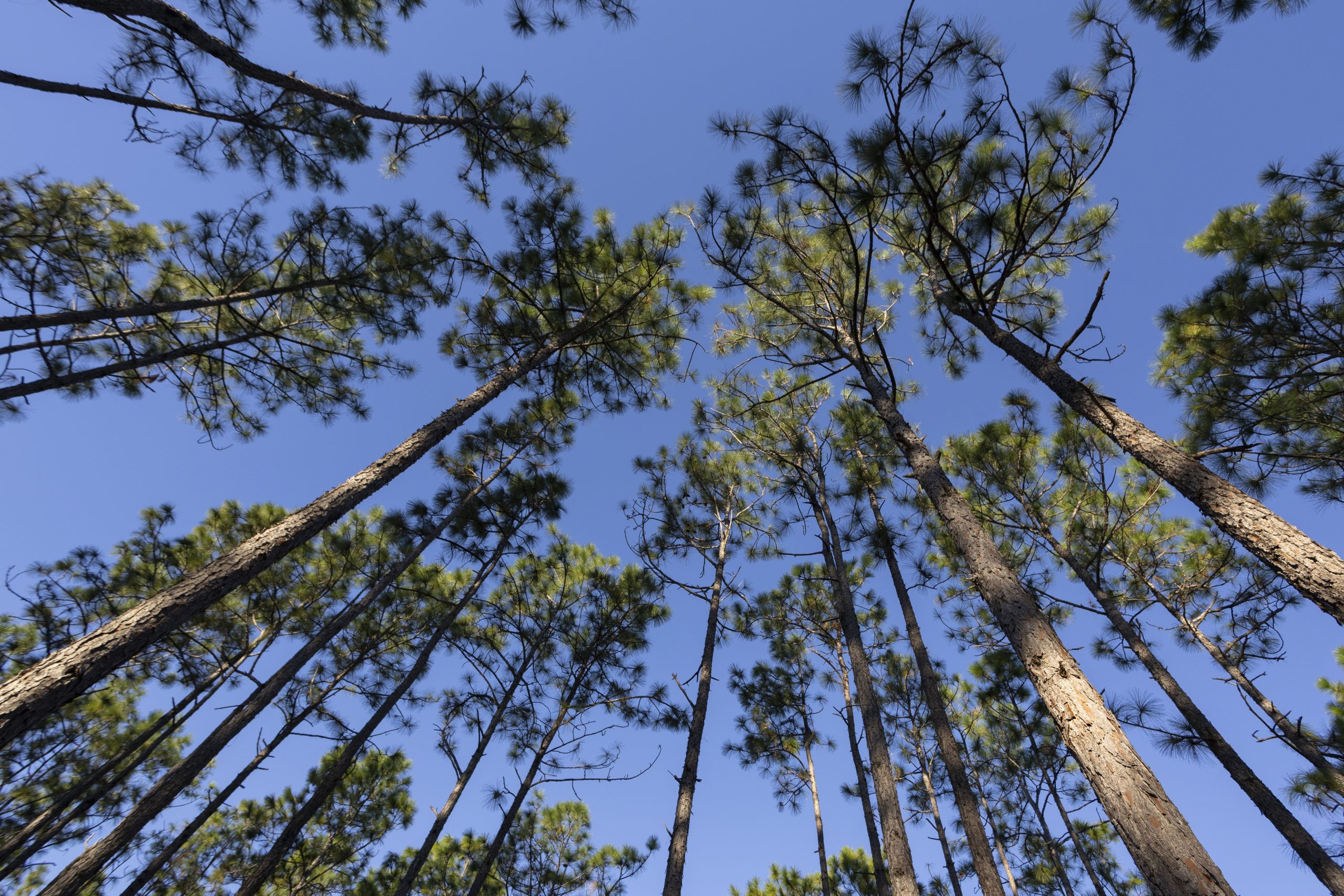
While most of us have moved on from the 2024 hurricane season, many of our trees are only now beginning to reveal the true extent of the damage they endured. Wind can shake trees violently, twisting and breaking their internal vascular systems. Trees shorn of leaves must regrow using stored energy, and roots, also stressed, may be wounded and vulnerable to fungal infections. After a hot, dry summer and with winter dormancy approaching, carbohydrate reserves are depleted. The trees are tired, and some are sick.
Pines, in particular, can be deceptive when injured. One day, their canopy may appear fully green and healthy; the next, it can turn dry and brown seemingly overnight. In these moments, it’s common for people to assume that pine beetles are to blame.
Barking Beetles?
While native bark beetles—such as black turpentine beetles and Ips engraver beetles—are attracted to the stress chemicals released by injured pines and may infest them, they are not the primary cause of the tree’s decline. These beetles are drawn to trees that are already weakened and can contribute to their demise, but they are not the ultimate culprit.
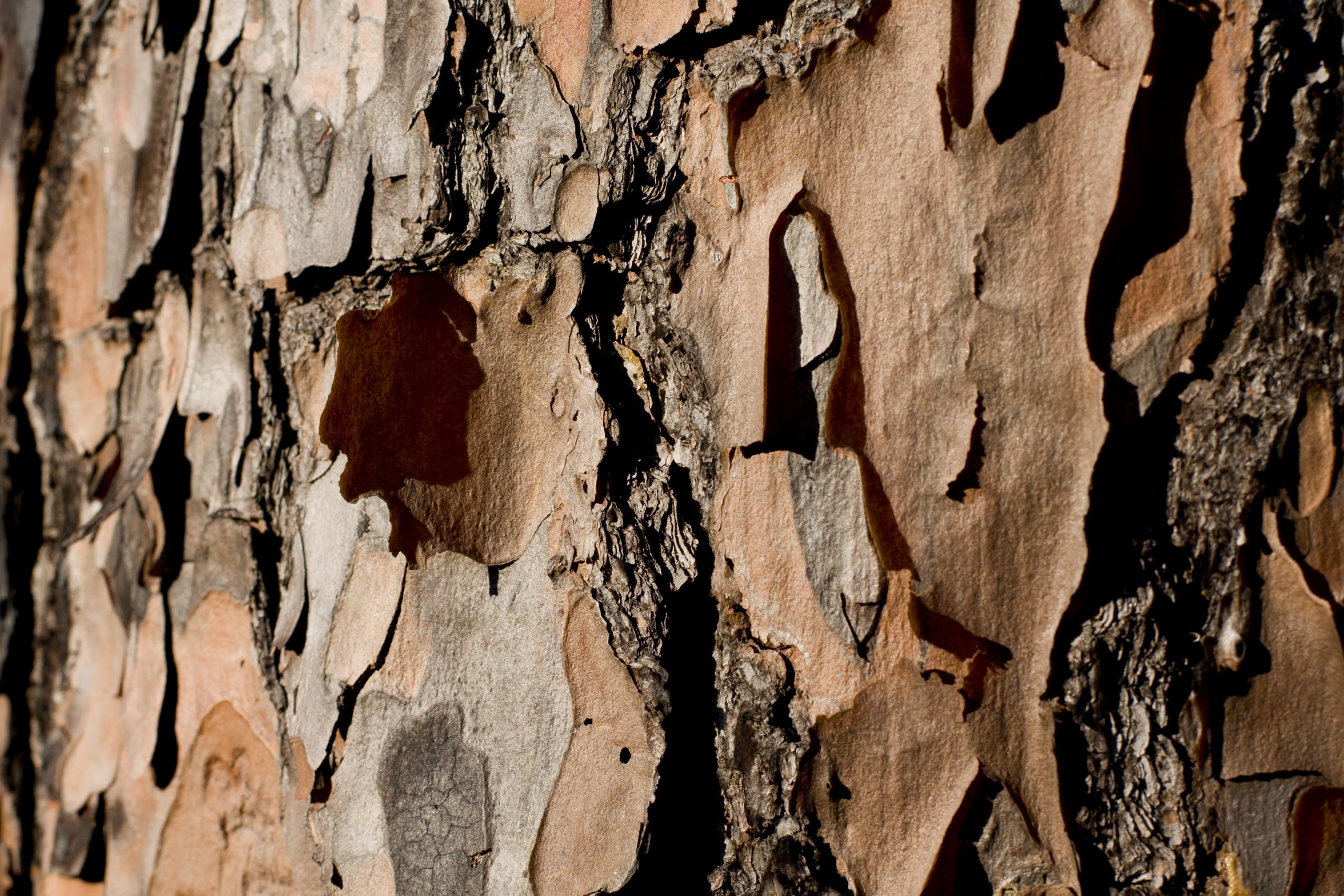
Pine bark beetles play an important role in forest ecosystems, breaking down and facilitating the fungal decay of dead pines. In Southwest Florida, in the year following a hurricane, they can become problematic for stressed pines in urban landscapes.
What to Watch For:
Much like the dwarves of Moria, sometimes these burrowing beetles run into something unexpected, while delving greedily into the phloem, they encounter resin ducts. These resin ducts contain pressurized resins that, when ruptured, push resin and occasionally beetles onto the bark in pitch tubes. Look also for reddish-brown boring dust, needle discoloration (green to yellow to brown), and shot-hole exit wounds. These signs often indicate that bark beetles have begun feeding and breeding beneath the bark, disrupting the tree’s vascular system and hastening its decline.
Which Beetle?
Florida hosts several bark beetle species, each with unique behaviors and ecological roles. Among them, the Ips engraver beetles—Ips calligraphus, I. grandicollis, and I. avulsus—primarily target
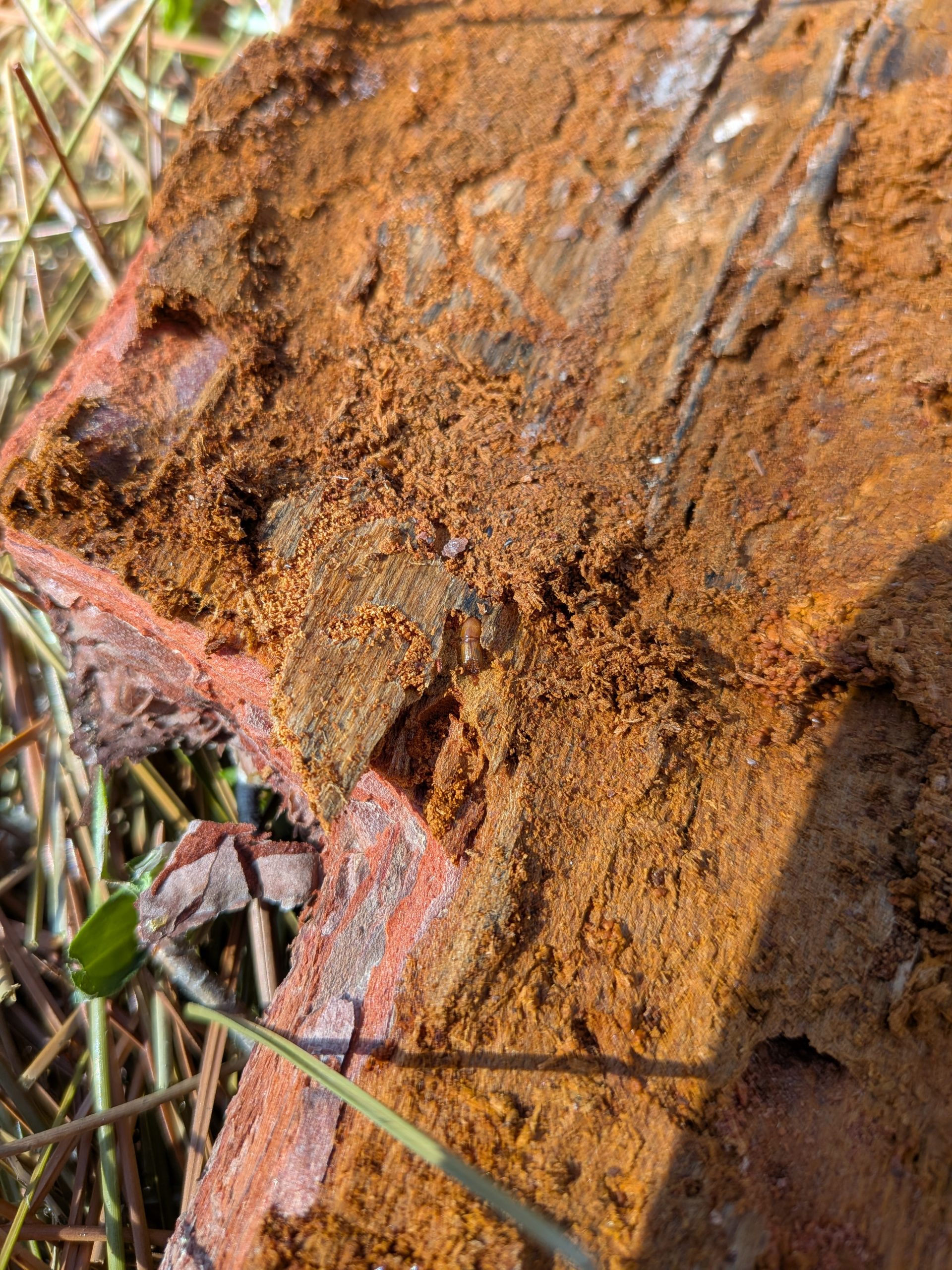
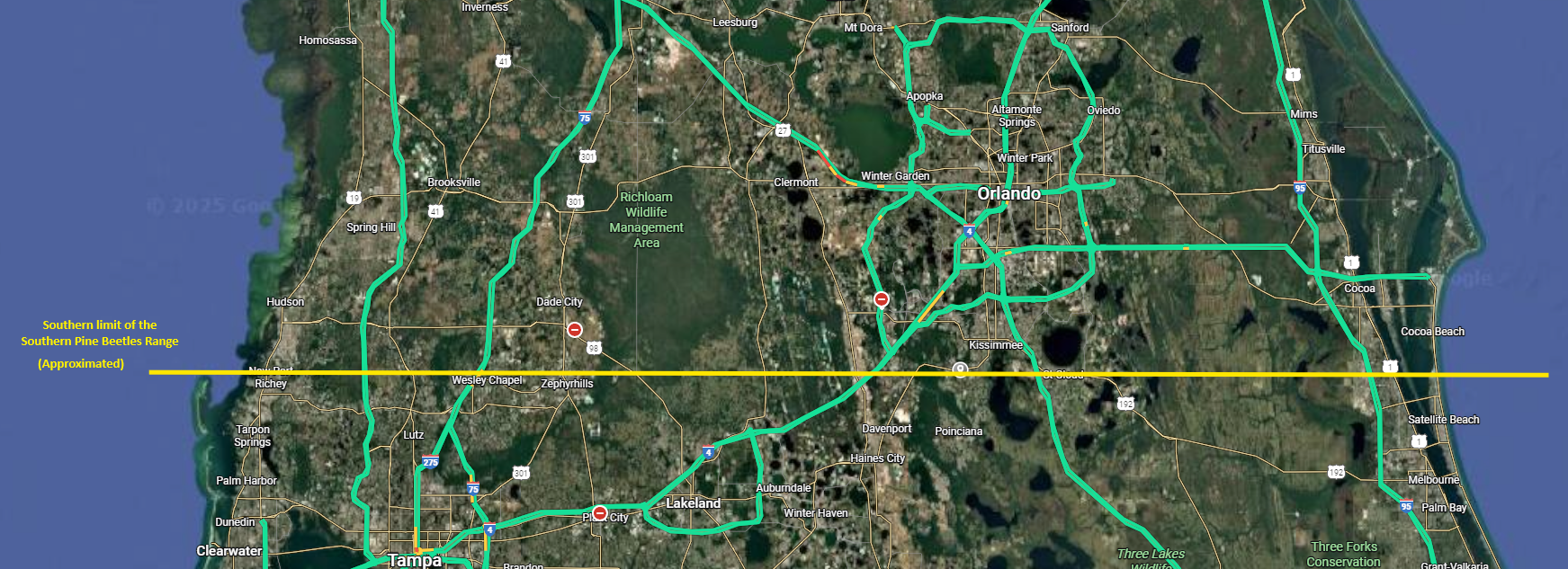
stressed or dying pines, colonizing various parts of the trunk from the base to the crown. The black turpentine beetle (BTB), Florida’s largest bark beetle, typically attacks near the base of trees and may also infest freshly cut stumps. In contrast, the southern pine beetle (SPB) is far more aggressive, capable of mass-attacking healthy trees during outbreaks. However, SPB is not found south of Osceola County due to its affinity for Loblolly pines.
What to Do:
If you have declining or dead pines in your landscape, consider leaving them as snags; standing dead trees that provide essential habitat for beneficial insects, birds, and other wildlife. While safety should always come first, especially near structures or trails, snags play a vital role in supporting biodiversity and maintaining ecological balance.
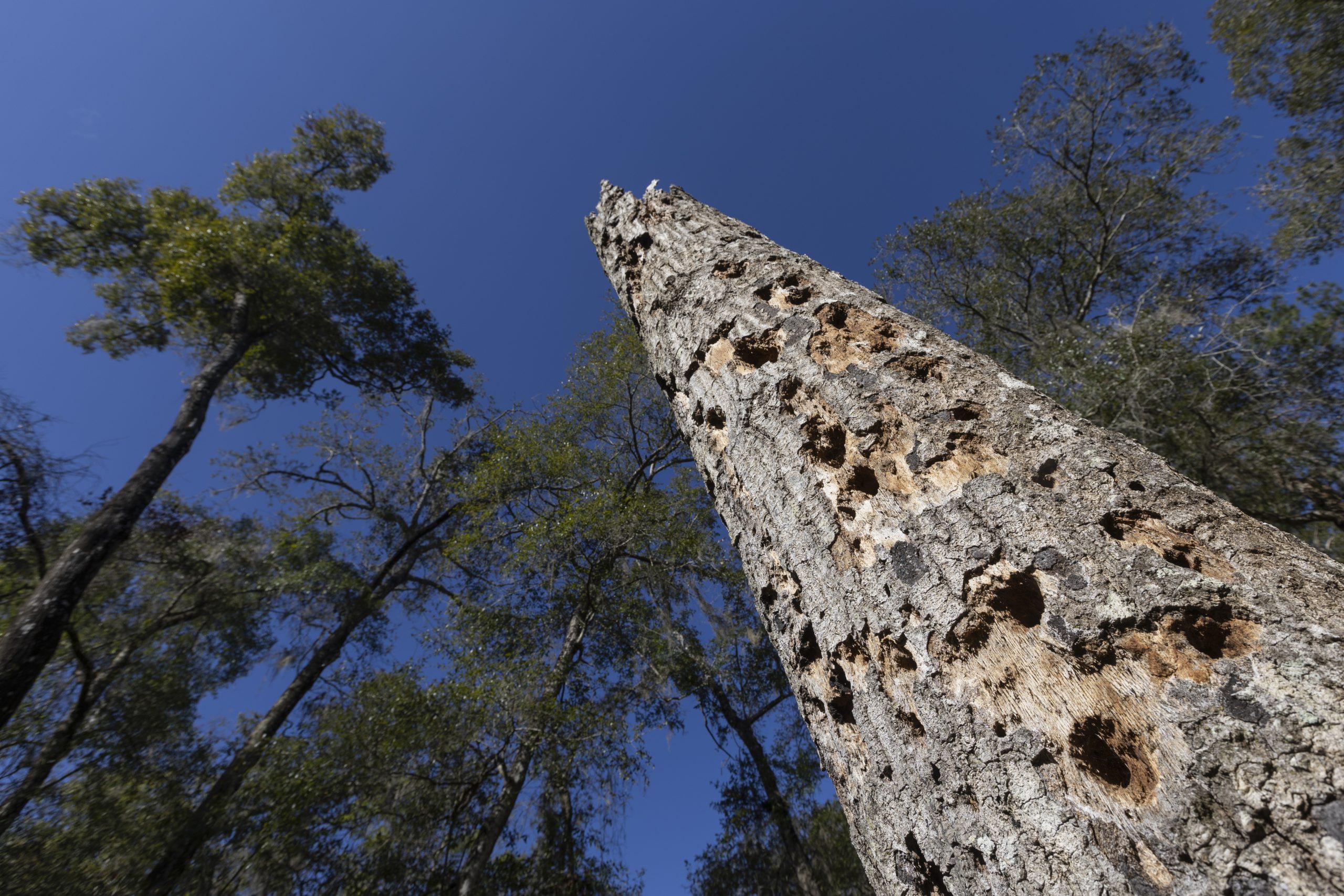
They offer shelter and food sources for insect predators, cavity-nesting birds, and decomposers. If a standing snag isn’t an option, retaining the trunk on site after it has been taken down provides similar ecological benefits.
In some cases, trees that are still early in their decline and hold historical, aesthetic, or economic value may be candidates for insecticide treatment. For guidance on appropriate treatment options for prized pines, reach out to a certified arborist or your local county Extension office.
 4
4