Having the right garden tool is important but keeping them in good condition is just as important. Garden tools often get used hard and put away dirty or wet, which causes rust and damage. With a little maintenance, your tools can work well for many years—even old tools can be revived. If you didn’t clean them at the end of last season, clean them now, oil them, and sharpen the blades if needed.
Proper Tool Storage
The best advice is simple: don’t leave your tools outside. Moisture from rain, dew, or wet grass can cause rust. Storing tools indoors also protects them from being stolen.
Keep tools off the ground so they don’t sit in moisture from the floor. Use:
- Hanging racks for long-handled tools
- Pegboards for smaller tools
A pegboard also helps you stay organized and notice if a tool is missing.
Clean and Dry Your Tools
Most garden tools touch dirt and water, so keeping them clean and dry is the first step to good maintenance.
- Rinse soil off shovels, rakes, and trowels with a strong spray from a hose. Scrub if dirt is stuck.
- Dry the tools completely before storing them.
- Wipe down small tools like pruners to remove moisture and sticky sap. Turpentine can remove tough sap.
- Always handle sharp blades carefully.
In humid areas, some people use oiled sand to help clean and protect metal tools. The sand helps to sharpen and the oil provides a moisture barrier.
Prevent Rust
Even with good cleaning, tools need extra protection from rust. Add a protective coating with products like:
- Boeshield T-9
- Bull Frog Rust Blocker
Because good garden tools can be expensive, this step helps them last longer.
General Maintenance Tips
- Wood handles: Sand them if they get rough and apply boiled linseed oil to keep the wood from drying out or cracking.
- Moving parts: Use a lubricant like Boeshield T-9 on pruners and loppers to keep them working smoothly and prevent rust.
- Remove existing rust: Products like Evapo-Rust or Bull Frog Rust Remover can clean rusty tools safely, even if they’ve been neglected.
Keep Your Tools Sharp
Sharp tools work better and make gardening easier. They cut cleaner, which helps prevent plant diseases. Tools dull over time, so regular sharpening is important.
Basic sharpening supplies:
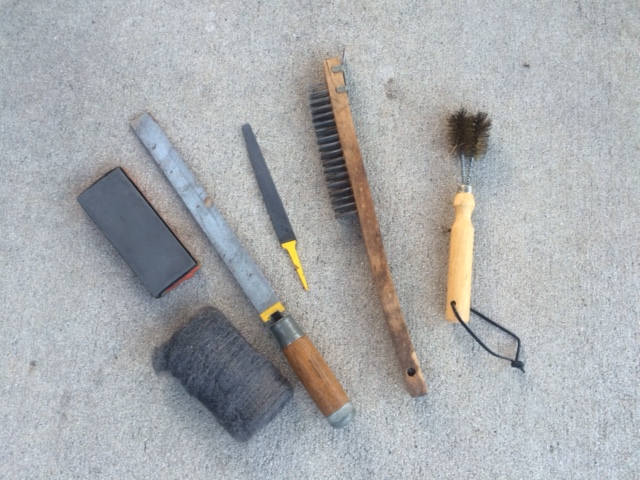
- Wire brush
- Mill file (for large tools)
- Small sharpener or whetstone (for pruners)
- Sandpaper
- Steel wool
- Vise
- Oils (WD-40, machine oil, or linseed oil)
Sharpening Large Tools (Shovels, Spades, Hoes)
- Clean the metal with a wire brush or steel wool.
- Secure the tool in a vise. Use a mill file to sharpen it, push the file in one direction. Follow the original angle of the blade.
- Remove burrs by lightly filing the back side.
- Oil the blade and apply linseed oil to wooden handles.
Sharpening Small Tools (Pruners, Loppers, Shears)
Use a small diamond stone or whetstone. Start with the coarse side, then the fine side. Follow the original blade angle and sharpen in one direction. A quick fine sharpening after each use helps keep blades in great shape.
In Summary
A little effort goes a long way. With proper storage, cleaning, rust prevention, maintenance, and sharpening, your garden tools will stay effective for years—even if they were neglected before. Well-cared-for tools make gardening easier, faster, and more enjoyable.
For more information contact Susan at UF/IFAS Extension Hillsborough County at 813-744-5519 Ext. 54103 or szcrmchz@ufl.edu.
Sign up for the ProHort Newsletter: http://tinyurl.com/ProHort-Newsletter
Go to the ProHort website: https://sfyl.ifas.ufl.edu/hillsborough/professional-horticulture/
An Equal Opportunity Institution. UF/IFAS Extension, University of Florida, Institute of Food and Agricultural Sciences, Andra Johnson, Dean.
 3
3