Nothing brings holiday spirit into your home quite like the scent and beauty of a fresh Christmas tree. After choosing the perfect one, it’s important to care for it properly so it stays healthy, fragrant, and safe throughout the season. Here is a guide to care for your tree.
- Make a fresh cut before putting it in water. When you bring the tree home:
- Cut ½–1 inch off the bottom of the trunk.
- This reopens the pores that seal with sap after the tree is cut. Open pores allow the tree to drink water.
- Place it in water within 15–30 minutes of recutting.
- Use a tree stand that holds plenty of water.
- Choose a stand that holds at least 2 quarts (½ gallon) of water after the tree is inserted.
- Tree trunks generally absorb 1 quart of water per inch of trunk diameter per day.
- Example: A 4-inch trunk diameter may drink up to a gallon a day in the first few days.
- Keep the water level above the bottom of the trunk. This is the most important part of keeping a tree fresh.
- Check water daily (twice a day for the first 48 hours).
- Never let the bottom of the trunk become exposed—if it does, the tree will seal again and stop drinking.
- Skip additives. Plain, fresh clean water is best. You don’t need:
- Sugar
- Aspirin
- Bleach
- Commercial “tree preservatives”
- Position the Tree Correctly. Keep it at least 3-5 feet away from heat sources which dry trees out quickly:

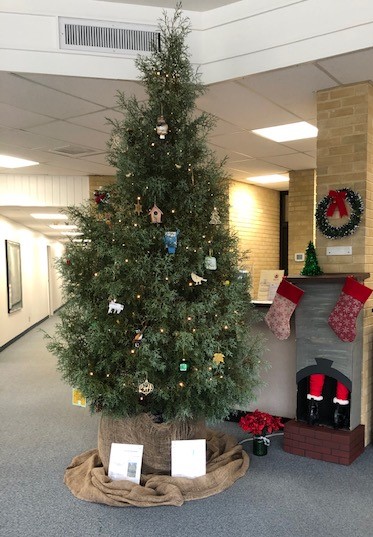
- Fireplaces
- Heat vents
- Radiators
- Direct sunlight
- If possible, use lower room temperatures to slow drying, ideally between 60-72ºF.
- Use led lights for safety. LED lights stay cool and greatly reduce the risk of drying or fire.
- Check light cords for damage.
- Use a timer to turn lights off when asleep or away from home.
- Protect the tree from pets. Cats love climbing in trees, playing with, and knocking off ornaments and chewing on lights and branches. Many cats are injured or die from electrocution at Christmas. Eating needles can cause diarrhea and vomiting.
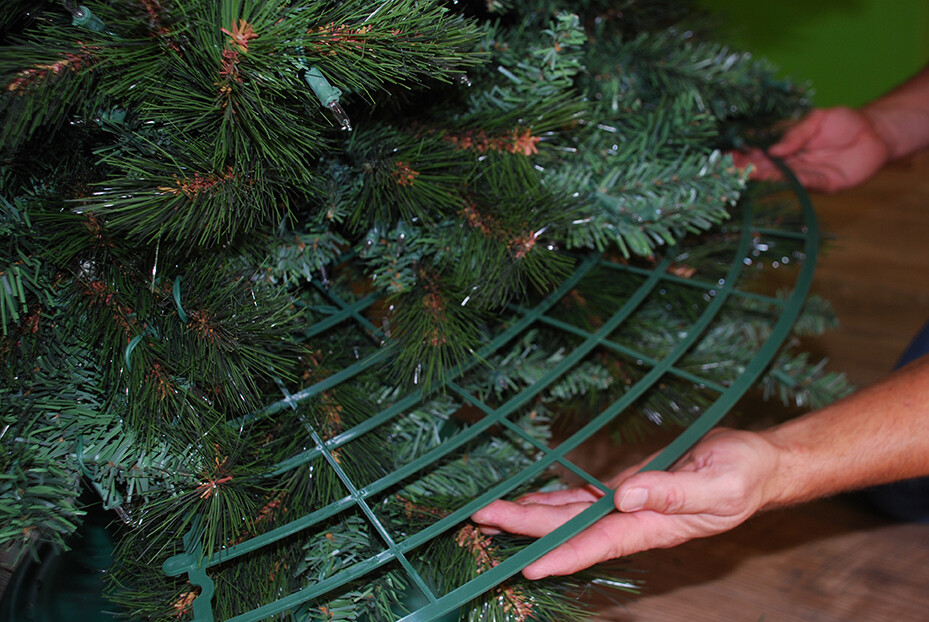
- Confining your cat or using baby gates and blockades may not be practical.
- Products such as the Christmas Tree Defender may work. It’s a circular netted mat that’s installed in the lower branches and extends out from the trunk preventing cats from climbing your tree and accessing ornaments.
- Monitor for Dryness. Signs the tree is drying:
- Needles fall off in large amounts.
- Branches feel brittle.
- Tree stops drinking water for multiple days.
- If it’s drying rapidly, remove lights and consider replacing the tree for safety.
- Dispose of the Tree Promptly After the Holidays. Dried trees are a fire hazard.
- Many counties and cities offer curbside pickup or recycling.
- Many communities chip trees into mulch.
Now sit back, unwind, and take in the tree’s beautiful glow.
For more information contact Susan at UF/IFAS Extension Hillsborough County at 813-744-5519 Ext. 54103 or szcrmchz@ufl.edu.
Sign up for the ProHort Newsletter: http://tinyurl.com/ProHort-Newsletter
Go to the ProHort website: https://sfyl.ifas.ufl.edu/hillsborough/professional-horticulture/
An Equal Opportunity Institution. UF/IFAS Extension, University of Florida, Institute of Food and Agricultural Sciences, Andra Johnson, Dean.
 0
0