During the first week of September, a week marked by surprisingly brisk morning air, the Koeser Lab team gathered to perform some necessary and challenging tasks. In previous Show Us the Data! posts, we gave you a glimpse into the world of field research. The tedious assignment of tags, hand pruning, data collection, and the use of crudely drawn maps to find pruning sites—while carefully navigating fire ants and three-foot-tall grasses—was just the beginning.
Conducting research on trees requires trees. In some cases, it’s best to conduct research in a (slightly more) controlled environment than urban landscapes or forests. At the UF/IFAS Gulf Coast Research and Education Center, the Koeser Lab manages dozens of trees in delineated plots. Access to these trees is essential for Andrew and the intrepid band of researchers to carry out some of our recent and upcoming research.
So, what happens when you need to prune dozens of Laurel Oaks in a plot? You grab your chaps, saws, loppers, and head out to the field for a maintenance day. The goals for maintenance are simple: remove unnecessary lower branches and clean up the lower canopy to facilitate ease of access for mowing and future research.
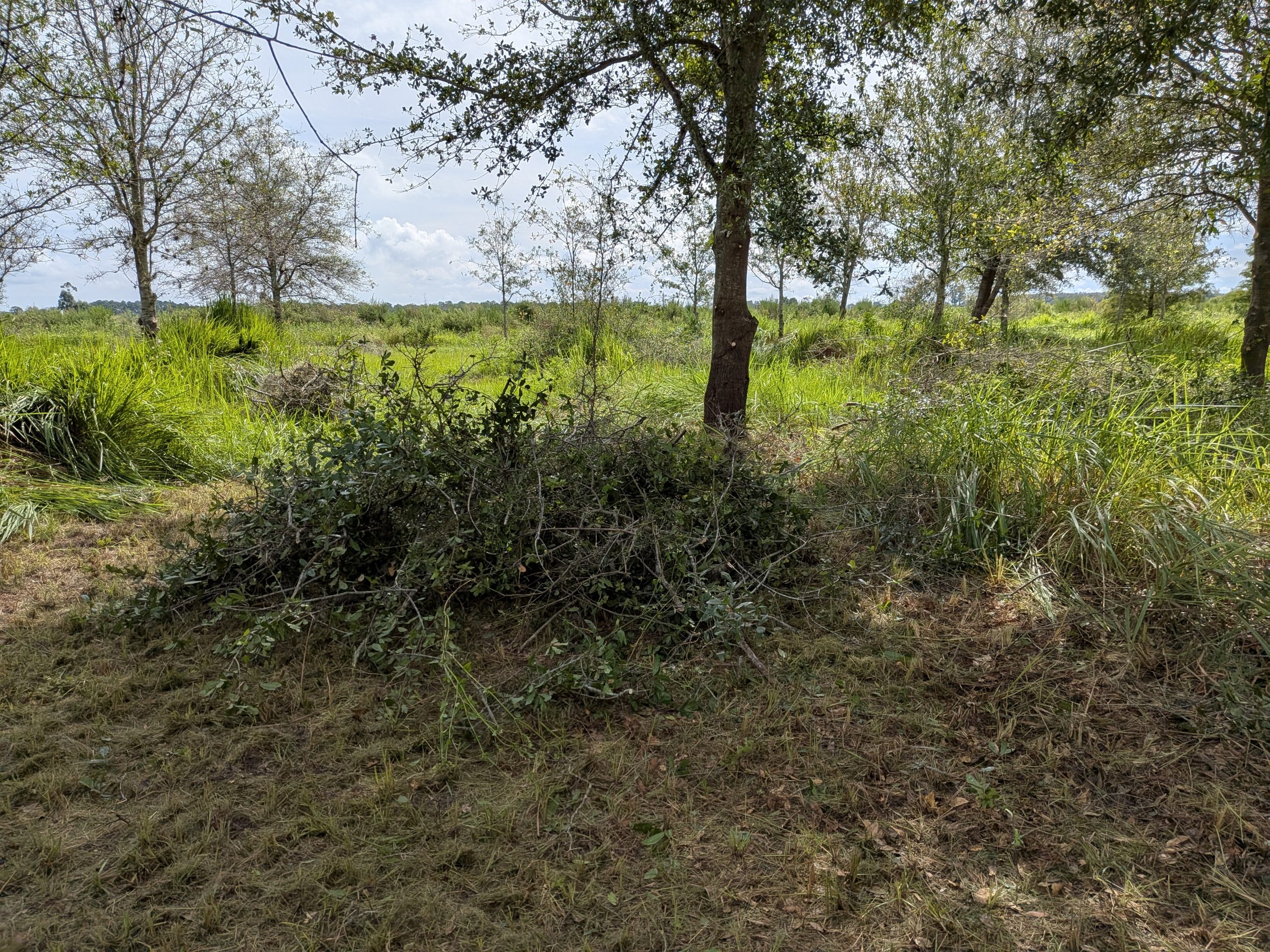
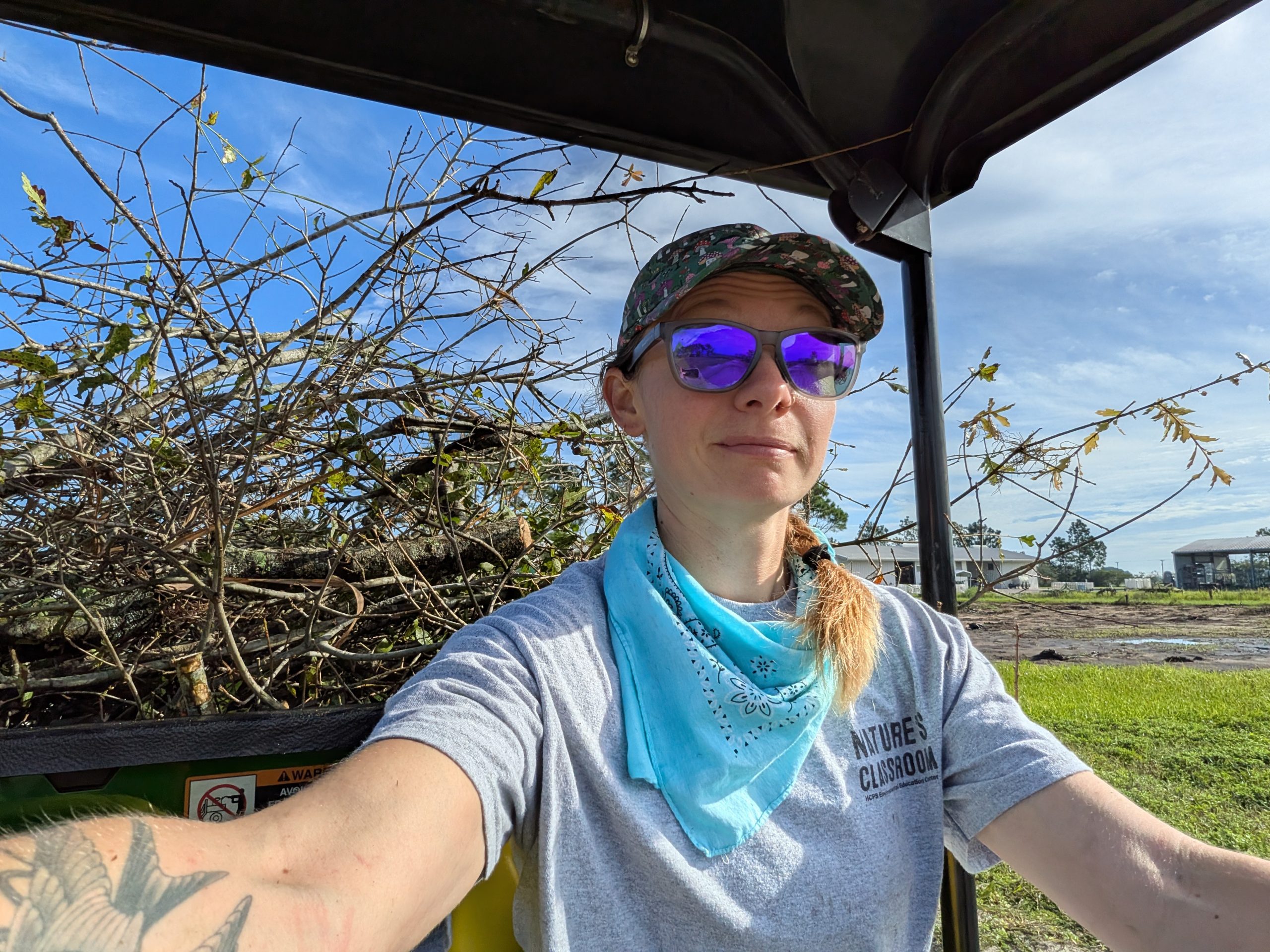
Unfortunately, the Koeser lab recently retired a pickup truck and was left with the bed of a standard gator utility vehicle for brush hauling, did that deter the maintenance crew? Not a chance. As Andrew and Joe moved their way down the rows with saws, removing larger lower branches, Alyssa followed behind, lopping her way through debris piles and loading the bed of the gator. Towering branches were no match for stomping feet (a la grape crushing) making sure to make the most out of each trip to the debris pile.
Limbs removed, and a couple hours in, the debris piles remained but diminished, there was an opportunity to discuss some of the additional challenges of maintaining such a large area. One primary maintenance issue is the prevalence of Cogongrass, in some areas it was thick as thatch around the bases of the trees. Having given reprieve to trunk flares, it was discussed how best to manage this pernicious pest with repeated rounds of trimming and herbicide application.

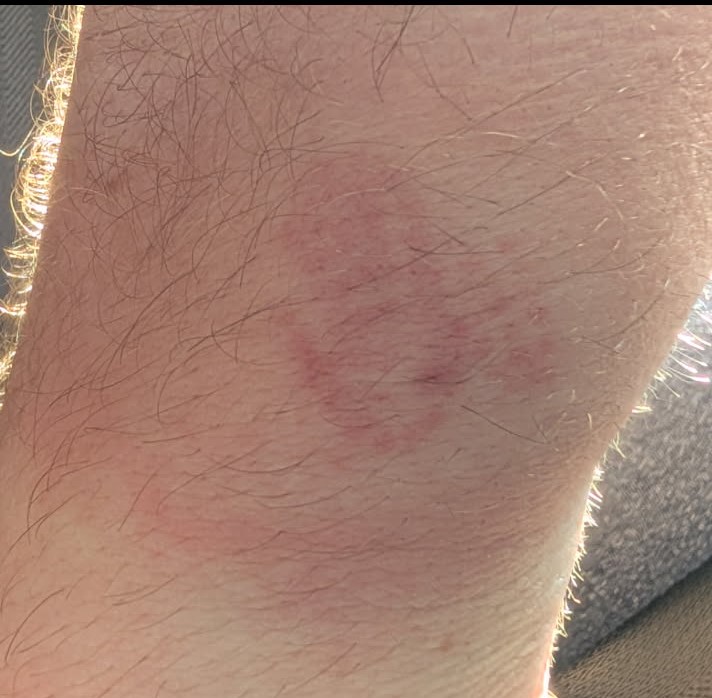
Just as the team was wrapping up, sweaty and feeling the noon hour upon their empty bellies, Andrew encountered his soon to be nemesis; Megalopyge opercularis, more commonly known as the Puss Caterpillar. In a showing of admirable stoicism, Andrew simply said ‘Ouch’! Upon identification of the caterpillar, we decided it best to wrap up and head back to the lab for some first aid.
Despite the sting of unexpected encounters and the weight of brush-filled gator loads, the day ended with a sense of accomplishment and camaraderie. Maintenance days like these may not make headlines, but they’re the backbone of good research—sweaty, scratchy, and occasionally stung. As the team headed back to the lab, tired but satisfied, the trimmed trees stood ready for the next round of data collection, and the Koeser Lab lived to prune another day.
About this Blog
Rooted in Tree Research is a joint effort by Andrew Koeser and Alyssa Vinson. Andrew is a research and extension professor at the University of Florida Gulf Coast Research and Education Center near Tampa, Florida. Alyssa Vinson is the Urban Forestry Extension Specialist for Hillsborough County, Florida.
The mission of this blog is to highlight new, exciting, and overlooked research findings (tagged Tree Research Journal Club) while also examining many arboricultural and horticultural “truths” that have never been empirically studied—until now (tagged Show Us the Data!).
Want to see more? Visit our archive.
Subscribe!
Want to be notified whenever we add a new post (about once every 1–2 weeks)? Subscribe here.
 5
5