A team of researchers from the UF/IFAS School of Forest, Fisheries, and Geomatics Sciences (SFFGS) is conducting a study of commercial and recreational boat ramp use that will help guide the South Florida Water Management District (SFWMD) in managing an increase in boat ramp public traffic.
SFFGS Professor of Ecotourism Taylor Stein, Ph.D. is leading the study which focuses on two boat ramps in the Everglades where commercial activity is creating challenges: The Loxahatchee Road boat launch (WCA 2A) and the S-356 Airboat Launch on Tamiami Trail.
According to the study’s Statement of Work, “At these locations, heavy commercial airboat use is reportedly causing conflicts with other recreational users. This research will assess the scope of airboat activity, evaluate its associated social and ecological impacts, and develop potential management strategies to mitigate user conflicts and protect these resources for everyone.”
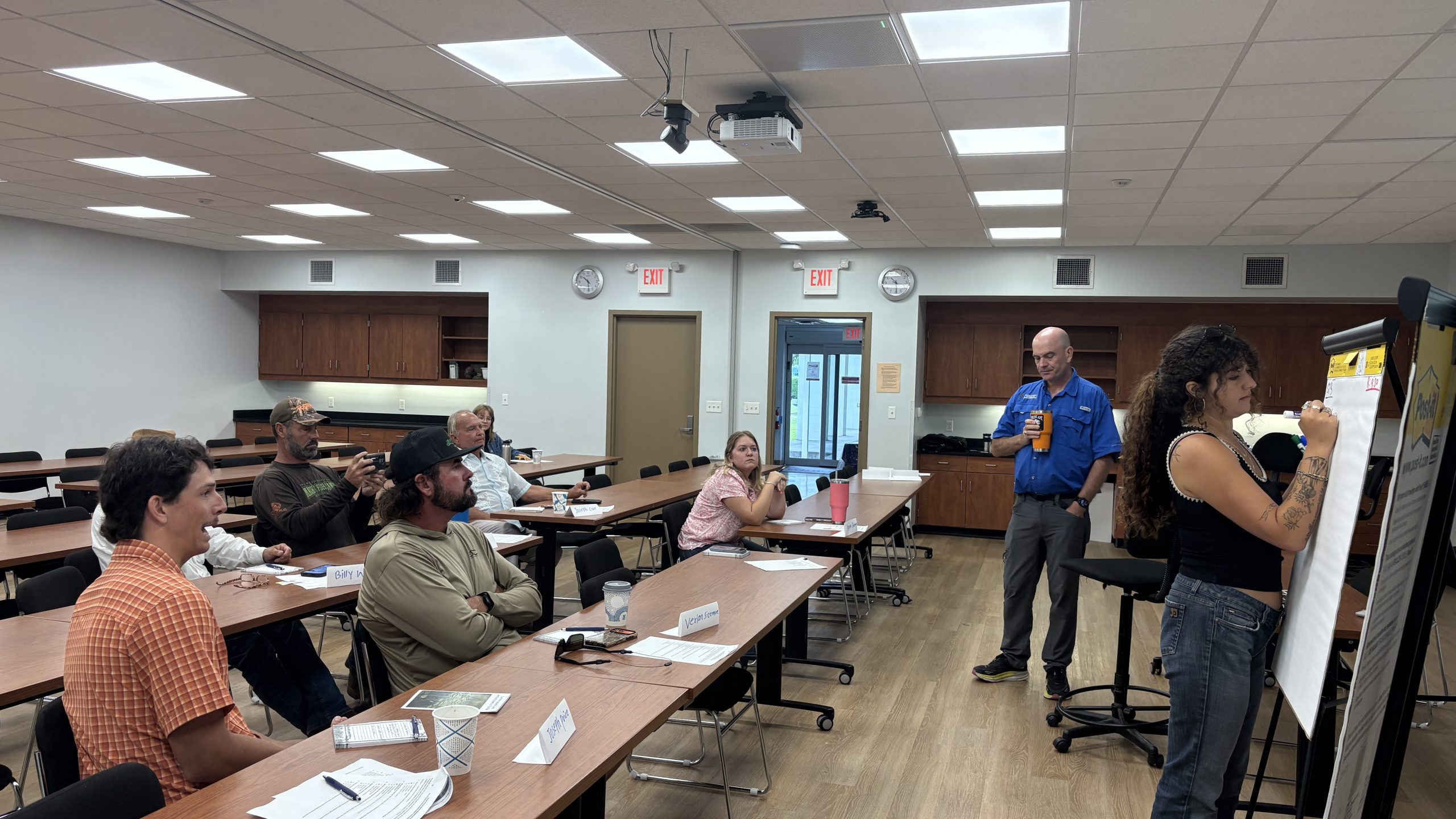
Stein, SFFGS Research Scientist Ramesh Paudyal, Ph.D., and UF Graduate Student Alexandra Goodhard recently held a planned focus group discussions with boat ramp users in Ft. Lauderdale.

“We focused on two boat ramps just outside of Miami and Ft. Lauderdale that are heavily used by many recreationists, specifically airboat operators,” Stein said. “Airboat operators can be divided into two groups: recreational airboat operators such as folks going out for their own recreation experiences and commercial airboat operators which are businesses that take people (e.g., tourists) into the Everglades.”
According to Stein, the commercial airboat operators are dependent upon these publicly managed boat ramps to conduct their business, but the water management district does not actively manage visitation on these boat ramps, so there are no policies or management guidelines that directs the water management district to treat these airboat operators differently; even though recreational airboat operators are going there for fun and commercial airboat operators are hosting many tourists and making money from using these ramps.
“There are concerns that conflict and crowding issues might develop due to the different ways these airboat operators use the ramp,” Stein explained. “For example, commercial air boat operators often keep their boats at the ramp for long amounts of time as they wait on their visitors to arrive. When visitors arrive, they bring personal or rental cars, which take up more space on the ramps.
“Recreational airboat operators might find these boats and cars in their way. Also, recreational airboat operators might be perceived as “less professional” than commercial airboat operators, so there are concerns that they are making impacts on the ramps (litter) and impact other airboat operators because they’re not as skilled at operating an airboat. It is unclear how impactful these conflicts are and if they are really happening to a lot of people or just to a few folks who have complained.”
The study team has three phases of data collection, with the four focus group meetings just being one of the steps.
“We are also collecting quantitative data on site using traffic counters and cameras to record actual use on the ramps,” Stein said.
“We conducted four focus group meetings so far,” Stein said. Two groups focused on recreation airboat operators and two focused on commercial airboat operators.

“In all four meetings, we asked participants: Why they use the ramps for air boating, their perceived barriers and constraints that stop or inhibit them for achieving their goals for air boating (recreation or hosting tourists), and ideas for future management.
Stein said the focus group information will give a perspective on airboat operators’ values, attitudes, and perspectives on what’s happening at the boat ramps and their ideas on what the water management district should or should not do to minimize conflicts and impacts to the ramps.
“We are currently drafting a report simply on the focus group meetings, but since that’s just one phase of data collection a bigger report will be developed in September.”
The eventual deliverable of the study will be scientifically based information on use, potential conflicts, and perspectives on management.
“We will propose some management implications to SFWMD and provide technical advice on how to continue to collect user data using the cameras and traffic counters,” Stein said.
According to Michael Cheek, section leader in the Public Use and Wildlife Unit of the SFWMD, “Dr. Stein will be giving a summary of the results from the Focus Group meeting portion of the study on Sept. 28th at our tri-annual recreation forum meeting.
“The study is expected to help the District decide how best to manage recreational and commercial boat activity at the District’s public boat ramps.”

 0
0