Almost everyone has heard of red tides and know they periodically occur off the coast of Florida. The more frequent events occur off southwest Florida between Tampa and the Keys, but they have occurred in other parts of the state.
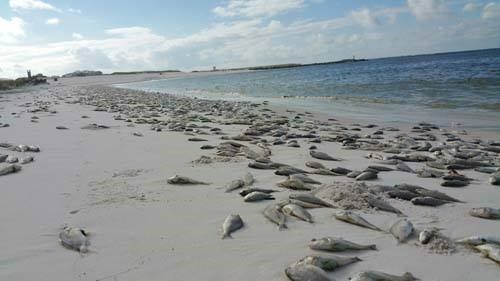
Photo: Randy Robinson
When they do occur in the panhandle, they seem to be more common on the east side – Bay, Gulf, and Franklin counties. This year there has been a rather large red tide event that has lingered several weeks now in this area. There have been multiple samples that have been reported as HIGH (1,000,000 cells or more / liter). Cells in this case is referring to the organism that causes red tide – Karenia brevis.
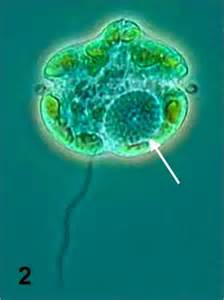
K. brevis is a microscopic plant that belongs to the dinoflagellate group. They occur naturally in Florida waters and when conditions are good – will begin to multiple and create a bloom. These blooms can be large enough to discolor the water – often making it a rusty/reddish color… hence the red tide. Good conditions would be those you would think plants like – plenty of sunlight, warm temperatures, plenty of nutrients. When the wind is lower the water moves less allowing them to concentrate into large patches producing “the tide”. These small plants can release a toxin, known as brevotoxin. Brevotoxins are neurotoxins that affect the transmission of nerve signals, which can lead to several internal complications and possibly death for marine life.
Humans and animals typically ingest or inhale brevotoxins during a large red tide event. Fish kills are a common phenomenon during large events, but marine mammals and sea turtles have also been killed. During the recent red tide event in the St. Joe area fish kills have been reported, as well as respiratory problems with humans. We now also can include diamondback terrapins as a victim.
Terrapins are smaller brackish water turtles found along the coast of Florida. At the time of this article, scientists with the US Geological Survey had logged 66 dead terrapins from the St. Joe area, all were females, and most were large females.
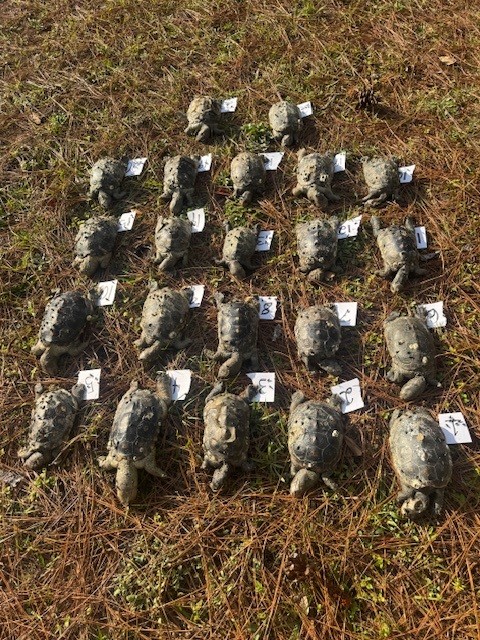
Photo: Dan Catizone
At the time of this writing the tide in this area continues. High concentrations have been reported from Gulf, Bay, and Franklin counties. The most recent FWC report at the time of this article (December 5) red tide had been detected in 20 samples from the panhandle. Cell concentrations of >100,000/liter (medium-high) were reported from five of those. Background to medium concentrations were reported from Bay County. Background to low in Gulf and Franklin counties. Fish kills suspected to be related to the red tide occurred in Bay County but there were no reports of respiratory problems anywhere at that time.
Red tides seem to be more common in late summer and fall. NOAA believes the same climate pattern that has caused the drought, and no named tropical storms to hit Florida, may be the cause of the current patterns holding the red tide near the St. Joe area. Concentrations SEEM to be declining. Hopefully this one will not last much longer.
 1
1