Each year Florida Sea Grant conducts a summer survey of selected invasive species of concern in the coastal area of Pensacola Bay.
Below are the results of the 2025 survey.
Beach vitex
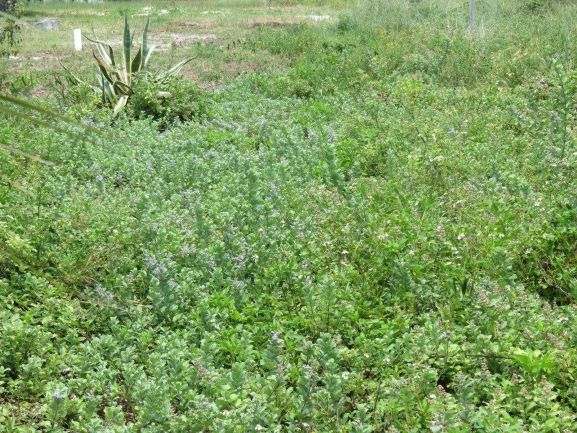
Beach vitex is an invasive vine that grows in the sands of our beaches and dunes. Our records currently show 108 sites in the bay area where the plant exists.
| Location | Number of sites | Surveyed in 2025 |
| Gulf Breeze | 3 | No |
| Pensacola Beach | 68 | Yes |
| Perdido Bay | 2 | No |
| Perdido Key | 3 | No |
| Gulf Islands National Seashore – Naval Live Oaks | 24 | No |
| Gulf Islands National Seashore – Ft. Pickens | 1 | No |
| Navarre Beach | 8 | No |
| Location | Private property | Public property | Status |
| Gulf Breeze | 1 | 2 | One of the public sites HAS been removed. |
| Pensacola Beach | 42 | 26 | 25 sites have had the plant removed and it has not returned.
26 sites have had the plant removed BUT it has returned. 16 sites have never been treated. Most of these are private properties. 1 site status unknown (construction currently ongoing). |
| Perdido Bay | 1 | 1 | Status unknown. |
| Perdido Key | 2 | 1 | Private property is being treated. Status of public site is unknown. |
| Gulf Islands National Seashore – Naval Live Oaks | 0 | 24 | Unknown. |
| Gulf Islands National Seashore – Ft. Pickens | 0 | 1 | Status unknown. |
| Navarre Beach | ? | ? | Status of all is unknown. |
Tilapia
We estimate there are about 60 Blue and Nile tilapia living in the upper “right arm” of Bayou Chico east of “W” Street (could be under estimated). There was a collection effort this year and 25 of those fish were removed. Surveys west of “W” street have not shown in evidence of tilapia invasion. We encourage waterfront residents of Bayou Chico to report any sightings of this fish.
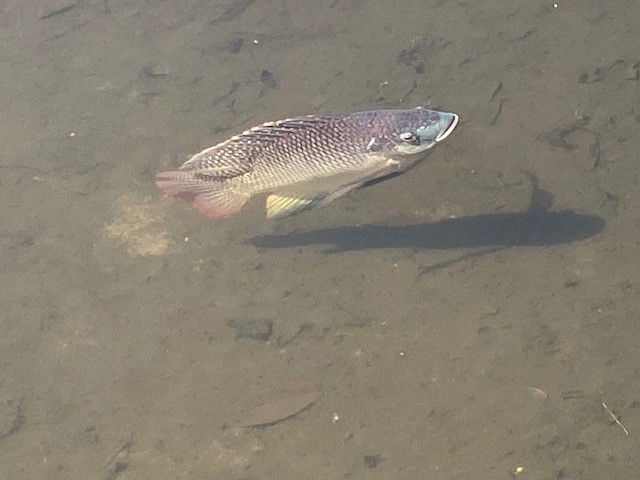
Photo: Molly O’Connor
Lionfish
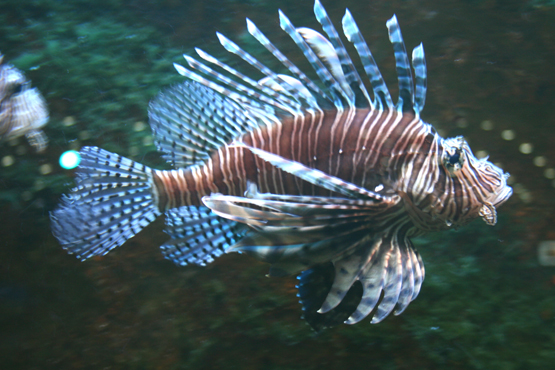
It is well known that lionfish exist in the Gulf. Whether, and how many, exist within the bay is unknown. Since we began monitoring (2013) we know of 3 records within Big Lagoon – all were removed. In the last five years there have been reports of lionfish near the fishing pier at Ft. Pickens. Volunteer removals have removed at least 10 fish from this location. No surveys or removals occurred in 2025. Surveys were conducted at the snorkel reef near Park West, and the artificial reefs near the Grand Marlin in 2025 – no lionfish were found.
Cogongrass
Cogongrass has been found on Perdido Key. No surveys were conducted in 2025, and status is unknown.
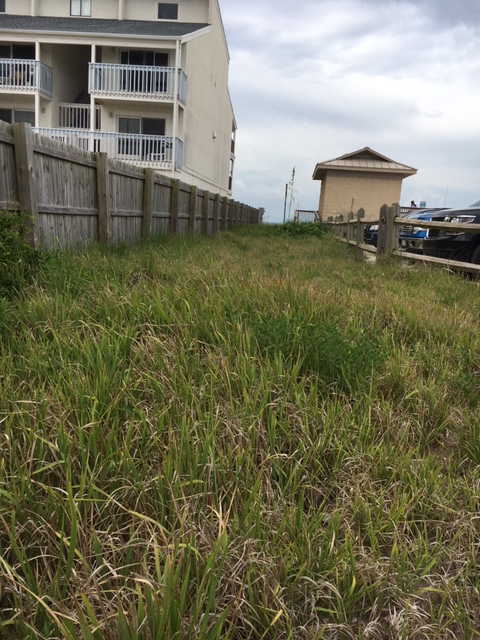
Photo: Rick O’Connor
Cuban Treefrogs
Several reports of additional Cuban treefrogs were submitted in 2025. According to the national database EDDMapS, there are 18 records from the Pensacola Bay area – 1 from Gulf Shores.
| Location | Number of CTFs reported |
| Perdido Key | 3 |
| Downtown Pensacola | 3 |
| Ensley area | 3 |
| Near UWF | 1 |
| Near Scenic Heights | 1 |
| Pensacola Beach | 2 |
This is most likely underreported. If you believe you have a Cuban treefrog, please contact the Escambia County Extension and/or report to the EDDMapS database. If you are interested in setting up a Cuban treefrog trap – contact the Extension Office to learn how.
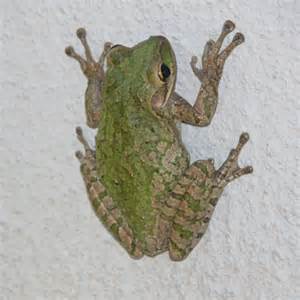
Photo: UF IFAS
Giant salvinia
This invasive plant has been found in several locations within Bayou Chico. We will be removing a small portion of the problem near “W” Street this year. We encourage waterfront homeowners on Bayou Chico to assist with removal, and destruction, of this plant.

Green mussels
There was one UNCONFIRMED report of this invasive mussel in Pensacola Bay. If you believe you have seen this – please contact the Escambia County Extension Office.

Photo: Maia McGuire Florida Sea Grant
Nutria
There is a small population of nutria living on Perdido Key. At this time, they seem to be contained in a small location. If you believe you have seen this animal in your neighborhood, please contact the Escambia County Extension Office.
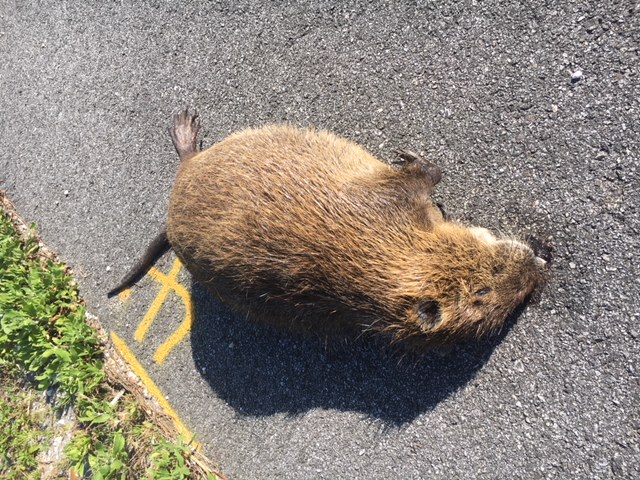
Photo: Rick O’Connor
Tiger shrimp
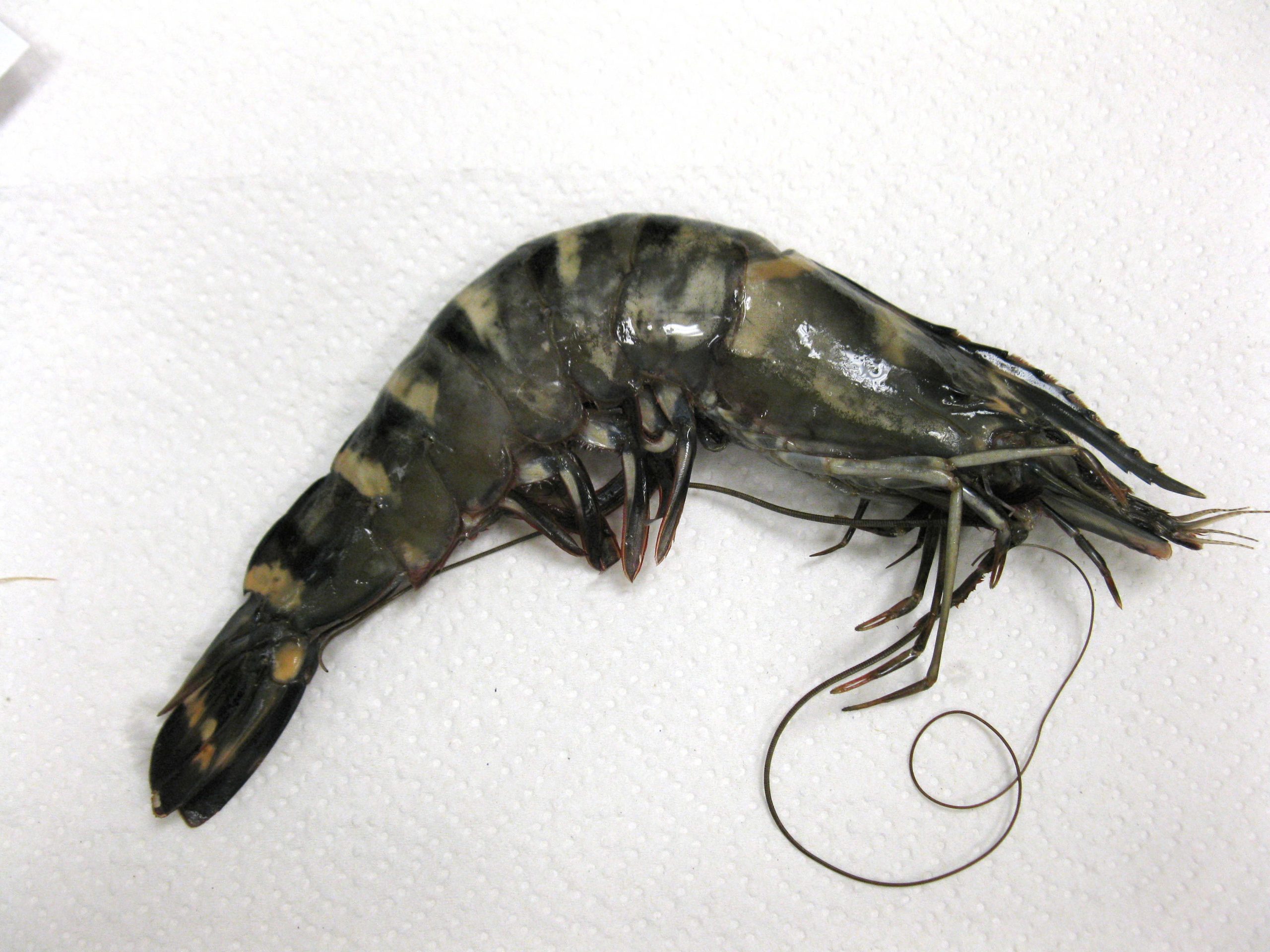
The invasive tiger shrimp were reported in Pensacola Bay around 2013. We have had no reports since. EDDMapS shows 9 records from Pensacola Bay and 1 record from Milton.
Thrush Cowries
This is a new invasive species first reported this summer. The snail has been found on the pilings of the snorkel reef at Park East, Navarre snorkel reef, Pensacola Beach fishing pier, Casino Reef, and along the beach near the Flora-Bama. If you see this snail, please contact the Escambia County Extension Office.
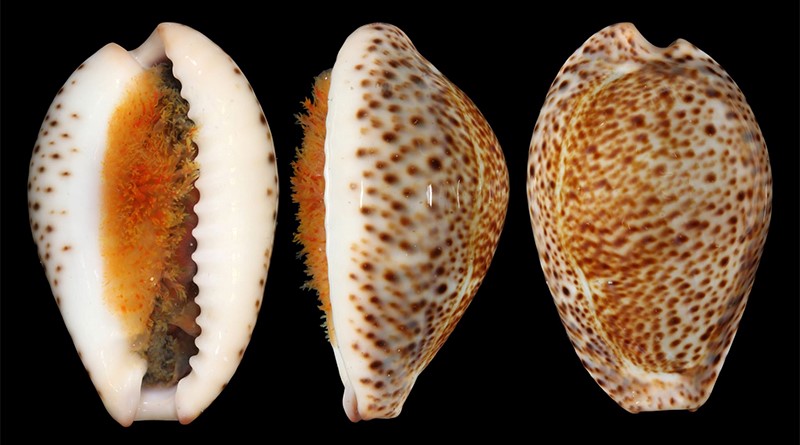
Photo: FWC.
 0
0