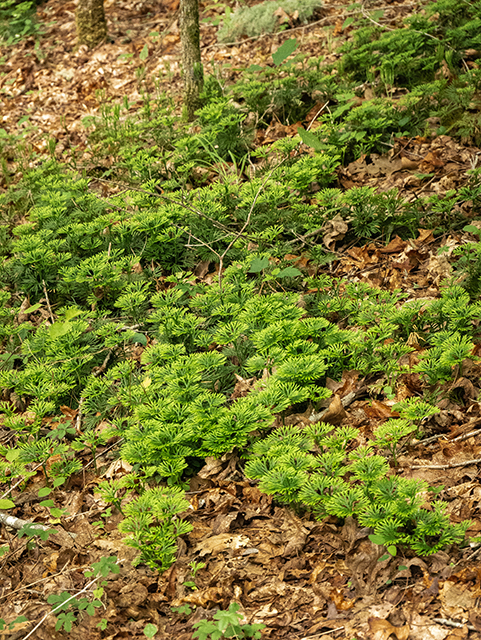
I love hiking in new places. Different terrain, new perspectives, and always some plant or animal I’ve never before come across. Last weekend on another hike along the Cumberland Plateau in southern Tennessee, we noticed a low-growing, bright green but unfamiliar plant. It was in a shady, slightly moist area and looked like moss—if moss grew like a 4” tall cedar tree.
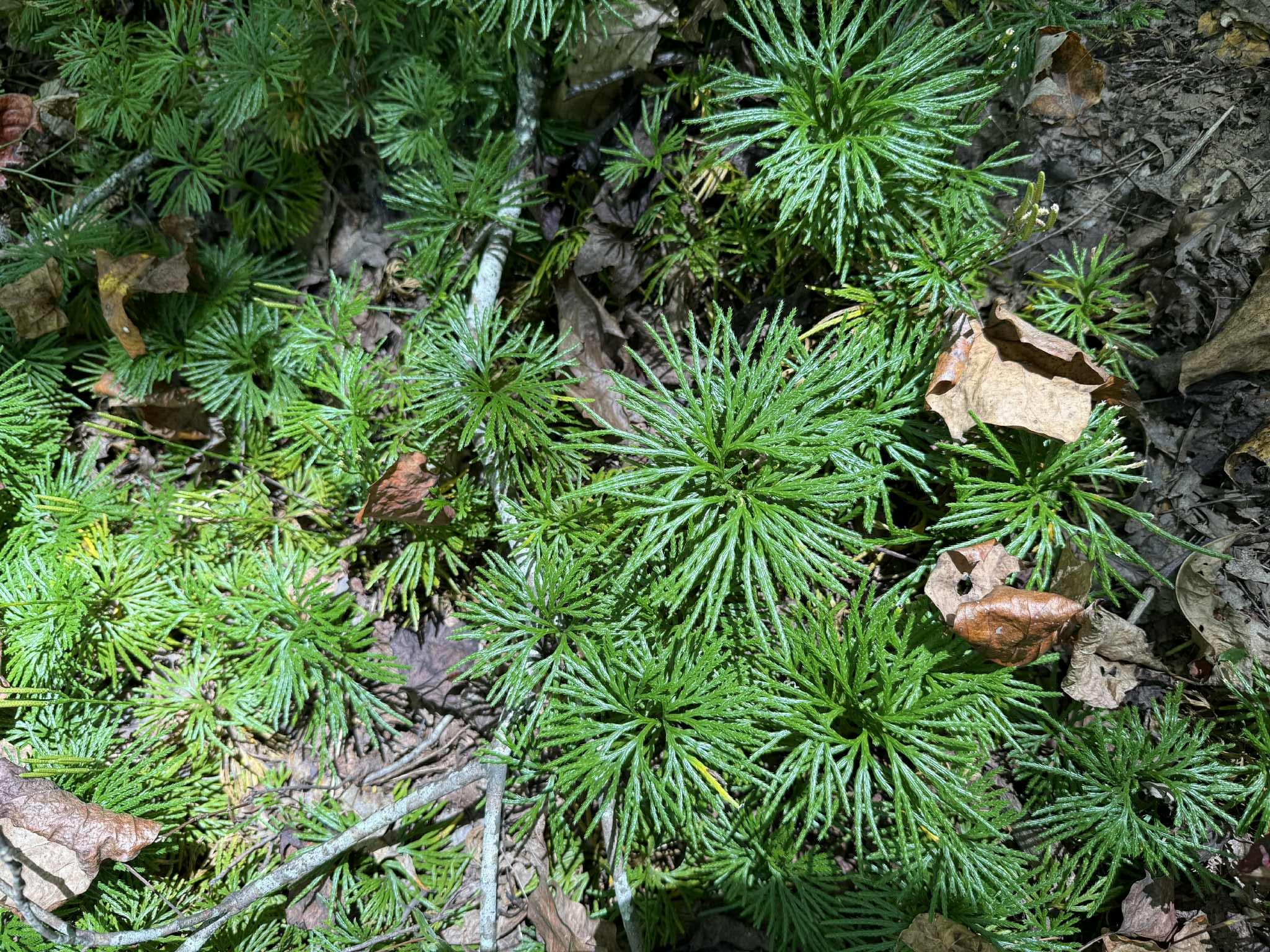
Following some research, I found it was an ancient species called fan clubmoss (Lycopodium digitatum), aka running cedar or ground pine. It has been around since before the dinosaur era; over 400 million years ago. This species has shrunk over time, with their direct ancestors towering over the forest more than 100 feet up. Along with ferns and horsetails, clubmosses reproduce by spores (instead of seeds) which botanists consider a more primitive method of reproduction. Nonetheless, it was and remains a successful one—these plants dominated the ancient forest. In a fascinating twist, I learned that their decomposition and subsequent pressure over time accounts for the vast majority of coal deposits formed throughout this region. This theory bears out—the hills around this particular trail were mined extensively for coal. In fact, it’s not unusual to come across small chunks of coal littered along the mountain paths we were walking.
Ferns and “fern allies” like club moss thrive in shady, damp, acidic environments. Interestingly, the rocky Appalachian hiking spot has a lot in common with our northwest Florida wetlands. In fact, we do have another species of Lycopodium, particularly foxtail clubmoss, in our wetlands. Despite the elevation difference, these shared soil conditions result in similar plant life.
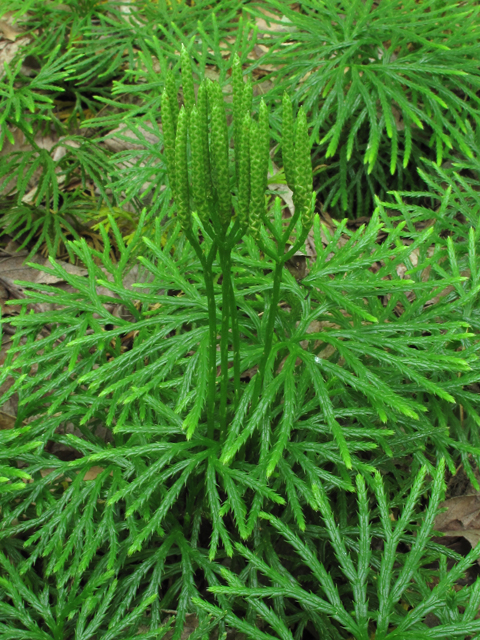
The “club” in clubmoss comes from structures that grow up and out of the low-growing moss, called strobili. Spores, produced in sporangia packets, grow in the club-shaped strobili. The plant is particularly notable in the hardwood forest during the deep midwinter, when other plants have dropped their leaves and the fan clubmoss is evergreen. This trait has left it vulnerable to collection, especially for Christmas décor, which is highly discouraged now.

Fan clubmosses have very slow growth rates, reaching maturity over 7-15 years. They can expand horizontally via rhizomes in addition to the windborne spores, but it can take decades for a mature fan clubmoss to replace itself. Like coral reefs, they do poorly if broken and take ages to recover. Clubmoss doesn’t transplant well, either, so it is best admired in its natural habitat.
Fan clubmoss has fascinating characteristics, resulting in a broad swath of historic human uses. Europeans and American Indians used the spores and leaf teas for treating headaches, labor pains, and gastrointestinal issues. Water-repellent properties make it useful for treating rashes and wounds, and it has been used in the dyeing process to stabilize colors. Lycopodium powder made from the spores is highly flammable due to its fatty, oily content, and will produce a spark when set aflame. It has been used in physics and chemistry experiments, fireworks and explosives, photography flash bulbs, fingerprinting, pill coatings, and stagecraft—including magic acts. Early inventors used it in the first internal combustion engines, along with versions of xerography, the origin of photocopying.
 6
6