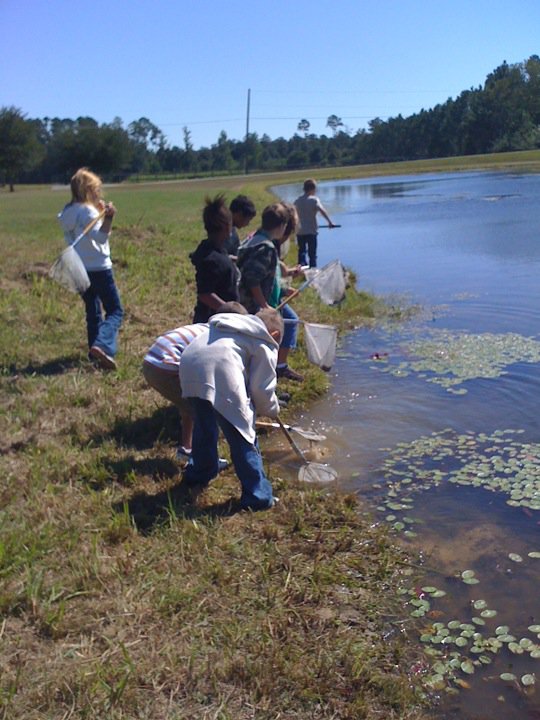
Before we sold the original 4-H property to Navy Federal, the entire office of Escambia County Extension agents regularly hosted school field trips at the 4-H camp. It had a huge auditorium, forested areas, pitcher plant bogs, and a pond. Depending on our area of expertise, we’d set up stations all around for the kids to move through—nutrition educators teaching lessons on food at the kitchen, livestock experts with the animals near a pen, and natural resource agents by the pond or the woods. I typically manned a station down at the pond, where kids used dip nets to reach into the mud and bring out bugs, plants, fish—and the occasional snake! The “new” 4-H camp in Barrineau Park still hosts year-round youth activities, and a pond is in the works so we can recapture some of that waterfront fun.

Outside of the rare snake, the dragonfly larvae left the biggest impression on students. As babies, these species are a little crazy looking. They resemble spiders more than the sleek dragonfly form we all know and love. After recovering from the initial “ick” factor of the leggy invertebrates, most kids quickly appreciated what they were looking at. Even more fascinating is these very hungry nymphs can eat just about anything, from mosquito larvae to small frogs and fish!
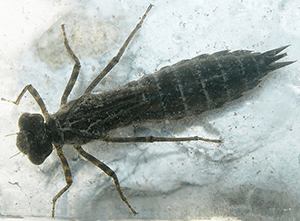
The other point I always drove home during the field outings was that immature dragonflies, typically known as naiads, in a pond are bioindicators of good water quality. Biologists study and sample benthic macroinvertebrates (aka insects and worms living in the bottom of a water body, visible without a microscope) in streams and lakes to determine their health. In low oxygen and polluted water, the only things you’ll find are bloodworms and blackfly larvae, which can be found even in wastewater and raw sewage. Dragonflies, damselflies, and stoneflies are more sensitive to pollution, and will only live in clean, well-oxygenated water. This is an example of a concept in ecology called, “resource partitioning,” in which similar species evolve to thrive in vastly different habitats to avoid competition and take advantage of limited supplies of food and habitat.
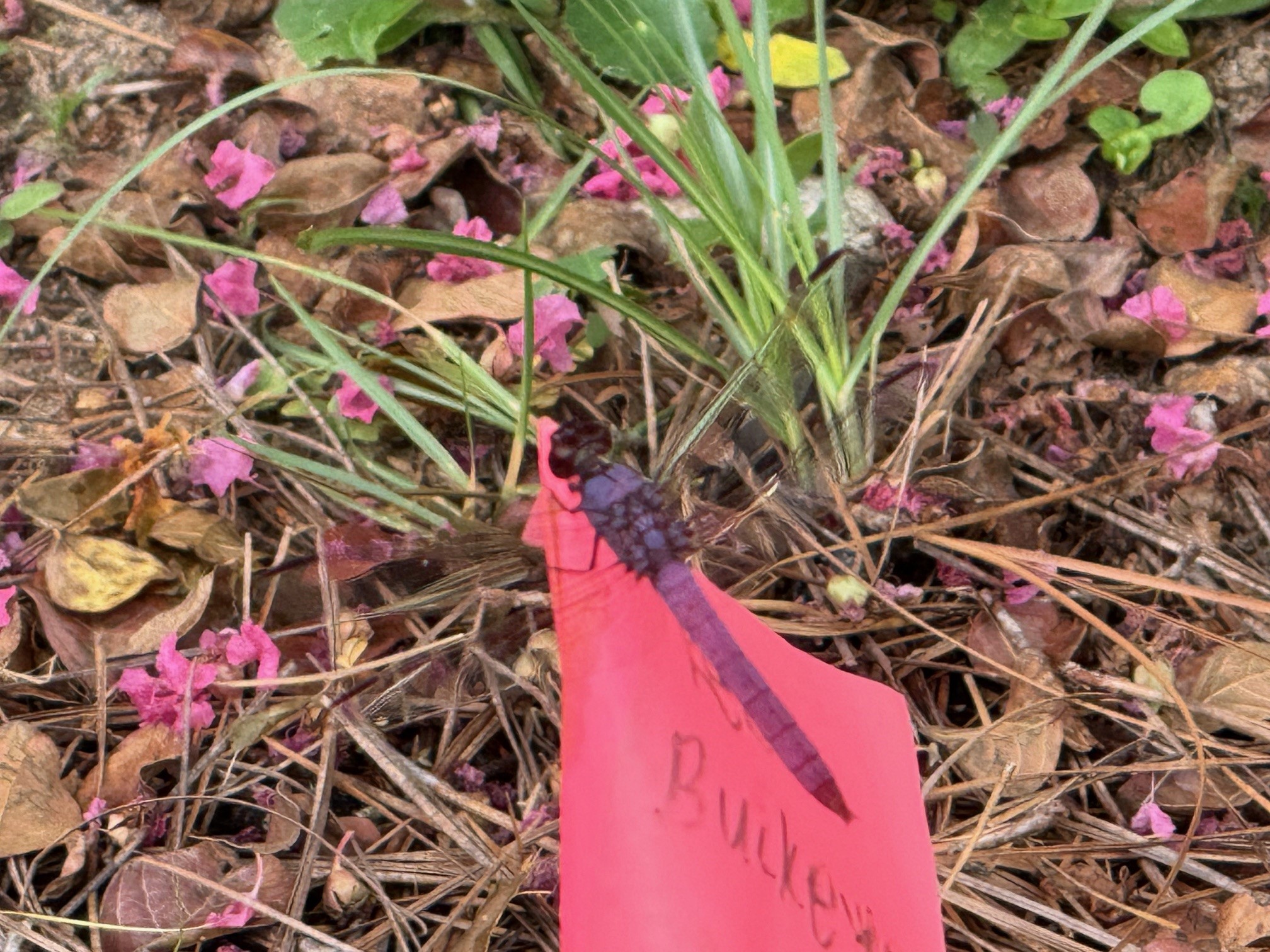
As young dragonflies leave adolescence, they molt over a dozen times as their bodies elongate and often become more colorful. Recently in the span of 30 minutes at a University of West Florida garden, I saw electric blue, brilliant green, and deep pink/purple dragonflies and damselflies flitting about. These are all native to the area, taking advantage of the new insects drawn to the recently planted vegetation. Dragonflies and damselflies are similarly built members of the Order Odonata. I am not an expert in species identification, but damselflies generally have thinner bodies and rest with their wings folded, while dragonflies are bulkier and rest with wings outstretched. With more than 150 species of Odonates in Florida, there is plenty of opportunity to explore and learn.

True to their rather intimidating name, dragonflies are top predators in the insect world. A close look at their massive mandibles makes it easy to understand how they can take down mosquitoes, moths, butterflies, wasps, even rival dragonflies. They have muscular bodies to support those enormous wings, and are acrobatic fliers, efficiently capturing prey on the wing like bats. Several studies have clocked dragonflies moving faster than 30 miles per hour, along with flying upside down and backwards, as seen in this fascinating video from Science magazine.
Dragonflies are universally interesting because of their ubiquity, color variation, and unusual flying and behavior patterns. I am anthropomorphizing here, but they’ve always seemed more friendly than other insects—flying up at eye level, landing fearlessly on people’s hands and clothing. Those big eyes are endearing as well—plus, they don’t have stingers and you’d really have to antagonize one to have it bite you. These charismatic features have made them wildlife ambassadors of sorts, serving as mascots for numerous conservation efforts. A citizen science effort for dragonfly enthusiasts exists at Odonata Central, which works similarly to iNaturalist in that anyone can upload photos and get identifications verified from experts all over the world. The site also sponsors the Odolympics, a two-day “bioblitz” designed to “record as many species from as many places in the Western Hemisphere as possible in the two census periods to generate a snapshot of odonate distribution.” If you’re interested, we are just in time for the next round, which starts August 14 and runs through the 24th!
 8
8