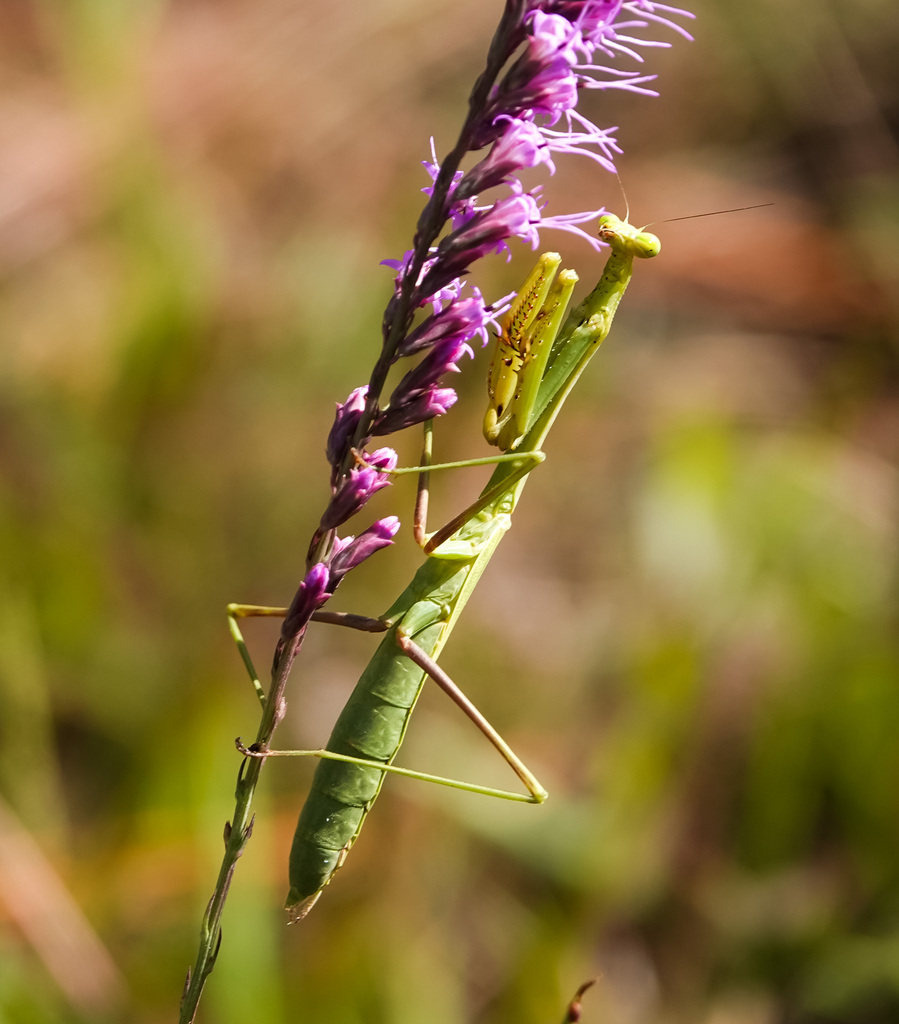
The gloriosa lilies are in full glory, so to speak, in our garden at the Extension office right now. While photographing them, I noticed a tiny visitor hidden in plain sight among the flower’s frilly petals and stamen. A bright green juvenile praying mantis, no more than an inch long and the same shade of green as the plant, stood still directly in front of me.
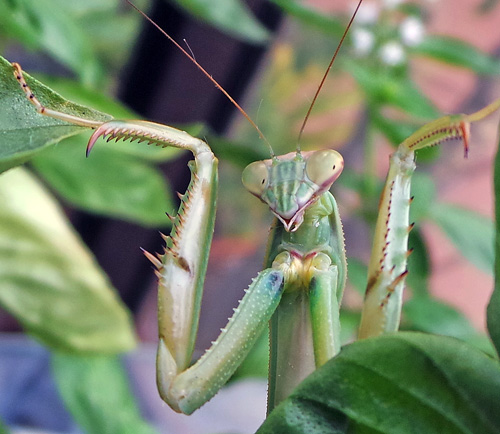
Praying mantids are often recognizable and well-known due to their interesting body shape and posture. They have other wild features, too, like gigantic folding “raptorial” (grasping/predatory) front legs and the ability to swivel their big-eyed, alien heads 180°. The large European mantid’s Latin name, Mantis religiosa, comes from the insect’s posture when hunting. It sits or stands with its forelegs folded up as if in prayer, before deploying them rapidly for a meal. All mantid species are ambush predators, capturing prey by sitting in wait, camouflaged in color and shape. They’ve even been observed swaying gently to appear like leaves in the breeze. But when they spring to attack, they are deadly accurate.
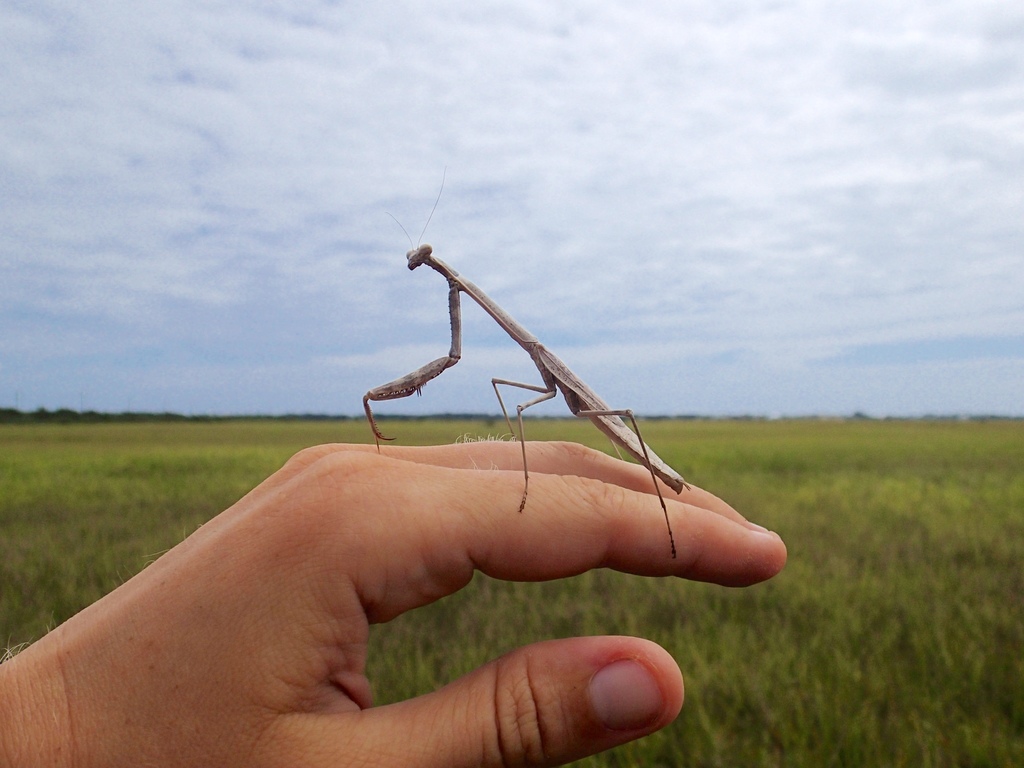
With those spiky front legs raised in the air, they drop down and grasp prey ranging in size from aphids to—rarely—hummingbirds. Their effective predatory behavior doesn’t make them immune from becoming prey themselves, however. Mantids are a food source for many species, including bats, birds, spiders, and fish.
The insects are known for their infamous (but rare in the wild) post-mating male beheading. Mantids are not alone in that cannibalistic behavior—many insects and spiders exhibit this conduct to boost the energy of females as they produce the next generation.
Most mantid species are tropical, but of the 2400 known worldwide, only about 20 live in the United States (11 in Florida). Mantids are considered natural pest control in a garden, although they are generalists and will prey on both beneficial and pest insects.
 7
7