For many people, a salt marsh is something to endure on the way to the coast: an inexplicably large expanse of mud and grass that one tends to accelerate through in the rush to arrive at the good stuff: dunes, waves, dolphins, sea turtles, fishing, boating, body surfing, boogie boarding, and parasailing; stashing the key to the beachhouse in the toe of a shoe and falling asleep in the sun, then jolting awake with feet suddenly in a wave and the crucial shoe and sundry other belongings afloat and setting off on a journey to Cuba; picnicking and fighting off seagulls trying to steal our hot dogs; burying family members in sand; reading salacious paperbacks; hunting for seashells and beach glass and driftwood and bottles containing ancient messages from sailors who died in Melville’s day; ice-cream eating; sand castle construction; volleyball playing; and copious consumption of mai tais.
Now, though, as summer fades, the beach-appropriate days of the year dwindle, and fall revs its engines preparatory for whatever thrill rides it has in store, we might be thinking about what salt marshes are good for besides alerting impatient beach-bound motorists that the ocean is nigh. Fall brings hurricane season, that nervous time of year when we haunt the NHC site and refresh the “Warnings/Cone Interactive Map” page multiple times a day every time a storm shows up and demonstrates some signs of gumption. Right about now we might be thinking of salt marshes as more comforting and cozy than tedious. In fact, we might be wishing we had more salt marsh acreage to drive through on the way to the beach. This is because, among their many often overlooked benefits, salt marshes protect coastal areas from storm damage.
Salt Marsh Restoration: A Summary of Approaches
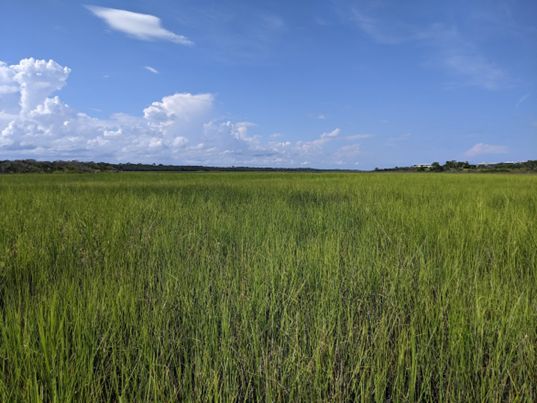
A recent Ask IFAS publication published by the School of Forest, Fisheries, and Geomatics Sciences Program in Fisheries and Aquatic Sciences and the Florida Sea Grant College Program explains several ways we can restore lost salt marshes and grow and strengthen existing ones. Designed for land managers and owners of coastal property, Salt Marsh Restoration: A Summary of Approaches lists several strategies for growing a new salt marsh to replace a lost one or improving the health of an existing salt marsh and making it a more extensive and effective buffer against storms. The restoration methods in the publication are arranged in order of cost and difficulty, from projects a small property owner might be inspired to tackle to larger endeavors necessitating more community involvement. Check this one out if you have charge of coastal land or if you’re simply interested in slowing down and looking more closely to learn about our fascinating salt marsh ecosystems.
Visit Ask IFAS to learn more about ecosystem restoration and living shorelines.
 1
1