For many people, mistletoe is a pest, while for others, it is a symbol of Christmas cheer. The origin of mistletoe as a Yuletide symbol came from the Norse and the Druids. Both had traditions that equated mistletoe with forgiveness and reconciliation. Good or bad, mistletoe is a common feature in many of our mature tree canopies.
What is Mistletoe?
The eastern mistletoe (Phoradendron serotinum) grows throughout the southeastern United States and north from New York to Ohio. Other common names include American, hairy and oak mistletoe. The plants have green stems with thick oval-shaped leaves. Clumps of mistletoe can often reach diameters of two feet or more. The plant produces sticky whitish, green berries from October to December. The plant is evergreen and keeps its leaves all year long. Oftentimes, homeowners do not realize that they have mistletoe in their trees until the winter when deciduous trees lose their leaves. It is then that the mistletoe clumps are easily recognized.
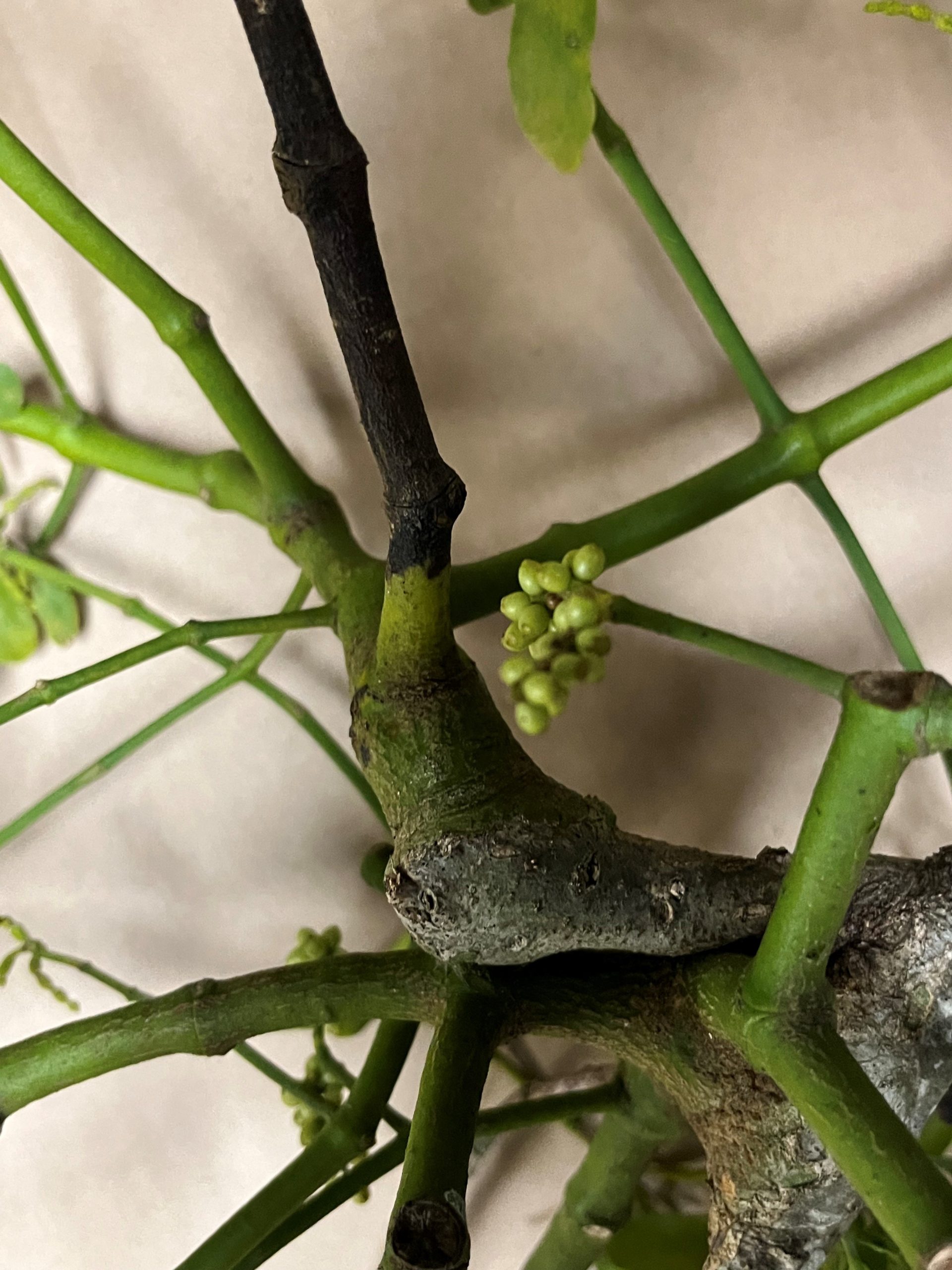
Does Mistletoe hurt trees?
Commonly, mistletoe is blamed for poor tree health. In most cases, it is the other way around. An overmature, declining, sparsely foliated tree allows mistletoe access to plenty of space and sunlight. A healthy tree with thick foliage usually can shade out any mistletoe that tries to become established. Additionally, a faster-growing, more vigorous tree sheds its older bark at a faster rate which also sheds off the sticky mistletoe seeds before they can sprout.
Controlling Mistletoe.
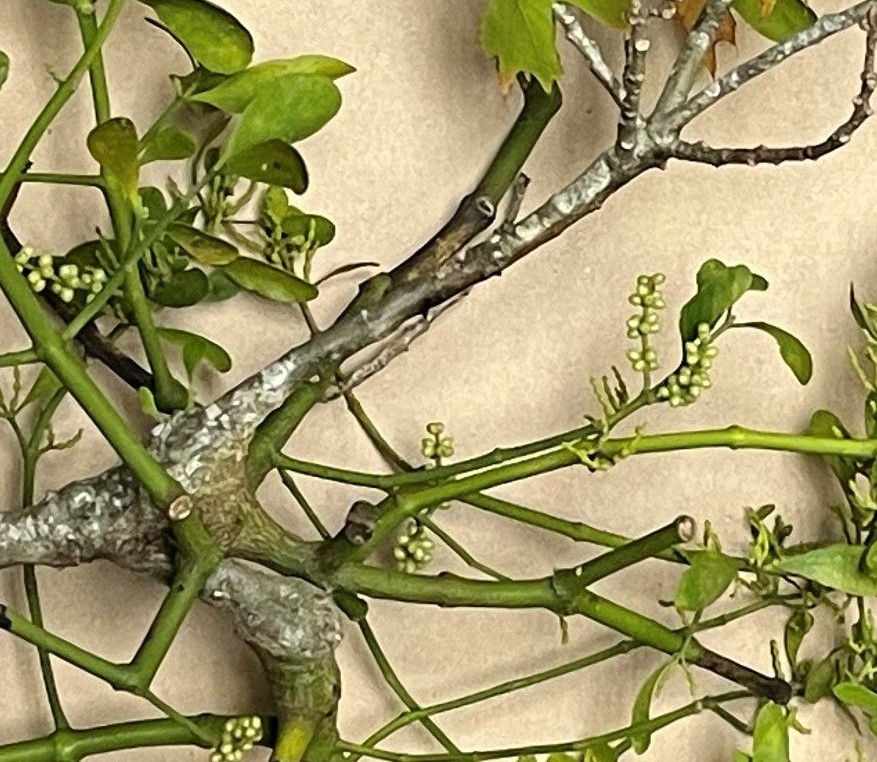
Mistletoe is hard to control. Historically the recommendation has been to remove the branch that the mistletoe is growing on. In a heavily infested tree, this type of pruning can be more damaging than the mistletoe. Other treatments include the use of a plant growth regulator, Ethephon, to suppress the regrowth of the mistletoe after removal. It needs to be applied by a licensed pest control operator and if applied at the wrong time, it can damage the tree as well. Sometimes simply removing the mistletoe clumps is the appropriate response. Yes, they will resprout, but it will reduce the spread of the mistletoe by removing the seed source. This stopgap treatment is fitting for an old tree where intensive branch removal would do more harm than good. A word of caution is needed here: if you are going to attempt to remove mistletoe in a tall tree, hire an arborist who can climb the tree safely.
Using mistletoe during the holidays.
 1
1