You’ve started to feel that welcomed North Florida cool-down, but your monthly water bill might still be reflecting the brutal summer heat. Many warm-weather grasses found locally, such as St. Augustine, Zoysia, and Bahia, will go dormant in the cold weather months. This means the brown grass you see in winter isn’t actually dead, it is just resting until the warm weather returns. If you keep watering your grass like it’s still July, you are inviting fungus, rot, and shockingly high utility bills. The result? Wasted water, damaged turf, and money literally pouring down the drain. If you want a healthy lawn heading into the new year, a fall irrigation tune-up is the most critical 30 minutes you can spend in your yard right now.
“Water Efficiently” is Principle #2 of the Florida-Friendly Landscaping Program.
An efficient irrigation system conserves water and helps to ensure that fertilizer and other pollution doesn’t flow into water bodies. However, even an efficient irrigation system can waste water if not appropriately programmed and regularly maintained.
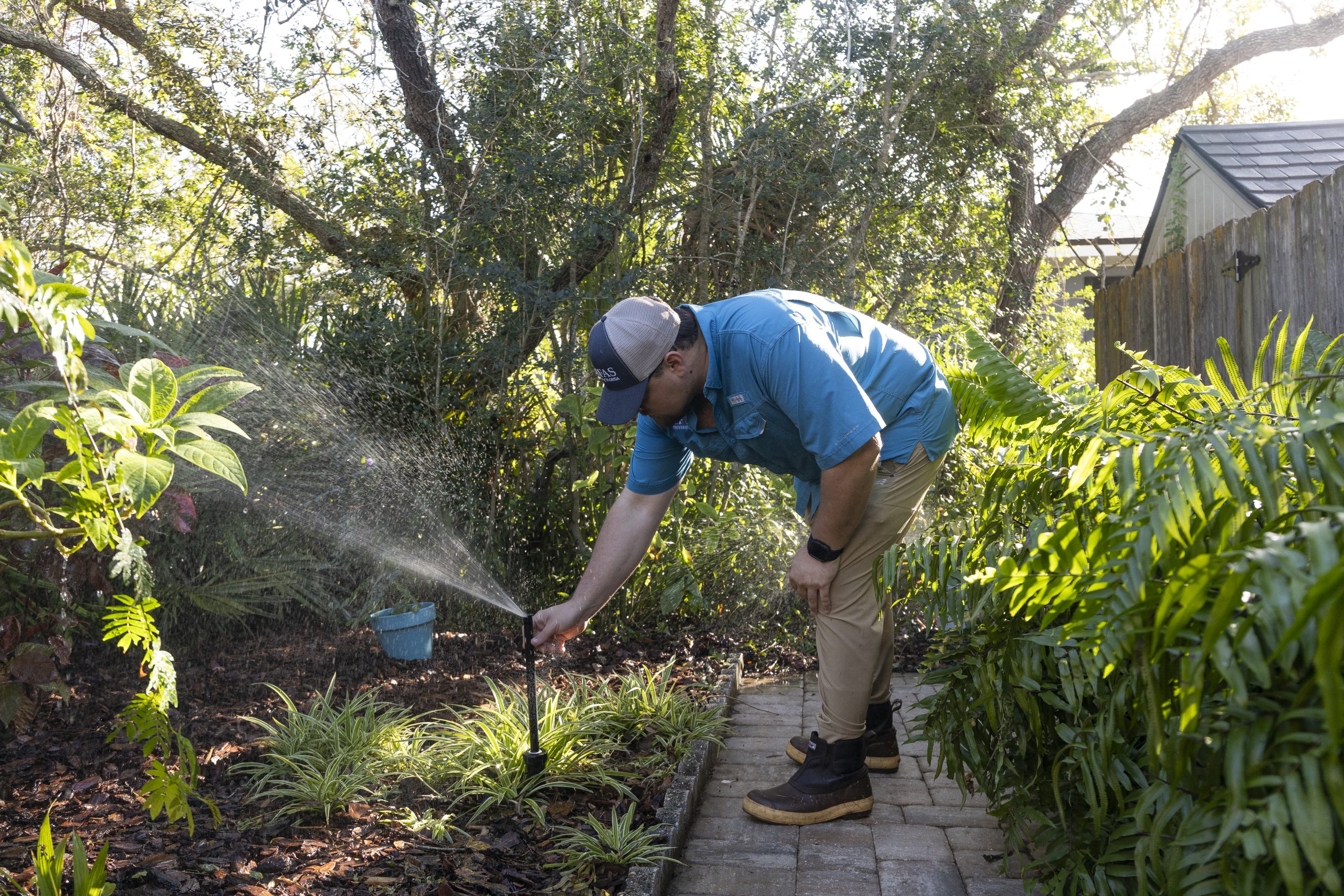
Firstly, it is important to know that Duval and most surrounding counties have an irrigation ordinance with watering restrictions in place.
In Northeast FL these local watering restrictions, set forth by the St Johns River Stormwater Management District, dictate the days of the week we are allowed to water and the time of day irrigation can be run. They also stipulate that during Eastern Standard Time, the first Sunday in November until the second Sunday in March, high volume (think rotors and spray heads that irrigate turf areas) irrigation must be reduced to just once per week. These restrictions apply regardless if the water is from a well or a utility company. Ignoring the restrictions can result in fines or legal action.
Beyond just turning the system down or off for the winter, there are some other simple steps you can take to ensure your irrigation is in tip top shape and working as efficiently as possible.
-
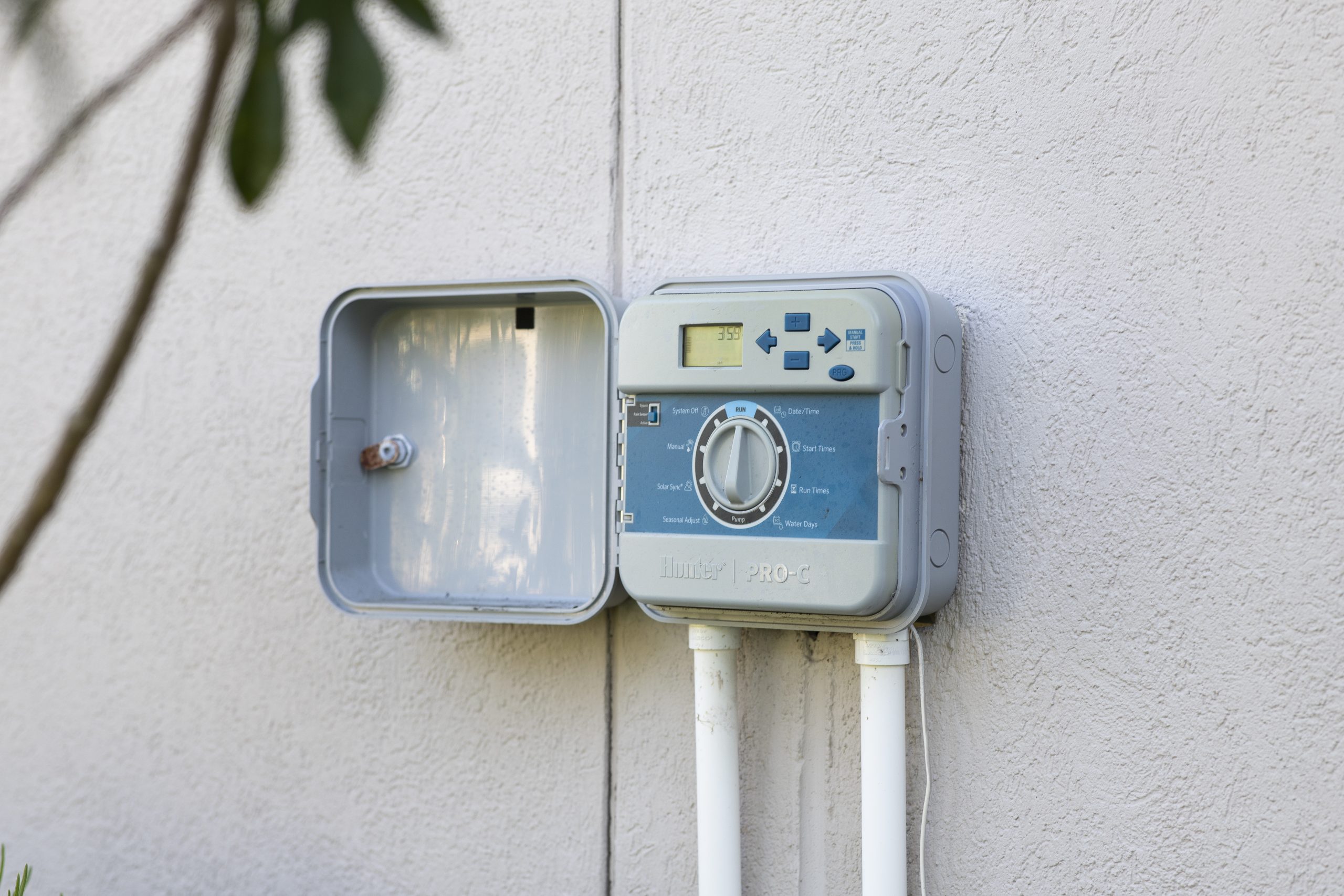
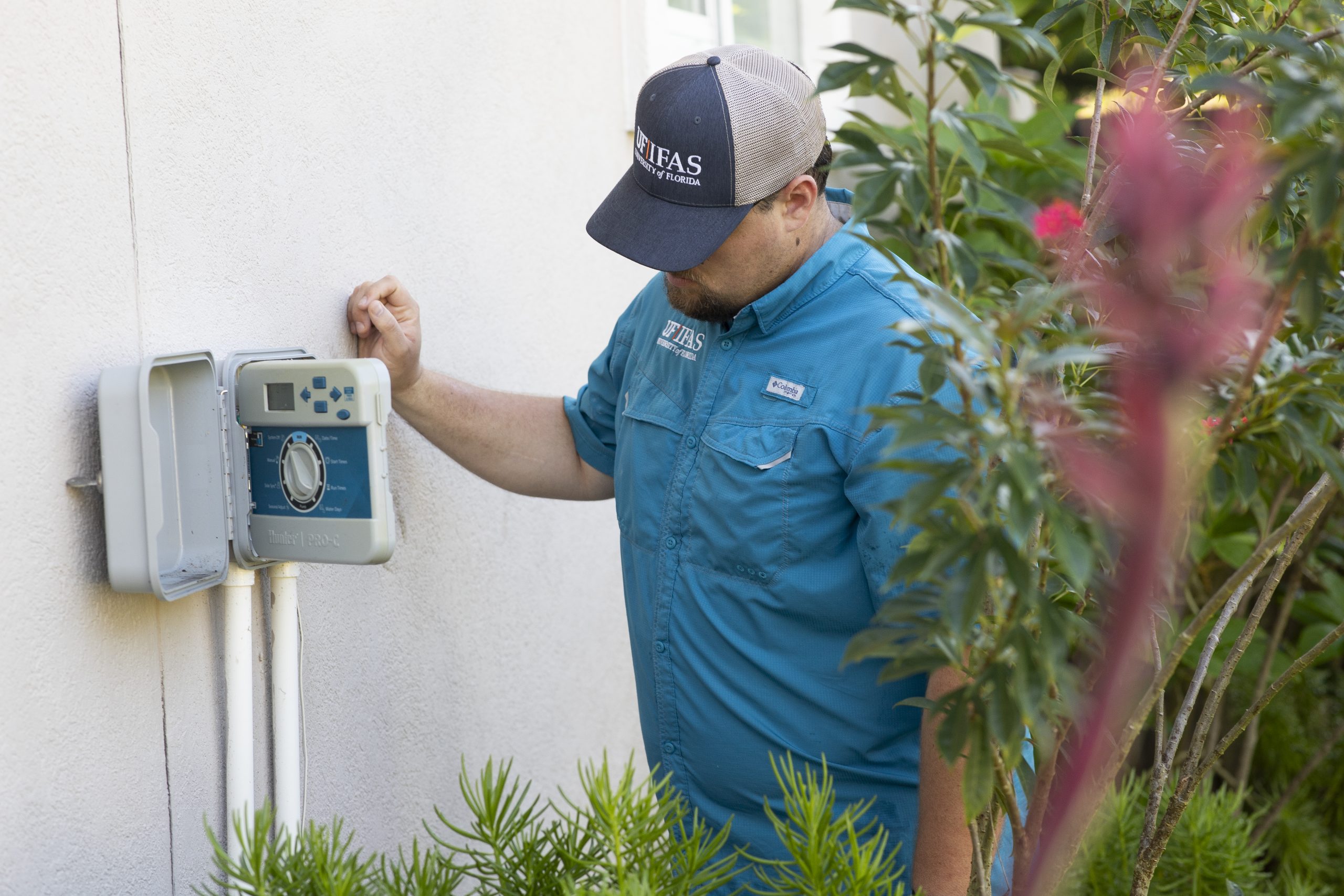
Locate your irrigation controller and check your programming
- Ensure your system is set to run no more than 1 day per week based on your watering restrictions set forth in the Duval County Irrigation Ordinance (or if you are in a different part of the state, find your local watering restrictions by searching your city name and “watering restrictions”)
- To learn how to set your timer, watch this video or locate your user manual and follow the instructions. If you do not have your original user manual you can search for a free downloadable .pdf copy online.
- Some systems may have a “seasonal adjust” option which reduces the amount of water that is applied, but not the number of days per week the system runs.

A typical irrigation controller. Often located in the garage or on an outside wall of the house. Photo Credit: Cat Woffard UF/IFAS
-
Check your back up battery
- Many irrigation controllers have a battery back up. This preserves the programming in case of a power outage.
- Check to see if your system has one, and if it does, ensure that it is in good working order and has been replaced within the last year.
- On some systems, if the battery is not in place or not functioning and the power goes out, the programming defaults to running the system 7 days per week!

Checking for the battery back up inside the main controller. In this case, the battery is located behind the front control panel in a secondary compartment. Photo Credit: Cat Woffard UF/IFAS
-
Locate, inspect, and test your automatic rain shut off device
- A functioning rain sensor is required by law on any in-ground irrigation system.
- Typically these devices are located at the roofline of the home and can be wired or wireless. (If the device is wireless, replace the battery yearly)
- Ensure it is located in an unobstructed spot where it has a clear view of the sky and is at least 5′ from any heating/cooling equipment. If it is obstructed by plant material, either prune the plant or relocate the sensor.
- This video has step by step instructions about how to test your sensor and troubleshoot it if needed.
- Corks within these sensors have a life span of 1-3 years so frequent maintenance is necessary.
- If you find a problem that you cannot solve, contact an irrigation professional.
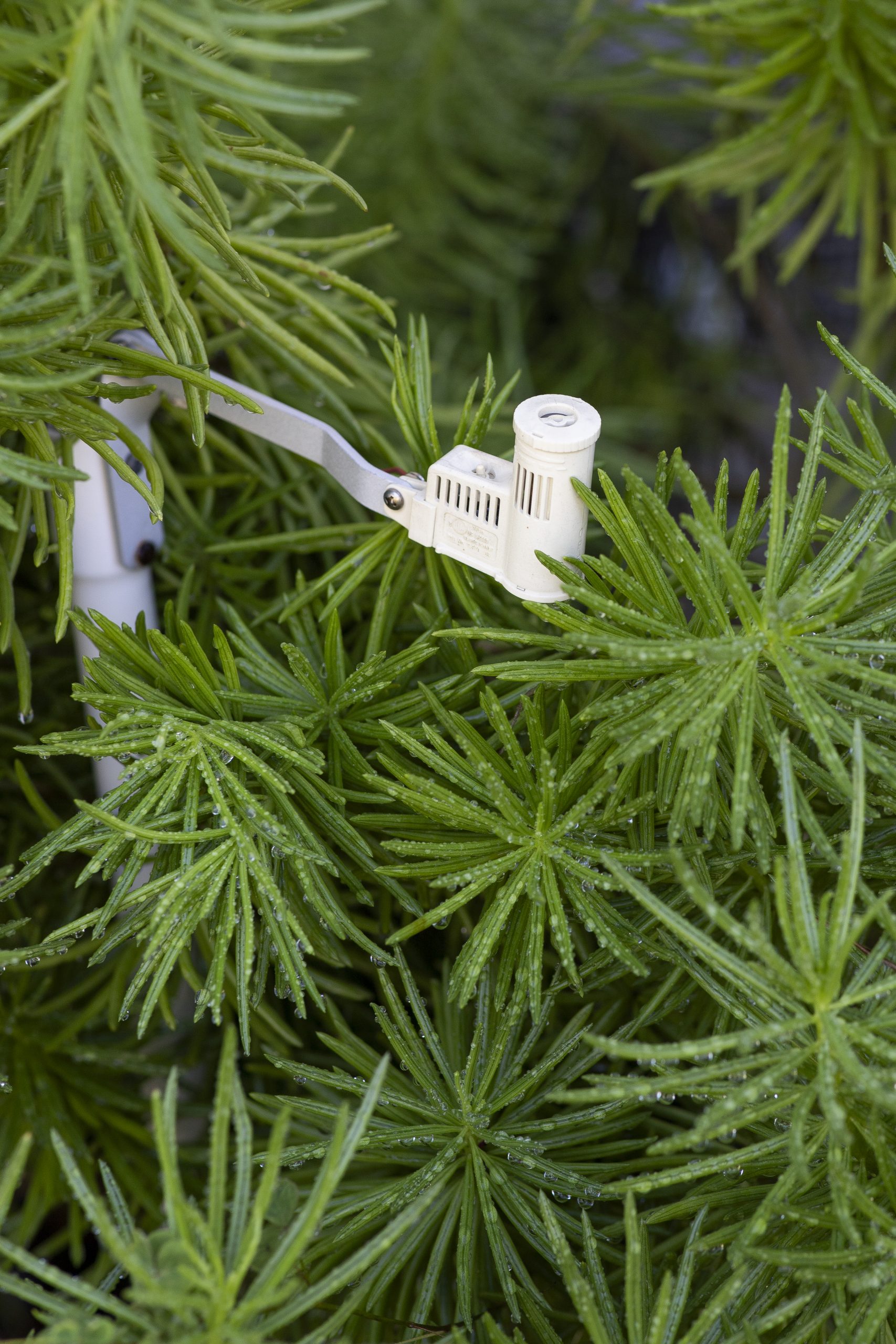
Poorly located rain sensor on a white pole visible to the right of the yellow flowers. This sensor is too close to the air conditioning condenser and is obstructed by the eave of the house and the shrub. A more appropriate location for it would be at the roofline over the irrigation control panel. 
Close up of rain sensor located in the shrub. Photo Credit: Cat Woffard UF/IFAS
-
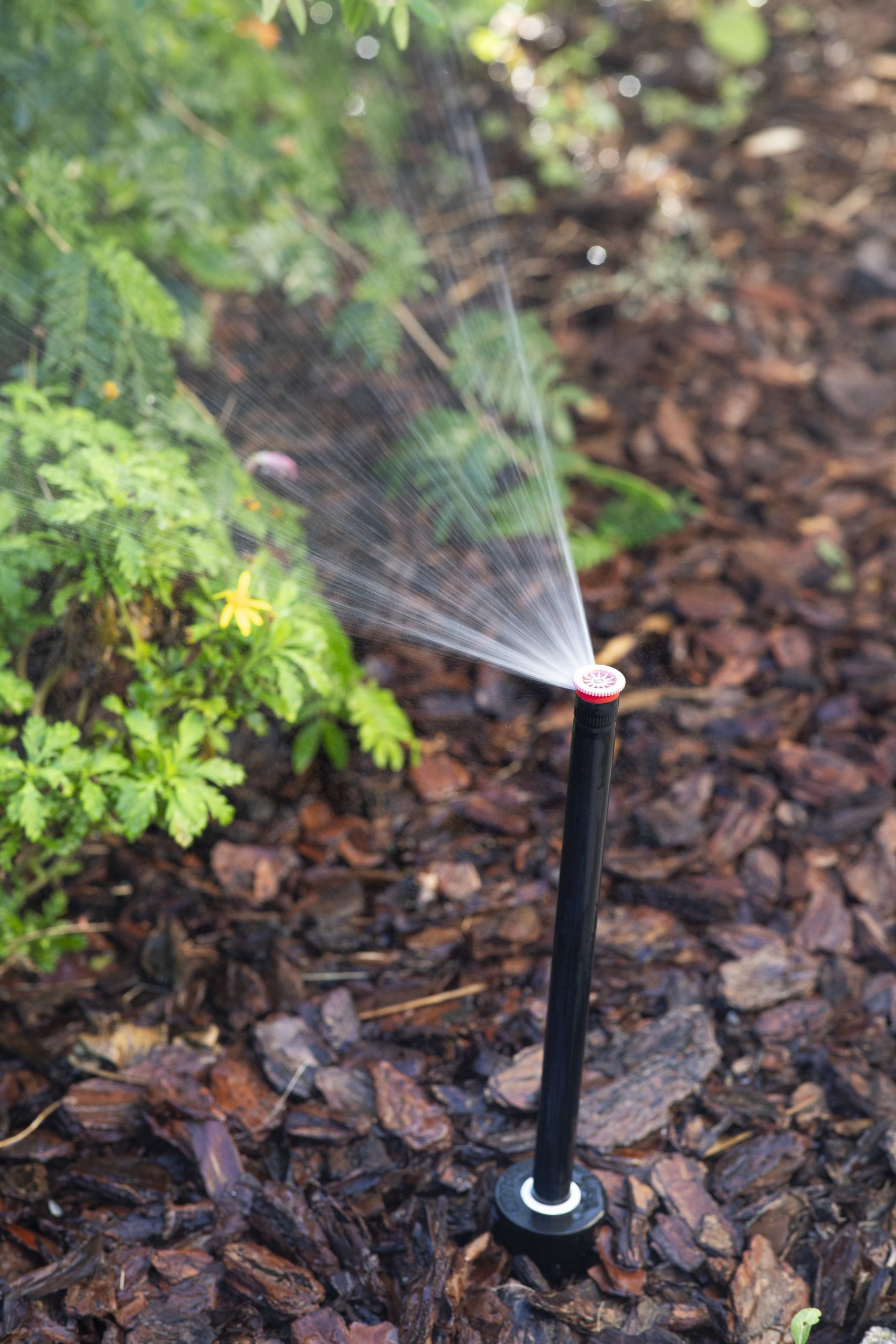
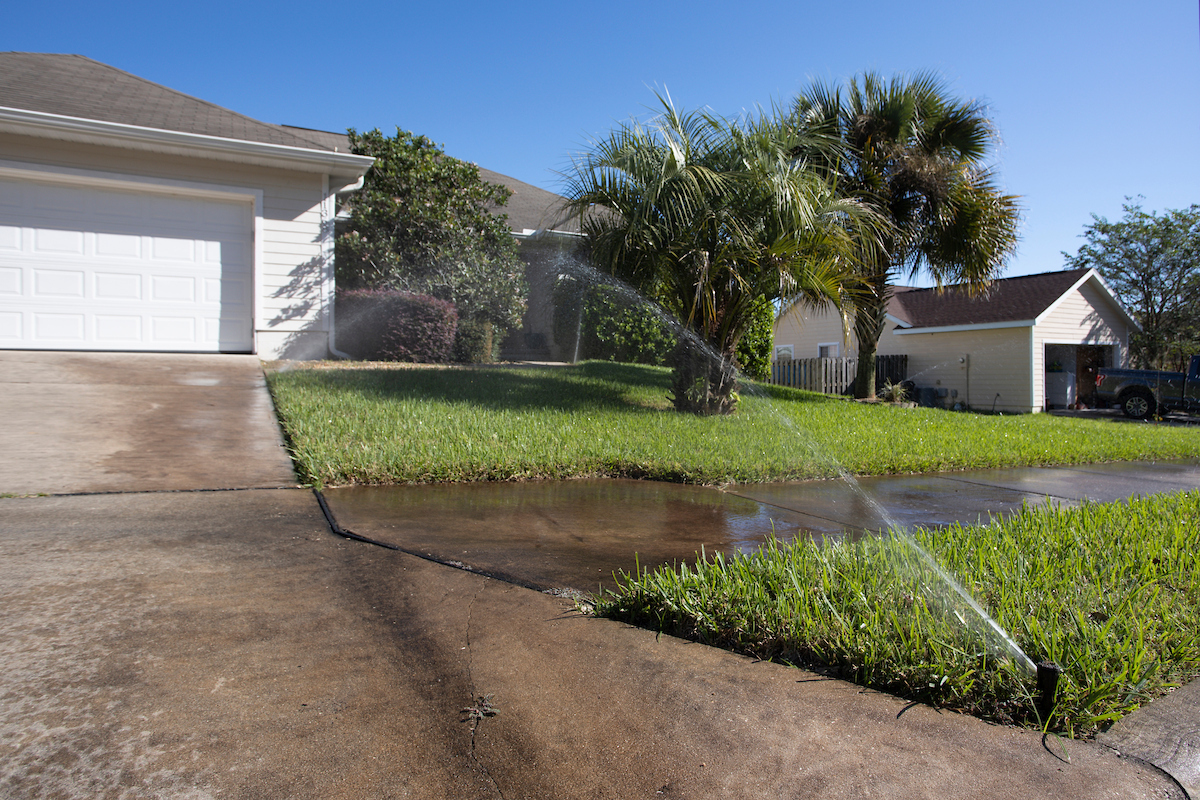
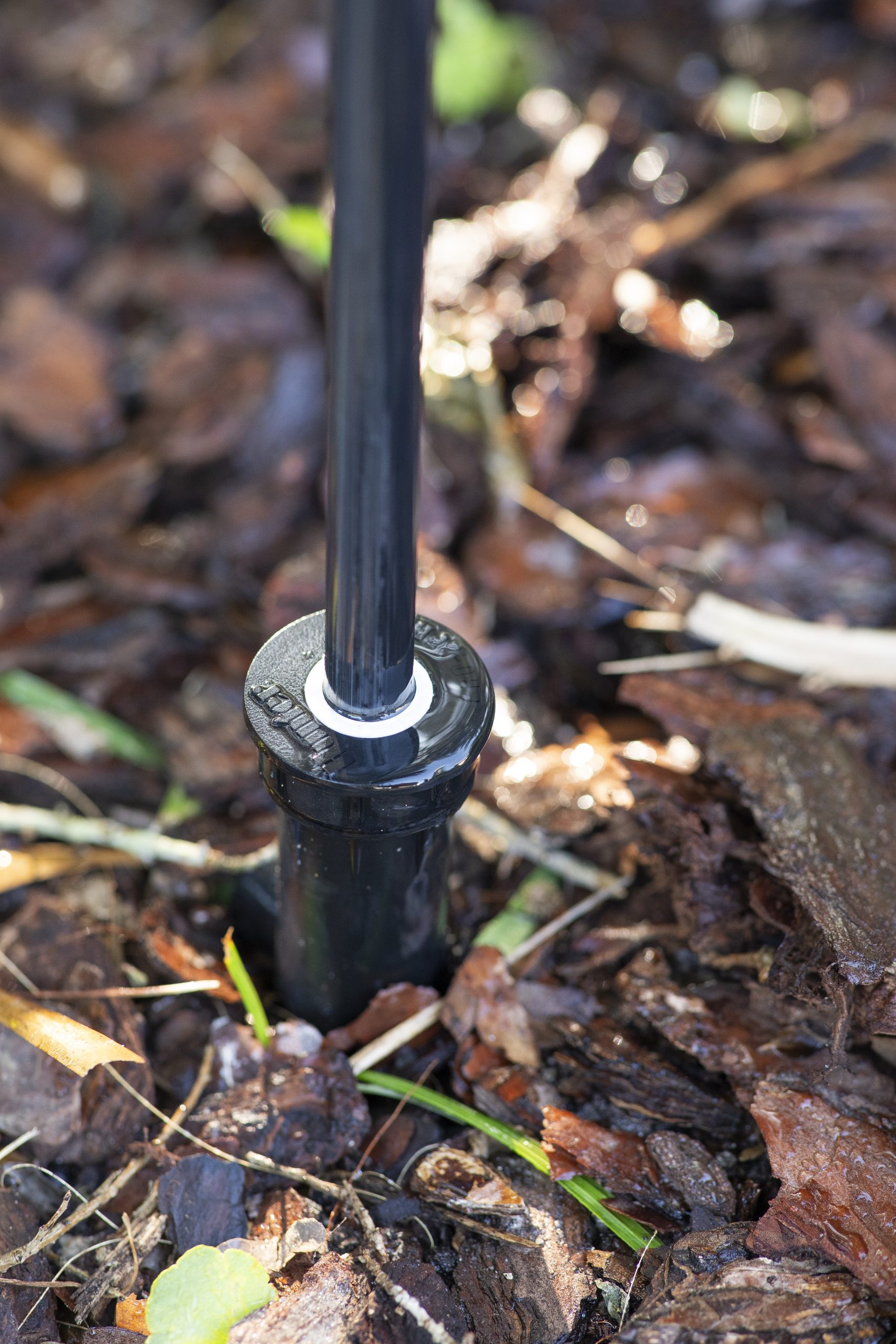
Run each zone for a few minutes at a time and look carefully for problems
- Leaking heads
- Overspray onto impervious surfaces
- Obstructed spray patterns either by objects or plant material
- Tipped/angled heads
- Heads or entire zones that do not pop up or spray
- If you find any of the above issues, make a list and mark the location of the problems with flags or on a map of the yard. Then, address each problem or contact an irrigation professional to conduct a service call at your address.

Problem: Irrigation head obstructed by a rain barrel. This irrigation head needs to be moved now that a rain barrel has been installed. Photo Credit: Stephanie Means


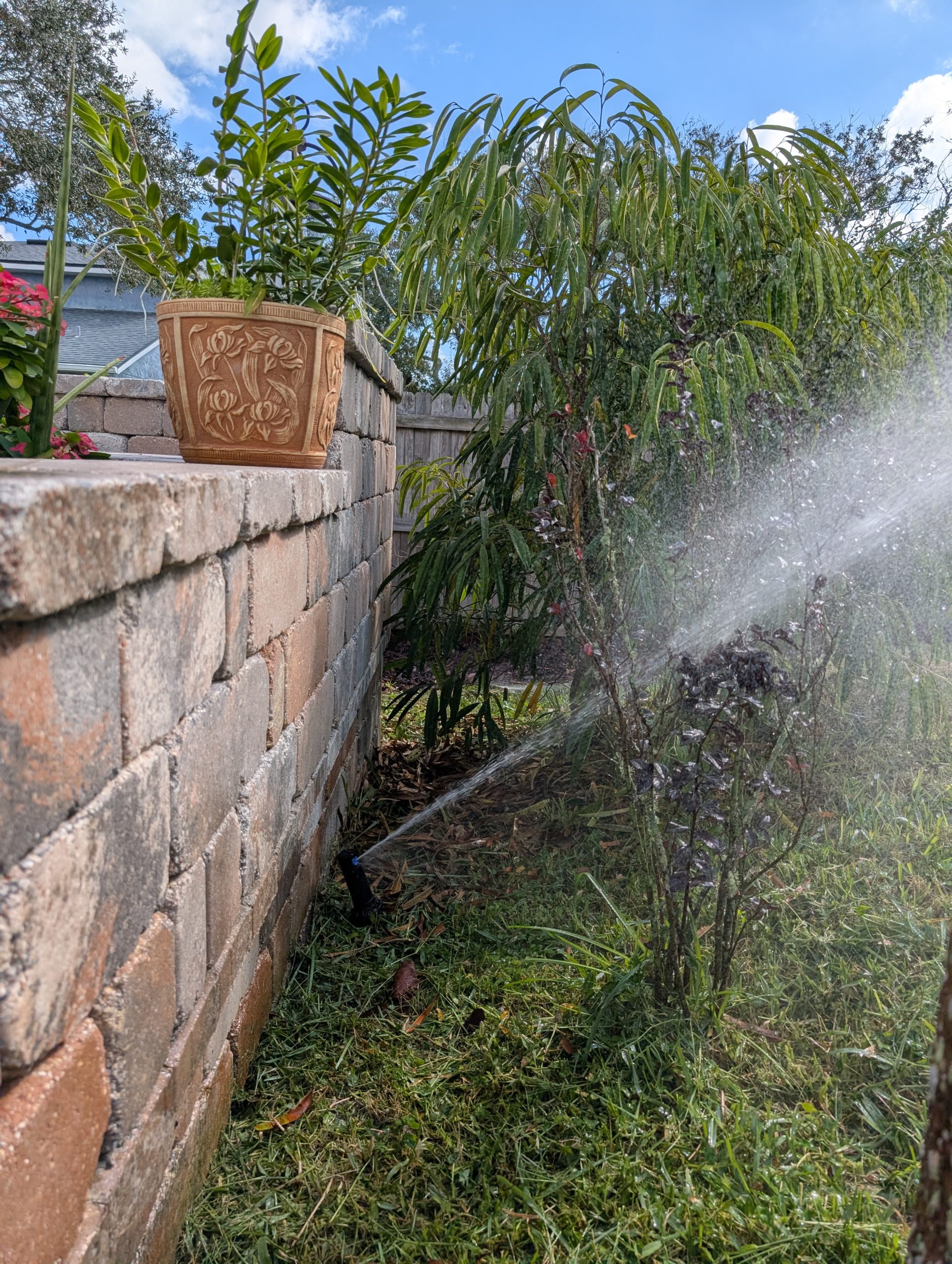
Forget raking leaves—in Florida, the priority this fall is adjusting those sprinklers!
So, plan some time this weekend to go through the easy steps above to tune up your system and ensure your lawn survives the ‘winter’ looking better than ever. If you are a residential JEA customer with an in ground irrigation system that uses potable water, you can sign up for a FREE irrigation assessment where a JEA representative will help guide you through the steps above at your residence. For more information about the Florida-Friendly Landscaping Program and for other ways you can save water in your landscape see here.
 3
3