If you’re new to fall vegetable gardening in northeast Florida, you might be wondering what we’re doing this time of year. From harvesting, planning and preparing beds, to starting seeds and planting, we’re doing a little bit of everything in our demonstration garden. Find out more about what you can do, and learn about upcoming events below!
Harvesting
In September and October there are several crops to harvest.
-
- Okra. Any plants left at this point are often becoming diseased and less productive, so we harvest the last of it and pull up the plants.
- Hot peppers. Unlike many bell peppers, hot peppers continue to produce, so if we have room we leave them. If we need the space for cool season crops, we harvest and pull them up.
- Sweet potatoes. Sweet potatoes are a warm season crop that requires 120-150 days to produce tubers. We typically get slips in the ground in early May, so by September they are ready to harvest. We cut back the vines and use a fork to lift up from underneath the tubers so they are not damaged. After curing in a warm dark place for two weeks, they are sweeter and ready for long term storage in the pantry.
- Peanuts. Peanuts are another great warm season crop. Depending on the type of peanut we have and when we planted, they are ready for harvest in 135-155 days, usually in September. We check a few to see if the seeds inside the pods are turning darker. If so, they are mature and ready to harvest. As with sweet potatoes, we lift up from underneath with a garden fork to avoid damaging the pods. If we plan to dry the peanuts, we pile the harvested plants in fluffy piles to cure for a week or so and let them cure in warm, hopefully dry weather. After curing we cut off the pods, wash them, and then roast.
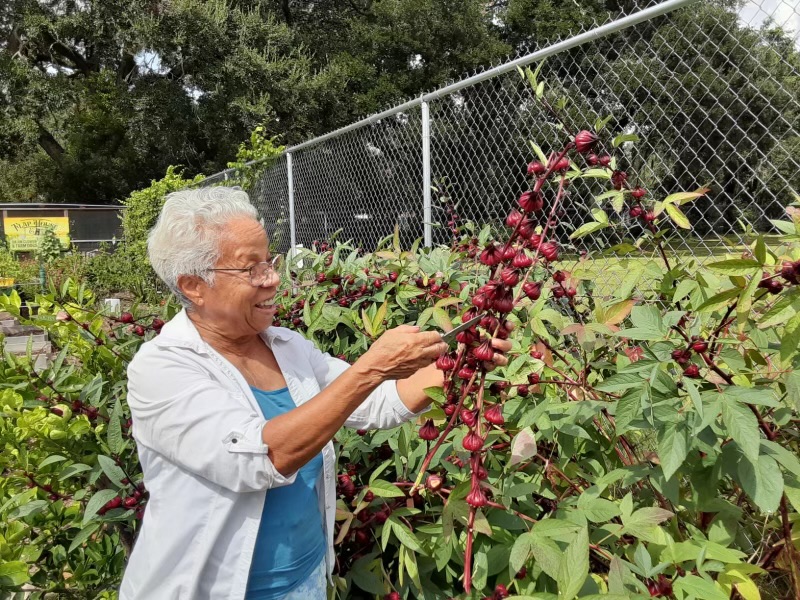
- Roselle. Roselle, a relative of ornamental hibiscus, finally begins flowering and producing calyces in the fall. We harvest those calyces to make jams, teas and Jamaican sorrel drink.
Planning
Early fall is a time when our beds are transitioning. And that requires some planning. We look at our planting plans from the previous 3-4 seasons to determine where our fall crops should go. It’s not always easy in a small home garden, but rotating crops by plant family each season is a good idea. This helps avoid build up of diseases or pests that particularly love specific plant families. So, if we planted okra (a member of the hibiscus, or malvaceae family) in a bed in the spring, we plant a crop such as broccoli (a member of the cabbage, or brassicaciae family) in the fall. UF IFAS Extension’s Florida Vegetable Gardening Guide contains plant family information for many common garden crops.
Preparing Beds
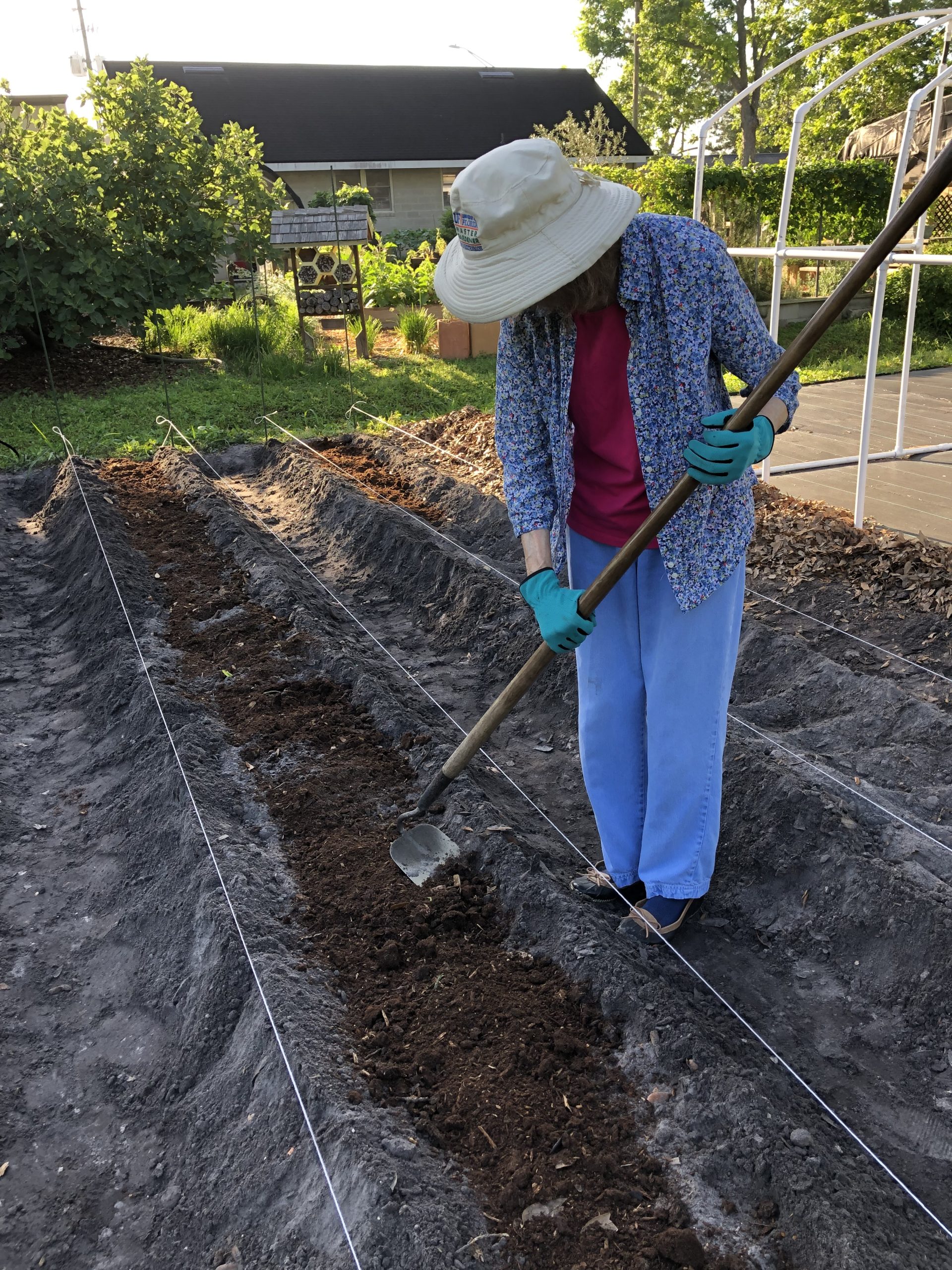
If we have solarized beds over the summer months, we carefully remove and dispose of the clear plastic. The beds are now ready to plant, and we are careful not to disturb the soil any more than necessary to plant. We don’t want to stir up pathogens from lower in the soil column or add any new ones to the top.
If we did not solarize a bed, we make sure it’s weeded and add additional organic matter. We use well composted horse manure because it’s available in large quantities. But you can use composted cow manure or home-made compost. Then turn or till it in. If you prefer a no-till garden, you can layer different organic materials on top of the soil, water it in and wait. This is called sheet composting. No matter which method we use, we do this well before we plant.
Starting Seeds
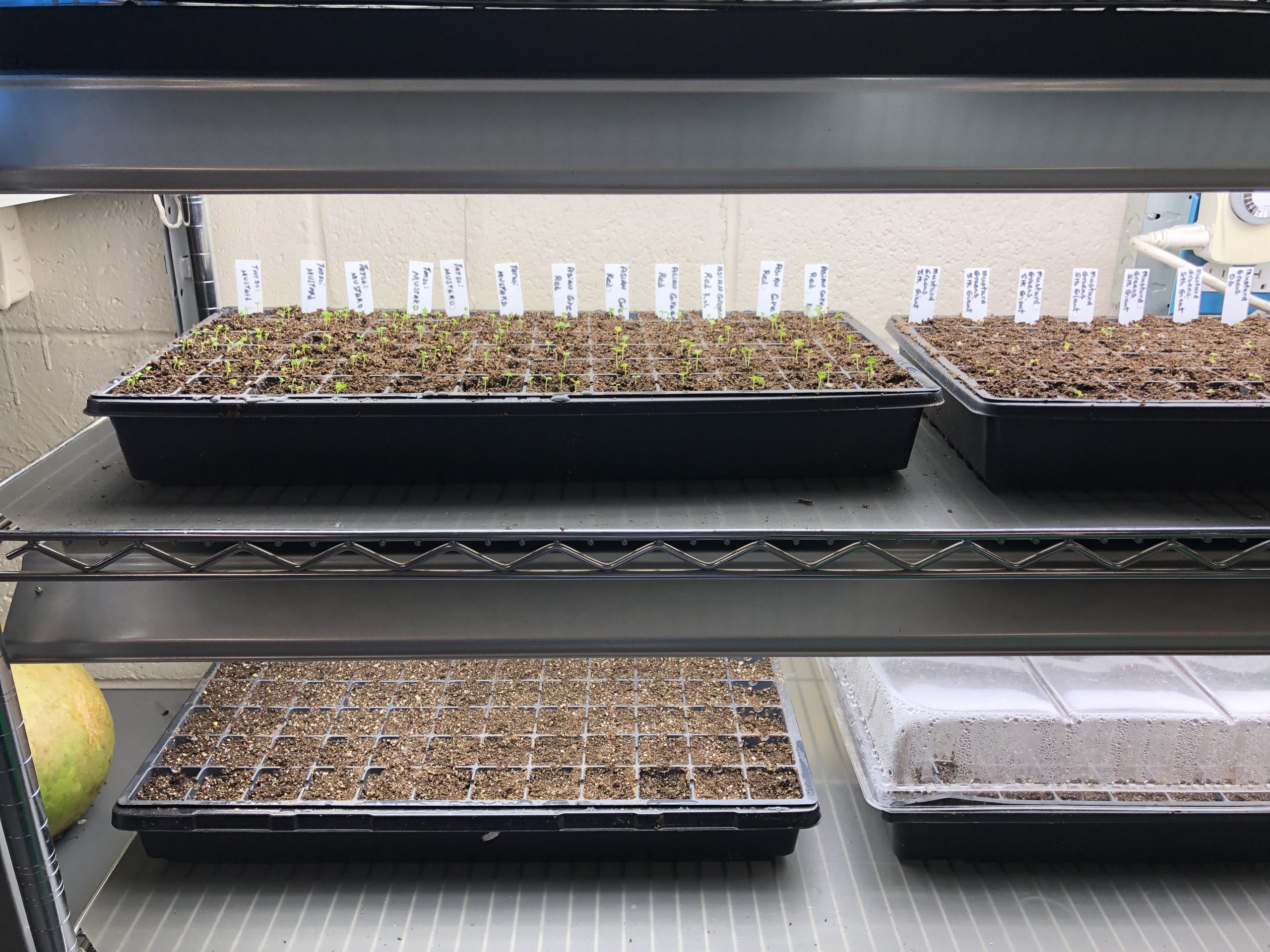
Even though we started many of our fall crop seeds in August, we continue starting seeds for additional crops. Some crops we direct seed where they will grow, such as radish, squashes, turnips, onions and carrots. Others we start as indoor transplants. We wait to start lettuce seeds, in particular, because they often struggle with warm spells in September and October. By November the weather is usually consistently cool, and they are ready to set out in their beds.
Planting Seedlings
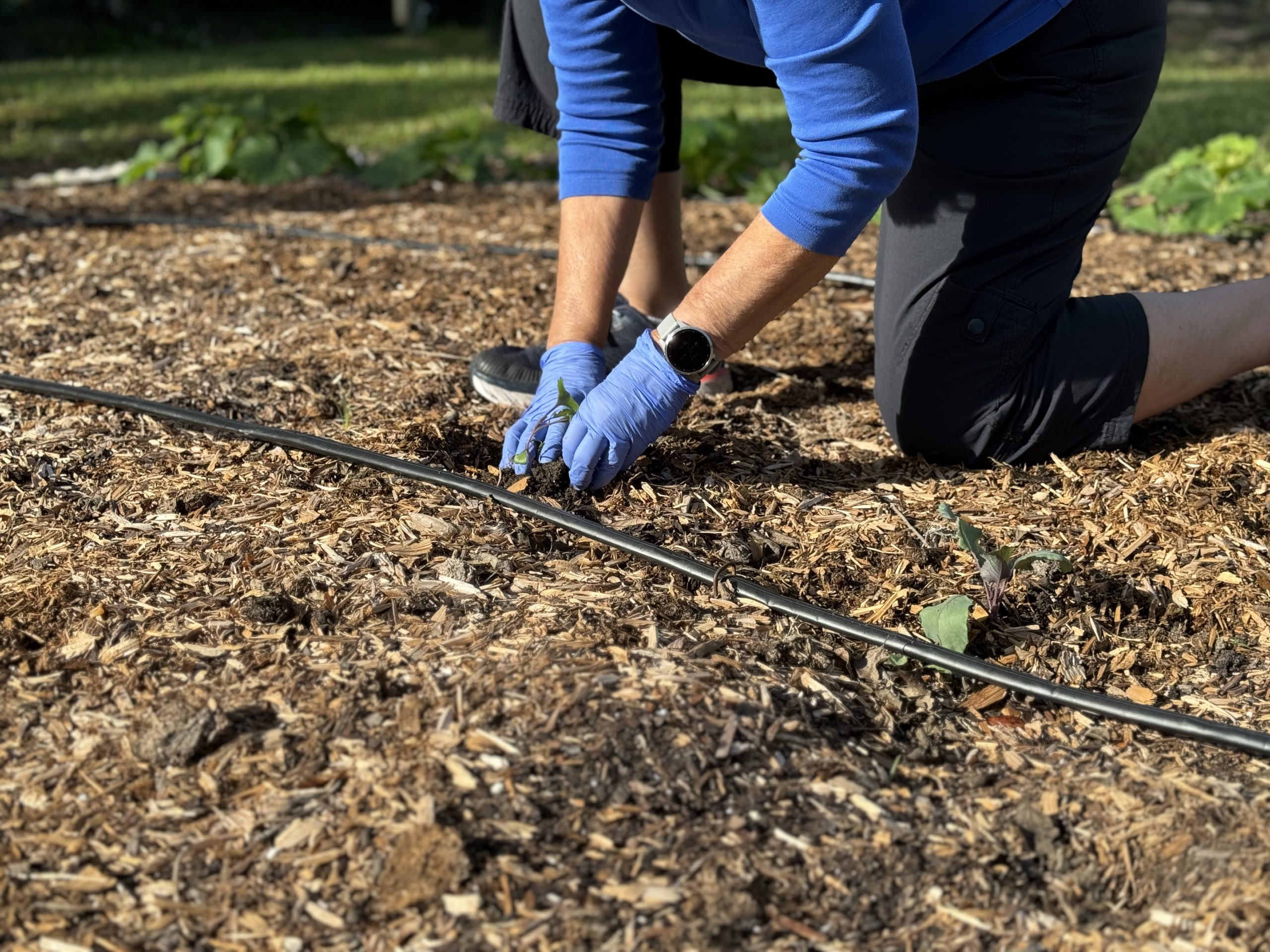
By September we are planting the first of our 4-6 week old seedlings outside into the garden beds, according to our planting plan. We mix in a little extra organic matter and a small dose of slow-release fertilizer and water them in well. Once we have the seedlings set, we re-install our micro irrigation to match the spacing and type of crop we have for the cool season. And finally, we make sure our irrigation timer is set and has a working battery.
In Summary
No matter what part of vegetable gardening you like best, you can do it in the fall. And it’s such a beautiful time to be in the garden. The days are finally cooling off and the air is so much drier.
Upcoming Events
If you’re interested in learning more about fall gardening, join us for one of the events below.
- Sept. 24–Workshop on Soil Blocks for Seed Starting. Take home a planted block.
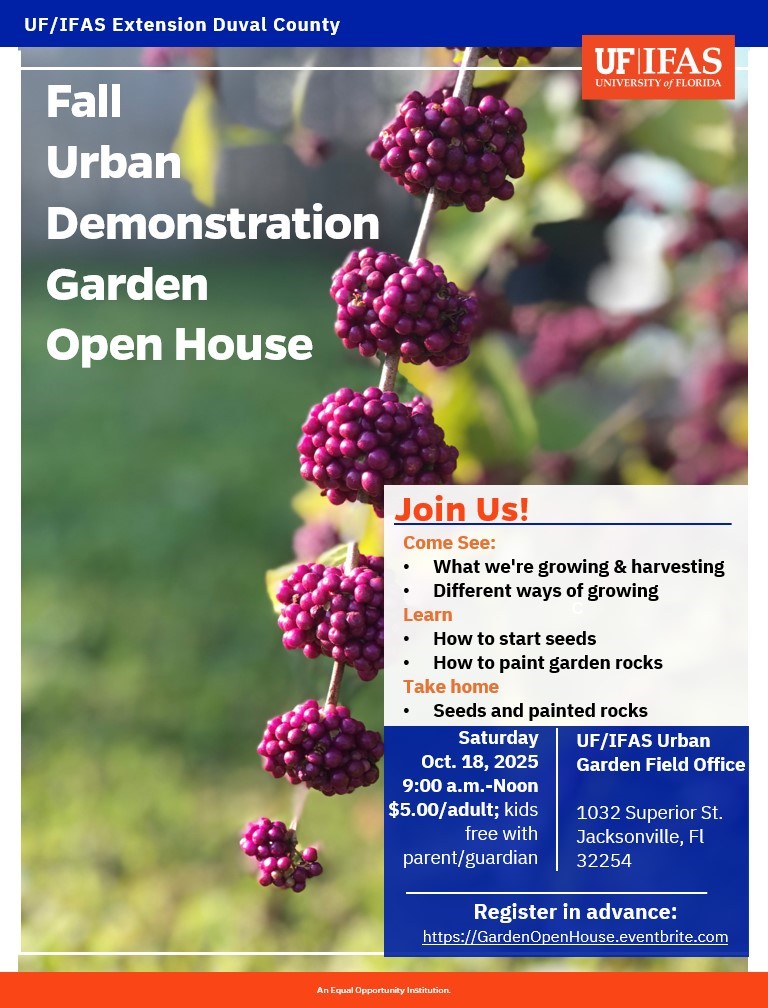
- Oct. 18–Urban Demonstration Garden Open House. See what we’re growing and harvesting in the fall. Learn about different ways of growing and how to start seeds and paint garden rocks. Kids and families are encouraged to attend!
- Oct. 24–Class on Growing Your Own Strawberries. Take home bare-root plants.
All require pre-registration and a small fee to cover materials. You can pre-register for all on Eventbrite.
 0
0