If the bottom end of the tomato (the one that’s not attached to the plant) is turning black but the rest of the tomato looks fine, you may have blossom end rot (BER)
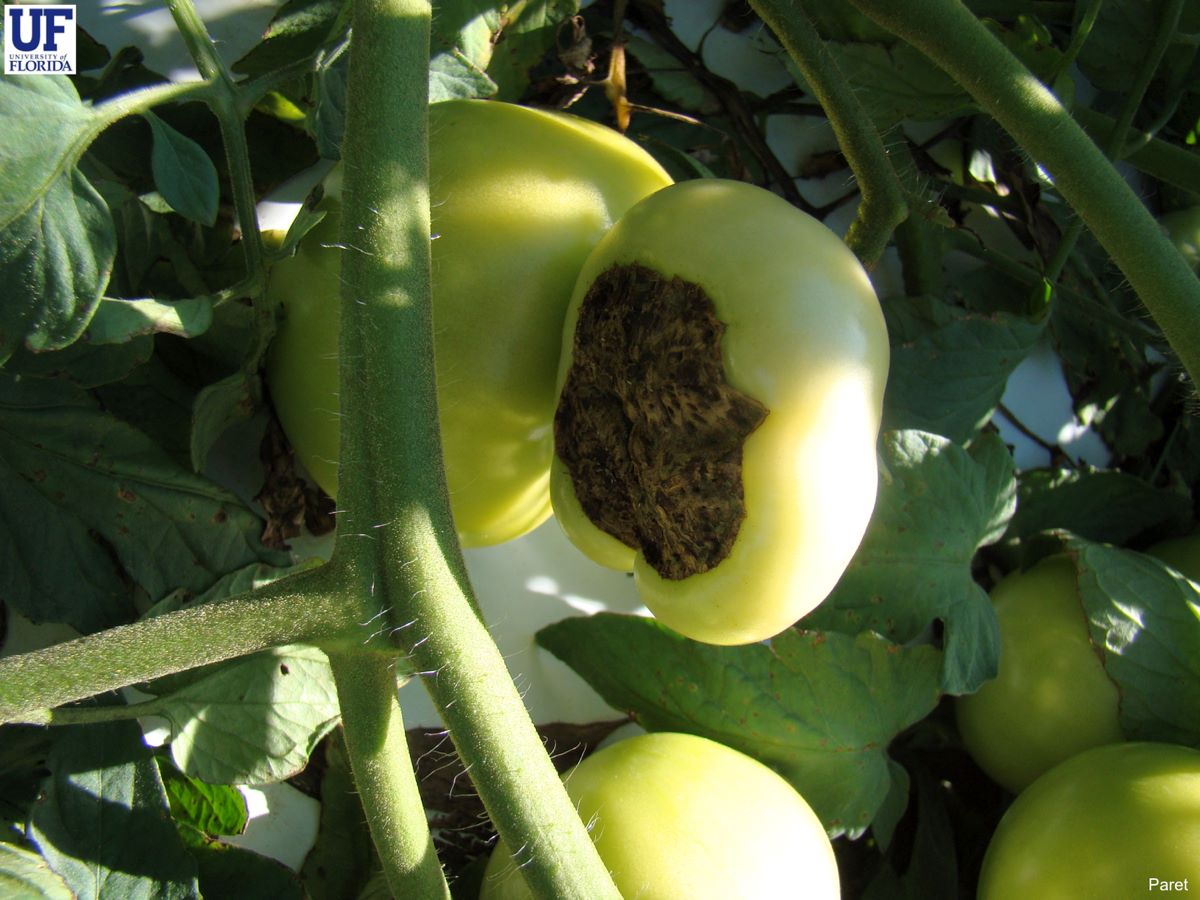
This is not a disease, and it is not caused by an insect pest. It happens when not enough calcium has been making its way with water up from the roots to the developing fruit. Lack of calcium causes cell walls in the fruit to break down, leading to invasion by a secondary pathogen. BER can also affect peppers and cucurbit crops. Once you have BER on a fruit, that one can’t be fixed. You can, however, prevent most cases of BER.
You may think this means you simply need to add more calcium to the soil to solve the problem
Although this may be a solution to the problem, especially in a raised bed or container, our native soils often have plenty of calcium. And our irrigation water often has more. So how can there be a deficiency in the fruit? There are three main causes:
1. Inconsistent watering.
Calcium is transported up through the plant in water. If watering is erratic, then supplies of calcium to the developing fruit are also erratic and may be missing when needed.
2. Over-application of nitrogen.
Excessive nitrogen can cause excessive leaf growth, redirecting water (and calcium) from the developing fruit to the leaves. The ammonium form of nitrogen can also inhibit calcium uptake.
3. Unavailability of soil calcium.
This can be due to an excess of soil magnesium or potassium, lack of adequate soil moisture to move the calcium, or even damage to the root tips that take it up.
Once BER is apparent, solutions are limited
You can try adding calcium to the soil, but if lack of soil calcium was not the problem, adding more will not fix it. Applying calcium solutions to the leaves is generally ineffective because the plant can’t move calcium from the leaves to the fruit. Harvest the damaged fruit and change cultural practices going forward. Water consistently. Add mulch to help soil retain moisture. Get soil nutrients tested and amend or reduce fertilizer applications. Avoid damaging plant roots. Blossom end rot is definitely a case where an ounce of prevention is better than a pound of cure!
For more information on blossom end rot:
• Blossom End Rot in Bell Pepper: Causes and Prevention
• Blossom End Rot on Tomatoes
For more information on soil testing:
• Landscape and Vegetable Garden Test Form
Article written by Beth Marlowe, Urban Garden Program Assistant June 2023
 0
0