If you are one of the many people who have recently started calling Jacksonville home, let me extend a welcome
I too, am a recent transplant, having moved here not quite two years ago from Memphis. Moving to Florida is a major adjustment for most gardeners, myself included. After I finished mourning the peony collection I left in Tennessee, I started to dig in and learn the ways of a sub-tropical landscape. Allow me to share some advice that I hope will be helpful to you as you begin your new Florida garden.
First off, know your zone
The USDA Hardiness zone map shows that Duval County is in hardiness zone 9a and 9b. Florida is a big state, and portions of it are in Zones 8,9, 10 and 11. So, you need to be careful what you plant because we do get freezes here. Some things that live in Orlando, just a couple hours away, will die in north Florida winters. Before you spend a lot of money on a statement plant or palm, check the zone the plant can live in. There are microclimates and people often try to cheat a bit if they live near a body of water, but know you are taking a chance if you push your zone.
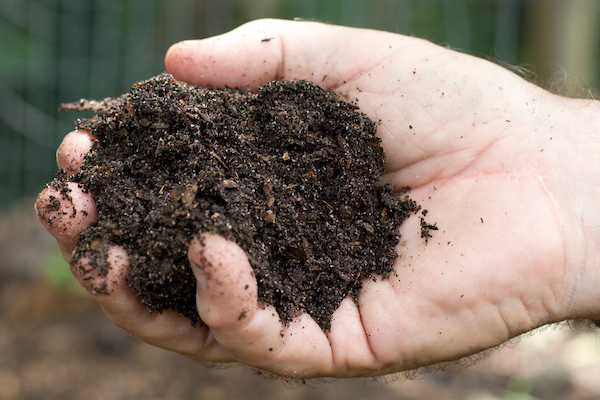
sandy soil
UF/IFAS Photo by Tyler Jones
Soils are the next adjustment for most new Florida gardeners
I was shocked to find out how sandy my new back yard was. Sandy soils mean good drainage. On the other hand, sandy soils also have less ability to hold onto essential nutrients. Most of the commonly found plants at the garden center need soil that holds onto nutrients. Unless you plan on growing all Florida native plants, you should add compost into your beds. Compost increases the soil’s ability to hold moisture and nutrients better. In Duval County, the pH can vary a lot, depending on how close you are to the beach, among other things. You can easily find out what your soil pH is by bringing a sample to the Duval extension office for a free pH test.
When you think about fertilizers, you need to know that our soil is naturally high in phosphorus, which is the middle number on the bag of fertilizer
So, unless a soil test tells you differently, you should look for a fertilizer that has a 0 in the middle, for example, 15-0-15. Speaking of fertilizers, Florida residents need to be very cautious about
how, when and how much nitrogen they apply to their landscape. We are surrounded by water and have a responsibility to protect our rivers and ocean. Too much nitrogen running off your landscape contributes to harmful algal blooms. If you are in doubt about how to appropriately fertilize, please look online at the Ask IFAS website or call the extension office for help.
Asking questions of other gardeners is a great way to learn
Come to Extension classes at our office or at local libraries. There are other great gardening groups in Jacksonville as well. Asking questions of other gardeners is a great way to learn. Your local garden club, arboretum or specialty plant group comes to mind. For instance, when I was in Memphis there was the Tennessee Native Plant Society and even a Memphis Camellia Society that were a great resource. Find your people. Put down your roots.
Article written by Tonya Ashworth, Environmental Horticulture Agent, June 2023
 0
0