Keeping water in check on a farm doesn’t have to involve fancy gadgets or a maze of plans. It’s all about a few steady ideas that anyone can follow. First, picture where every drop comes from rain, a well, or a pond and how it moves through the field: soaking into the soil, evaporating, or being pulled up by the plant (transpiration). Once you have that picture, a quick chat with your Extension agent can turn it into a simple and inexpensive water-saving plan.
Water does more than just wet the soil.
Water is the plant’s highway. It carries dissolved nutrients, expands cells, and even shuttles chemical signals that tell a tree when it is stressed, ready to flower, or needs more sugar. In plain language, good water management means looking at the whole plant‑soil‑air system—from the top inch of soil to the leaf tip.
What citrus needs
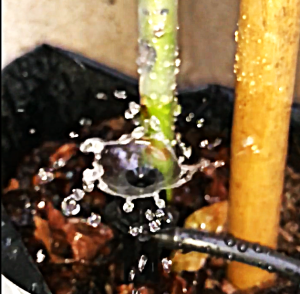
Citrus trees have a deep tap‑root that can reach two to three meters, but they also develop a dense carpet of shallow lateral roots just below the surface. Those fine roots feel the first sign of a dry spell, so keeping the topsoil moist is especially important. UF/IFAS notes in the Citrus Production Guide that maintaining about 60 % of field capacity in the 30‑45 cm layer gives steady growth without encouraging an over‑vegetative flush that can water down fruit quality. A light mulch of straw, pine bark, or biodegradable film protects those root hairs and cools the soil, both of which help the tree stay productive.
Phenology matters
The timing of water use is just as critical as the amount of water used. During flowering and fruit set, citrus has a steep water demand; a brief dry spell at this stage can reduce flower retention, shrink fruit size, and lower sugar concentration. Conversely, excess water after fruit set can promote vegetative growth at the expense of flavor development. Monitoring the crop’s phenological stage and matching irrigation to those windows is one of the most effective ways to protect both yield and quality.
Simple ways to cut losses
Mulch acts like a blanket, shading the soil, slowing wind‑driven drying, and keeping the temperature down. After harvest, trimming or pulling up leftover foliage removes extra surface area where water can escape.
Recommendations for irrigation

- Choosing the right type for the crop is essential, and it doesn’t mean we have to reach for expensive micro‑sprinklers.
- Low-flow drip lines placed on the tree’s drip line deliver water right where the shallow roots sit, while a modest sprinkler can serve younger trees that haven’t yet sent a deep tap‑root.
- Timing is another lever: irrigating at night or early in the morning lets the soil absorb moisture before the sun pulls it back into the air. Adjusting how often and how much we water by using short, frequent pulses of about 15 to 20 minutes every three to four days keeps the root zone comfortably moist without pushing water past the usable depth.
- Positioning the sprinklers or emitters so their wet circles just touch avoids both overlap (runoff) and gaps (dry spots).
- When the budget allows, consider combining low-cost tools, such as a handheld soil moisture probe, a simple weather app that flags hot, dry days, and a cover crop calendar for the winter rows, which protects soil moisture between the trees.
- Finally, regularly check the water quality and the depth of the water table. Testing for salinity, pH, and obvious contaminants each season helps prevent root‑uptake problems, and monitoring the water table guards against long-term depletion. UF Extension’s “Groundwater Management for Farmers” fact sheet (https://extension.ufl.edu ) offers a quick checklist for these checks.
Final thoughts
Watering isn’t just about stopping wilting; it jump-starts photosynthesis, moves nutrients, and sends signals that tell roots to grow deeper and fruit to sweeten (while producing and sending thousands of compounds, including hormones). By timing, placing, and delivering water in a way that respects citrus root architecture, phenological needs, and by using inexpensive tools, proper mulches, and regular quality checks, you get healthier trees, better‑tasting fruit, and a farm that uses water wisely even when rain patterns shift.
Further reading (UF Extension
- Best Management Practices for Protection of Water Resources by the Green Industries (GIBMP_Manual_Web_English.pdf)
- 2025–2026 Florida Citrus Production Guide: Irrigation Management of Citrus Trees (CPG12/CG093: 2025–2026 Florida Citrus Production Guide: Irrigation Management of Citrus Trees)
- Mulching effect on water management in agro-ecological systems: a review | AQUA – Water Infrastructure, Ecosystems and Society | IWA Publishing
- Mulching effect on water management in agro-ecological systems: a review (Mulching effect on water management in agro-ecological systems: a review | AQUA – Water Infrastructure, Ecosystems and Society | IWA Publishing)
- Florida Automated Weather Network (FAWN – Florida Automated Weather Network)
- Microbial and mineral interactions decouple litter quality from soil organic matter formation (Microbial and mineral interactions decouple litter quality from soil organic matter formation | Nature Communications)
 3
3