Florida’s warm, humid climate makes it a paradise not just for people—but also for mosquitoes. These tiny pests are more than just a nuisance; they can carry serious diseases that affect humans, pets, and wildlife. Understanding which species are most common, what they eat, and how they impact our health is key to protecting yourself and your community.
Meet Florida’s Most Common Mosquitoes Vectoring Disease
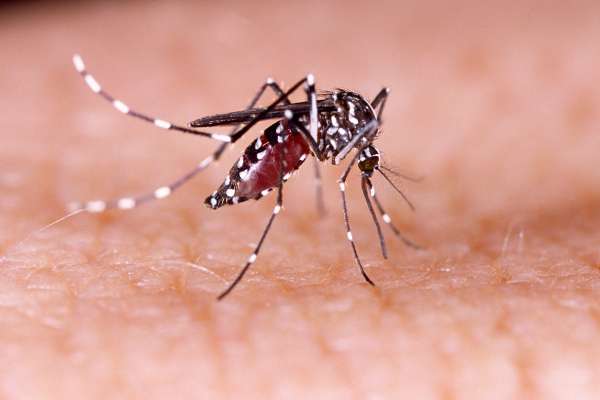
Aedes aegypti (yellow fever mosquito) and Aedes albopictus (Asian tiger mosquito) are aggressive daytime biters known for spreading Zika, Dengue, Chikungunya, and Yellow Fever. These mosquitoes thrive in urban settings and breed in containers of water. Read the blog on how to reduce breeding areas. Their life cycle from egg to adult takes about 7–10 days, and they primarily target humans.
Culex quinquefasciatus, the Southern House Mosquito, is a nighttime biter that transmits West Nile Virus and St. Louis Encephalitis. It prefers stagnant water and feeds on humans, birds, and mammals. Its life cycle is slightly longer, around 10–14 days. Interestingly, the pupae need about 36 hours at 81°F for the adult stage to emerge.
Lastly, Anopheles quadrimaculatus are known for transmitting malaria and dog heartworm. These mosquitoes are active at night and prefer clean water sources. Their life cycle spans 10–12 days, and they impact both humans and pets.
Mosquitoes Worthy of Mentioning
Aedes taeniorhynchus, the Black Salt Marsh Mosquito, doesn’t transmit major diseases but is infamous for its painful bites and swarming behavior in coastal region. It’s a nuisance biter with a life cycle of 7–10 days.
Since many gardeners use bromeliads in their landscape, the bromeliad-inhabiting mosquitoes (Wyeomyia vanduzeei and W. mitchellii) make this list. These mosquitoes lay eggs in bromeliads and are considered pests, but not known to transmit disease. If you have a high mosquito population in your yard, and you have bromeliads (particularly with “tanks”), you should be flushing the tank area weekly to remove the larvae. Bacillus thuringiensis israelensis or Bt crumbs can also be used in the bromeliad’s tank, but this is a tedious job.
Psorophora ferox is not known to be a major vector of human disease in Florida but also is worthy of a mention. It impacts mammals and birds mostly. However, it is known to be a ravenously, painful biter to humans. It lives in wooded areas and breeds in ephemeral water. If the pool of water dries up before the eggs hatch, they die. Out at sunset and sunrise, and swarm during the day to mate. There is not a control since it breeds in the intermittent pools of water in the woods.
Did You Know?
Only female mosquitoes bite and feed on blood to develop their eggs. Prior to mating, both the male and female mosquitoes feed exclusively on nectar. This diet difference is crucial to understanding their behavior and controlling their populations.
Symptoms to Watch For

Diseases transmitted by mosquitoes can cause a range of symptoms:
- Zika: Fever, headaches, rash, muscle and joint pain, conjunctivitis
- Dengue: High fever, flat red rash, joint pain, headache, continual abdominal pain
- West Nile Virus: Fever, confusion, neurological issues
- Encephalitis: Fever, stiffness, or headaches. More severe symptoms are brain swelling, signs of depression, sleeplessness or sleepiness, and death.
- Malaria: Cyclical fever, chills, tiredness.
If you experience these symptoms after a mosquito bite, seek medical attention promptly.
A Few Preventions
- Eliminate standing water around your home. (flower pot liners, tires, tarps that hold water, rain barrels, rain gutters)
- Use insect repellent with DEET, IR3535 or lemon eucalyptus oil, or picaridin on clothing and exposed skin
- Wear long sleeves and pants during peak mosquito hours
- Install screens on windows and doors, keep them rip-free
In Summary
Mosquitoes are more than just a seasonal annoyance in Florida—they’re a public health concern. From the aggressive Aedes species to the stealthy Culex and Anopheles, each mosquito plays a role in spreading diseases that can affect humans, pets, and wildlife. By understanding their life cycles, feeding habits, and the symptoms of the illnesses they carry, Floridians can take proactive steps to reduce exposure and stay safe. Awareness and prevention are our best defenses against these tiny but impactful threats.
Related Blog Posts:
- Ditch the Itch: Tips for Mosquito Season in Florida https://blogs.ifas.ufl.edu/gcrec/2025/04/16/ditch-the-itch-tips-for-mosquito-season-in-florida/
- Mosquito Defense Guide: Sprays, Devices and Clothing Tips Series 2 https://blogs.ifas.ufl.edu/gcrec/2025/06/18/keep-mosquitoes-away/
- Know your Enemy: The Diseases Mosquitoes Carry, Series 3 https://blogs.ifas.ufl.edu/gcrec/2025/07/25/know-your-enemy-the-diseases-mosquitoes-carry/
Need Help? For more information on managing mosquitoes and other home pests, contact:
UF/IFAS Extension Hardee County
507 Civic Center Drive, Wauchula, FL 33873
(863) 773-2164
Lisa Hickey: lisa.hickey@ufl.edu
Jonael Bosques: jonael@ufl.edu
Resources
Aedes aegypti (Yellow Fever Mosquito) Fact Sheet. 2016. https://www.cdph.ca.gov/Programs/CID/DCDC/CDPH%20Document%20Library/AedesaegyptiFactSheet.pdf
A Mosquito Psorophora ferox (Humboldt 1819) (Insecta: Diptera: Culicidae) 2018. https://edis.ifas.ufl.edu/publication/IN1100
Florida Container Mosquitoes. 2021. https://edis.ifas.ufl.edu/publication/IN1315
Mosquitoes. https://edis.ifas.ufl.edu/topics/mosquitoes
Mosquitoes and their Control: Integrated Pest Management for Mosquito Reduction around Homes and Neighborhoods. 2019. https://edis.ifas.ufl.edu/publication/IN1045
Southern House Mosquito Culex quinquefasciatus Say. 2019. https://edis.ifas.ufl.edu/publication/IN837
 0
0