Halloween is behind us the season of the pumpkin is still here. While being a classic symbol of fall, they can be a rewarding addition to your garden with the right care and timing. Whether you’re growing them for decorations, pies, or roasted seeds, pumpkins can thrive if you follow the right steps. Also, don’t forget to watch our Horticulture Happy Hour: Pumpkins video at the end of this blog.
Choosing the Right Variety
While you might dream of the giant pumpkins seen up north, our local heat and humidity make growing those monsters challenging. Instead, choose smaller and quicker-maturing varieties. According to UF/IFAS, good choices for our area include ‘Seminole Pumpkin,’ ‘Small Sugar,’ ‘Howden,’ and ‘Jack-Be-Little.’
The Seminole pumpkin is a very interesting option because it is native to Florida, more resistant to many pests and diseases, and can store well after harvest. This is a culinary variety and the sweet, orange flest is great for baking.
Planting Tips for Success
In our area, plant your pumpkins in March through July. Planting date will depend on the variety and desired harvest time. If you want pumpkins for fall decorations or Halloween, plant in late June to early July.
Select a full sun, well-drained location with plenty of room. Prepare your garden bed by adding organic matter such as compost to improve soil structure and fertility.
Plant seeds about 2 to 3 feet apart within rows with 6 to 8 feet between rows. Keep the soil moist but avoid overwatering to help prevent root rot.
Apply a balanced, slow release fertilizer at planting. Additional fertilization may be needed during the growing season but this should be done following soil test results, product label directions, and and periodically throughout the growing season, following label directions and plant needs.
Pests and Problems
Like most Florida garden plants, several pests can be an issue such as vine borers, cucumber beetles, and aphids. Check plants regularly and use integrated pest management (IPM) strategies—such as crop rotation, removing infested vines, and encouraging beneficial insects—to reduce chemical use while also achieving good control.
Pumpkins are susceptible to both powdery mildew and downy mildew during humid weather. To reduce these issues, provide good air circulation, maintain proper spacing, and water at the soil level instead of overhead.
Harvesting and Using Pumpkins
Pumpkins are usually ready to harvest when they reach full color and the rind is hard enough that it resists being punctured by your fingernail. Cut the fruit from the vine with several inches of stem attached, and cure them in a warm, dry place for about a week before storage.
Once harvested, pumpkins offer a variety of uses beyond Halloween and harvest décor. Seminole pumpkins and other small varieties are delicious roasted, pureed for pies and soups, or even used in bread and muffins. The seeds can be roasted for a healthy snack, and leftover pulp can be composted to enrich next year’s garden soil. Even your leftover jack-o-lanterns can be composted or be used to feed some livestock or backyard chickens.
Pumpkins and Mixology
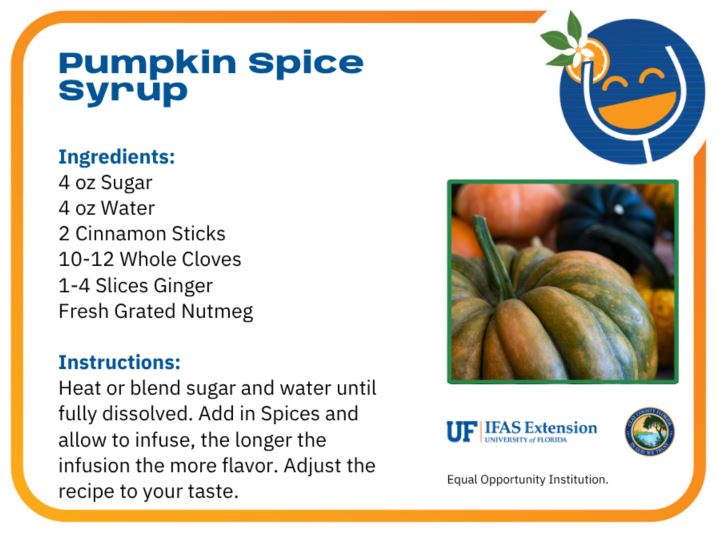
Honestly, you could get creative in using pumpkin pulp or juice to make some interesting drinks but for me, I prefer to evoke the flavors we associate with pumpkin spice like ginger, cinnamon, nutmeg, and clove. By making a simple syrup with a selection of these spices you can have a great sweet addition to coffees or mocktails. Try different levels of each spice to match the flavor to your personal preference. Check out our example recipe card below:
Finally, check out our Horticulture Happy Hour: Pumpkins video below!:
 0
0