Cold temperatures are uncommon in Brevard County during the winter, but they do occur. Knowing what to do, and not do, can save tender plants (tropical and subtropical) and even temperate plants that would otherwise be damaged or killed.
As temperatures gradually decrease, plants become acclimated and can better withstand freezing temperatures. Whereas a sudden freeze, following warm temperatures, can cause more damage to plants. Many parts of a plant can adapt to cold, but fruits and roots do not develop good cold tolerance. When temperatures are forecast to be 32°F or lower, tender plants will need protection. The exception to this rule is orchids, which can be harmed at 50°F, so bring them inside much earlier than other tender plants
Before the cold temperatures arrive
– Water your plants thoroughly a day to two before the freeze arrives, and don’t forget to water all outdoor plants in containers. This step is essential if a windy, cold front is forecast, as plants can dry out due to low humidity and strong winds.
– Spray sensitive plants with liquid seaweed that day or the day before the freeze is expected to arrive. Spray both sides of the foliage with a fine mist to reduce the freezing temperature of the plant tissue by two to three degrees.
– If the soil is bare under plants, mulch them to reduce radiant heat loss and protect the plants’ root systems.
– After watering is complete, turn off your irrigation system! If the sprinklers come on before or when freezing temperatures arrive, more damage would occur than if the irrigation had never turned on.
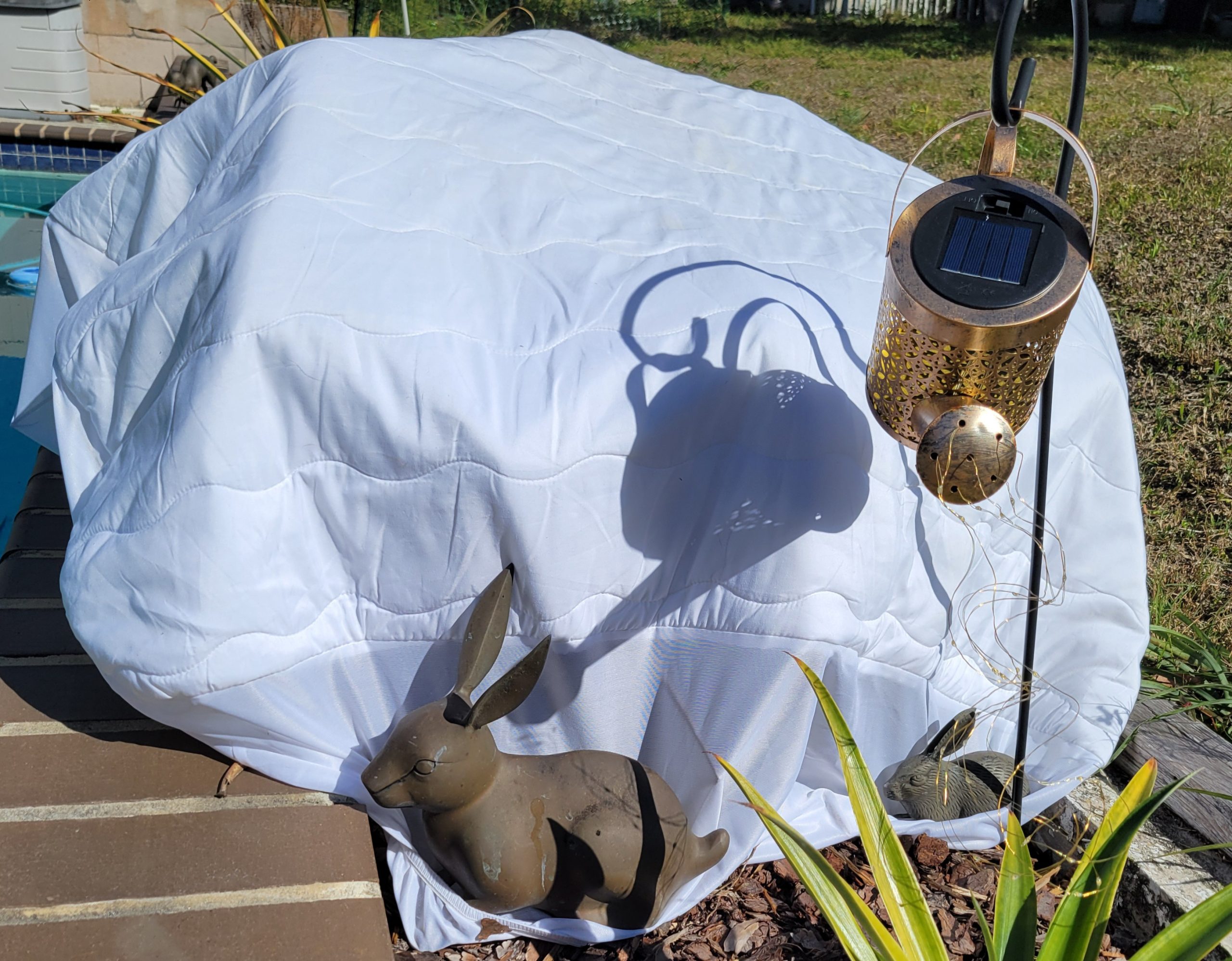
– Move containerized plants into the house or garage because cold injury is common in container-grown plants. Mulch can also be applied around container-grown plants. If they must stay outside, move them together (close to a building if possible) and cover the entire group with blankets, quilts, or frost cloth. A light bulb (not LED) could also be placed in the center to provide additional warmth.
– Young citrus trees can be protected by covering the entire tree with quilts and blankets. If the tree is too large to cover, protect the location, typically a swollen area low on the trunk, where the scion was grafted onto the rootstock.
– If plastic tarps or plastic sheets are used to protect plants, build a structure with wood or PVC to support the plastic and ensure that the foliage doesn’t touch the plastic, or cold damage will occur. Plastic covers should be removed during sunny weather to provide ventilation and then put back up if cold temperatures are forecast for the next night.
– When a hard freeze (down to 28°F) is forecast, place an incandescent light bulb or Christmas lights underneath the cover (LED bulbs will not work for this since they remain cool) and make sure that the hot bulbs do not touch the covering.
– Secure all coverings (i.e., frost cloth, blankets, quilts, plastic, etc.) to the ground with bricks, rocks, pavers, etc., if windy weather is expected, so the wind can’t get underneath.
After the cold temperatures have passed
– Water plants, especially if it is a sunny day and/or windy.
– Dead, unsightly leaves can be removed once they turn brown or black. Just pick them off and drop them around the plant as mulch.
– Delay pruning until new growth appears in the spring unless the plant tissue darkens and/or becomes soft. If the tissue becomes discolored or soft, prune below it to a firm spot. Delay pruning woody plants until new growth begins again in spring. That will prevent the removal of any live wood, which is challenging to identify when a plant is bare. Plus, if another freeze occurs, the dead wood that wasn’t pruned off will protect the surviving wood below.
– Tropical plants can be killed down to the ground by freezing temperatures, but many will re-sprout from the roots in the spring. Then there are those tender plants that are entirely killed, roots and all. So, if you want to replant again in the spring, you may not want to replant in the same spot. Some locations that can provide tropical plants with added cold protection include under trees (if the plant requires full sun, this may not be an option), near fences or tall plants, and on the south side of the house.
– Spray any damaged plants with chlorophyll present (i.e., foliage, grass blades, green trunks, etc.) with weekly applications of liquid seaweed for a couple of months.
Though freezing temperatures are uncommon in Brevard, they do occur, so planning can help protect your landscape from damage. An important rule to keep in mind when choosing plants for your yard is that the mainland section of Brevard County is in the hardiness zone 9B. Central and South Merritt Island and the Beaches are considered more zone 10A, though in 1989, Brevard County received a brutal freeze that killed Coconut palms and frangipani over on the beaches.
 3
3