By Peter J Hansen, University of Florida
For the first time, the University of Florida Dairy Unit has exported live cattle overseas. In May of this year, three pregnant slick Holstein females were delivered by air and truck to DayZee Farms in Bahawalpur, Punjab, Pakistan. A major focus of the company is to use cutting-edge embryo technologies and genomic sequencing to improve cattle for milk and beef production.
The slick mutation is a naturally occurring mutation that causes short hair in cattle and increased resistance to heat stress. The phenotype was first discovered by Tim Olson of the University of Florida and dairy cattle with the mutation have been selected for genetic improvement at the university since the 1980s. Semen from bulls produced at UF has been distributed globally since 2006.
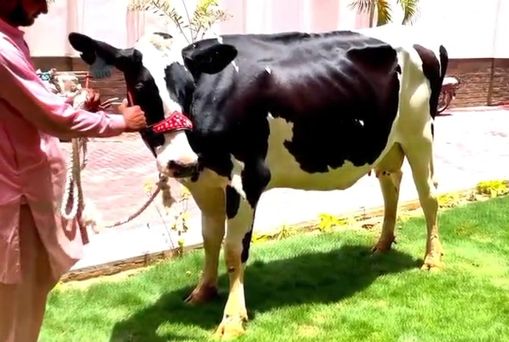
Summer temperatures in Pakistan can reach 120°F or more and incorporation of the slick gene into dairy cattle should reduce the negative effects of heat stress on milk yield and reproduction. According to Dr. Masroor Sagheer, Director of Animal Reproduction at DayZee, who oversees the IVF program, “As Pakistan’s summer temperatures rise and heat waves intensify, keeping dairy cows cool is crucial. By choosing slick Holsteins, farmers can boost milk yields, cut down veterinary bills and make our dairy industry stronger against rising temperatures.”
The three registered Holstein females from UF all arrived safely in Pakistan. Exportation was handled by Strickland Exports of Myakka City, Florida. Reneé Strickland, who organized the movement of the cattle, stated that “I don’t think these heifers could have gone to a better farm in Pakistan. They really seem to be putting their best foot forward and it’s truly a country that is crazy about their milk!”
Strickland has long been interested in slick-haired cattle. “I’ve been waiting for years to be able to ship some of the genetics from UF because as we all know at this point with climate change……the only way we will be able to keep people fed is through research and development of ag technology. The slick haired gene cow (whether it be dairy or beef) combined with embryo flushing and insemination and transfer will hasten the production of more animals that can tolerate & survive and thrive in hotter climates and already needed in most parts of the middle east and Africa, tropical Asia, Central & South America.”
Find more information about the UF/IFAS Department of Animal Sciences on our website. Stay in touch with us on Facebook, X, and Instagram. Read more on UF/IFAS ANS here: http://blogs.ifas.ufl.edu/animalsciencesdept/.
 0
0