Dr. Pedro A. Sánchez, an internationally renowned soil scientist, visionary leader and tireless advocate for food security, passed away Monday morning, Jan. 12, 2026. He was 85.
Born Oct. 7, 1940, in Cuba, Sánchez grew up on his family’s farm outside Havana. As a child, he often traveled throughout the country with his father, an agronomist. He gained early exposure to the soils and farmers on these trips that would later shape his life’s work. Those formative experiences instilled in him a deep respect for agriculture and a lifelong commitment to improving the productivity and sustainability of tropical soils.
After coming to the United States, Sánchez earned his bachelor’s, master’s and doctoral degrees from Cornell University. He went on to devote more than six decades to advancing soil science and sustainable agriculture across the tropics. His career spanned universities, international research centers and development initiatives around the world.
A Career of Global Impact in Tropical Agriculture
He began his professional career at North Carolina State University. There he helped establish and expand the Tropical Soils Research Program. His work took him throughout Latin America, Africa and Southeast Asia. His earliest pioneering efforts found success in Brazil’s Cerrado region, making acid tropical soils productive. Similarly, in the Peruvian Amazon, he helped developed alternatives to slash-and-burn agriculture.
“Dr. Sánchez is the reason Brazilian agriculture in Cerrado is so productive and successful,” said Marcio Nunes, assistant professor of tropical soils in the UF/IFAS Department of Soil, Water, and Ecosystem Sciences (SWES). “He worked with the government and farmers to show them how to grow food in what was savannah land at the time.”
Nunes, who grew up in south Brazil, said Sánchez became a mentor to him after he was hired at UF to teach tropical soils when Sánchez retired and witnessed his generosity first-hand. Sánchez let Nunes and his wife live in his Gainesville home for a short time when they moved to Florida. After that, they stayed in regular contact.
“When Pedro was back in town, he’d invite me over to his house and I brought some of my graduate students to meet him and hear his stories,” Nunes said. “Pedro worked in tropical soils around the world – the Philippines, South America, Africa – and he loved to talk about it with me and my students.”
Sánchez’s global influence deepened through leadership roles at major international research institutions, including the International Rice Research Institute in the Philippines and the Centro Internacional de Agricultura Tropical in Colombia. From 1991 to 2001, he served as director general of the World Agroforestry Centre in Nairobi, Kenya. His efforts focused on helping to elevate agroforestry as a cornerstone of sustainable development.
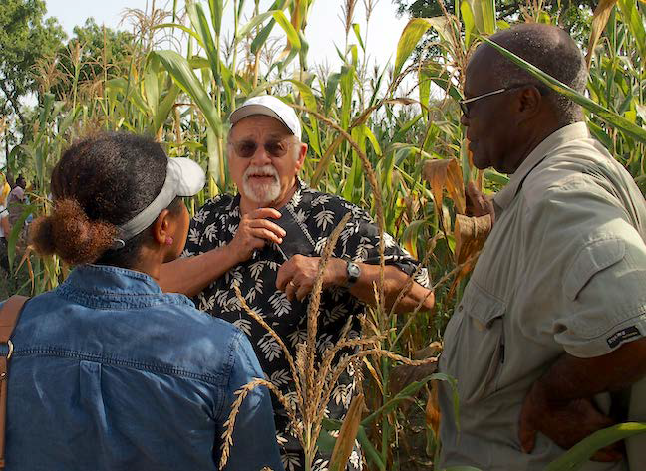
“Throughout his career, Dr. Sánchez faced the complex realities of international development with resilience and vision,” said P.K. Nair, UF/IFAS distinguished professor emeritus. “His pioneering work continues to inspire generations of scientists and practitioners to improve soil health and food systems worldwide.”
Nair worked with Dr. Sánchez and his wife, Dr. Cheryl Palm, in agroforestry and soil management for more than 40 years.
“His legacy will live on through his scholarship, mentorship, and unwavering dedication to advancing science for the betterment of humanity,” Nair added.
A Return to Academic Life
After a decade in Kenya, Sánchez joined Columbia University’s Earth Institute. While there, he led the United Nations Hunger Task Force and the Millennium Villages Project. That involved working in 12 African countries to demonstrate how integrated investments in agriculture, health and education could lift communities out of poverty.
In 2016, Sánchez joined the University of Florida as a research professor in SWES. During his time at UF, he reinvigorated the department’s focus on tropical soils and taught a highly popular graduate course in tropical soils management. He also completed the second edition of his seminal textbook, Properties and Management of Soils in the Tropics. The book is now published in multiple languages. He also strengthened UF/IFAS’ global reach by building enduring international partnerships, including a key collaboration with the Federal University of Lavras in Brazil.
A Tribute from Dr. Jack M. Payne
Dr. Jack M. Payne, who served as UF senior vice president for agriculture and natural resources and leader of UF/IFAS from 2010 to 2020, reflected on Sánchez’s impact and friendship:
“One of the highlights of my career at UF was hiring Pedro Sánchez and his spouse Cheryl Palm away from the Earth Institute of Columbia University. Having been the winner of the World Food Prize as well as a MacArthur Genius Award winner and a member of the National Academy of Sciences made Pedro a Gold Star hire. Cheryl also was an accomplished ecologist.
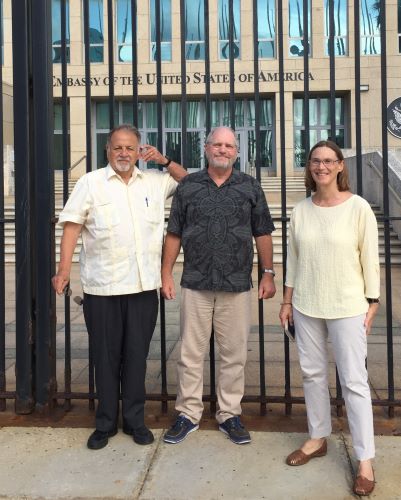
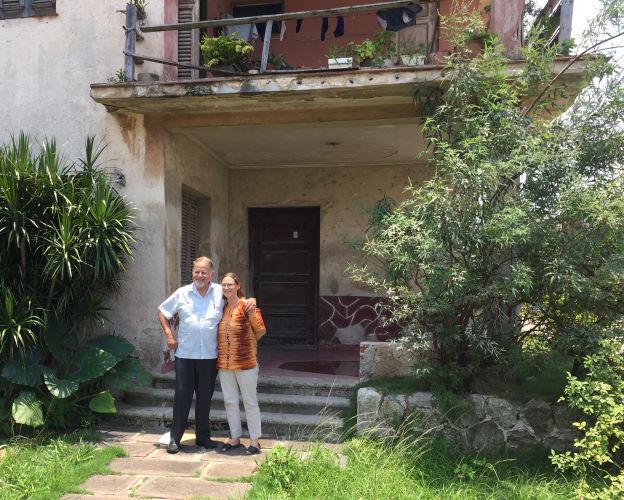
“Pedro and Cheryl became incredible friends, and we had many adventures together. I traveled several times to Cuba with him, where he worked with Cuban scientists to try and improve the productivity of Cuba’s soils. We traveled to Kenya together, where he served for many years as director general of the World Agroforestry Institute in Nairobi and was also involved in the Millennium Village Project.
“He was one of the kindest, smartest, most genuine people I have ever known. My life has been blessed with his and Cheryl’s friendship. He brought so much goodwill and a better quality of life to so many people in this world. He was a humble giant among people, and I am devastated at his passing.”
A Lasting Legacy
“Dr. Pedro Sánchez’s lifetime of research transformed soil management and improved food production throughout the tropical world,” said Dr. K. Ramesh Reddy, who served as SWES chair when Sánchez joined UF. “His groundbreaking work helped combat global hunger and increase food security worldwide. The soil science profession has lost a true legend and leader—one whose influence on global food security will continue to play a pivotal role in efforts to end hunger.”
Sánchez received some of the highest honors in science and agriculture. He is a 2002 World Food Prize Laureate and a 2004 MacArthur Foundation Fellow. The U.S. National Academy of Sciences inducted him in 2012. He held four honorary doctorates, and President Barack Obama appointed him to the President’s Committee on the National Medal of Science. In recognition of his deep engagement with communities, the Luo community in western Kenya anointed him an elder, and he received traditional honors in Nigeria and elsewhere.
Despite these accolades, those who knew Sánchez best remember him for his humility, generosity, curiosity and deep commitment to mentoring the next generation of scientists. He never lost sight of the people behind the problems he worked to solve. His legacy lives on in the students he taught, the institutions he strengthened, and the countless communities around the world whose lives were improved by healthier soils and more sustainable agriculture.
Featured image of Pedro Sanchez and Cheryl Palm in Zambia with agricultural officials.
 14
14