Florida’s sandy soils typically have low organic matter and high permeability. That means a greater risk of nutrient leaching before a plant or tree can use what it needs. Cover crops are an option for improving soil fertility because they can capture more nutrients during the fallow period and reduce leaching. A new study from UF/IFAS scientists examines how different cover crops impact nitrogen in Florida’s unique climate and soils.
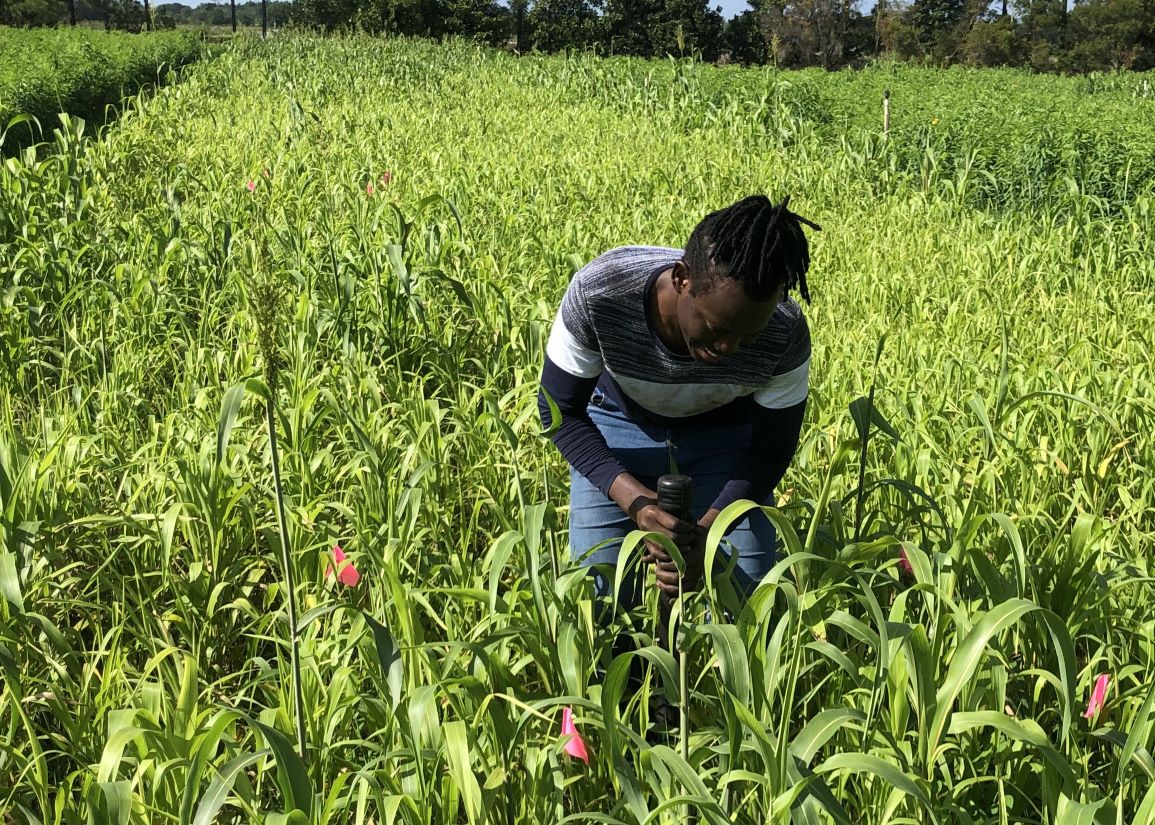
The research conducted at the UF/IFAS Gulf Coast Research and Education Center tested several treatments in sandy soil over two years:
- Only legumes (sunn hemp)
- Only grasses (sorghum sudangrass)
- A legume–grass 50/50 mixture
- A fallow control (weeds, no cover crop)
After the first season of cover crops (from approximately April through June), the researchers mowed the crops and weeds down. The plants were then left on the soil surface. They planted a summer tomato crop followed by a winter ryegrass. The experiment repeated the same treatments in the second year. Scientists took soil samples at three different depths a month before and after growing cover crops as well as during growth. They also collected cover crop samples before mowing to analyze them for total nitrogen and carbon.
Results
The study shows cover crop species, sampling time, and soil depth all significantly affected soil inorganic nitrogen concentrations.
“Plant residues of sunn hemp (legume) easily and quickly released inorganic nitrogen within the first few weeks after termination,” said Juma Bukomba. The research is based on his master’s thesis study. “During the same time, sorghum sudangrass had a much lower release rate for inorganic nitrogen.”
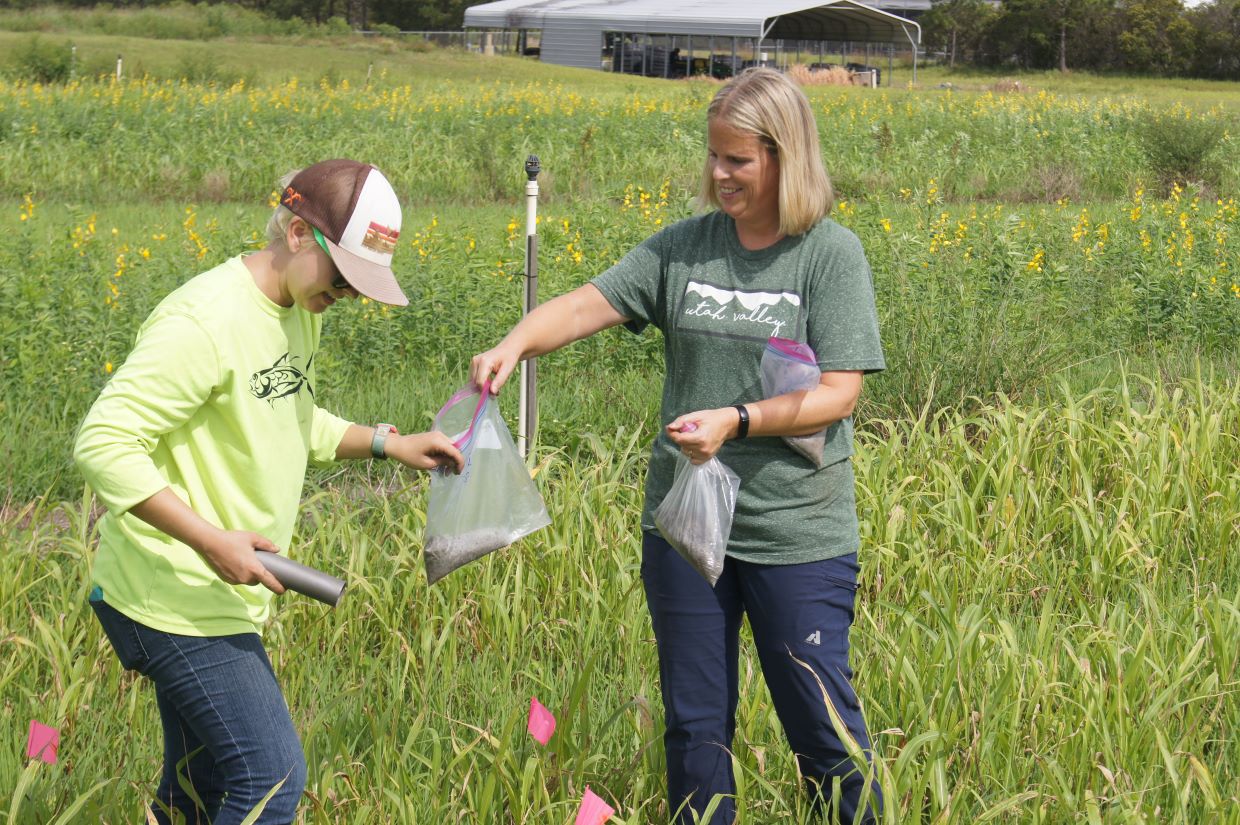
The sunn hemp and 50/50 mixture treatments had more extractable soil inorganic nitrogen in the surface soil after the cover crop termination.
“This may lead to higher nitrogen leaching losses under those conditions if the following cash crop isn’t quick to take up that available nitrogen,” said Mary Lusk. She is an assistant professor in the UF/IFAS Department of Soil, Water, and Ecosystem Sciences and Bukomba’s advisor.
If a producer wants to make the most of the cover crop’s impact on a sandy soil, timing is crucial.
“Farm management is key,” said Bukomba. “The right cover crop is important for sandy soils, but so is the timing of planting the cash crop to tap into available nitrogen.”
The research and all results are detailed in “Inorganic nitrogen dynamics under cover crops in Florida’s sandy soils.” You can read it on the journal Nutrient Cycling in Agroecosystems website.
Feature image provided by Juma Bukomba.
 4
4