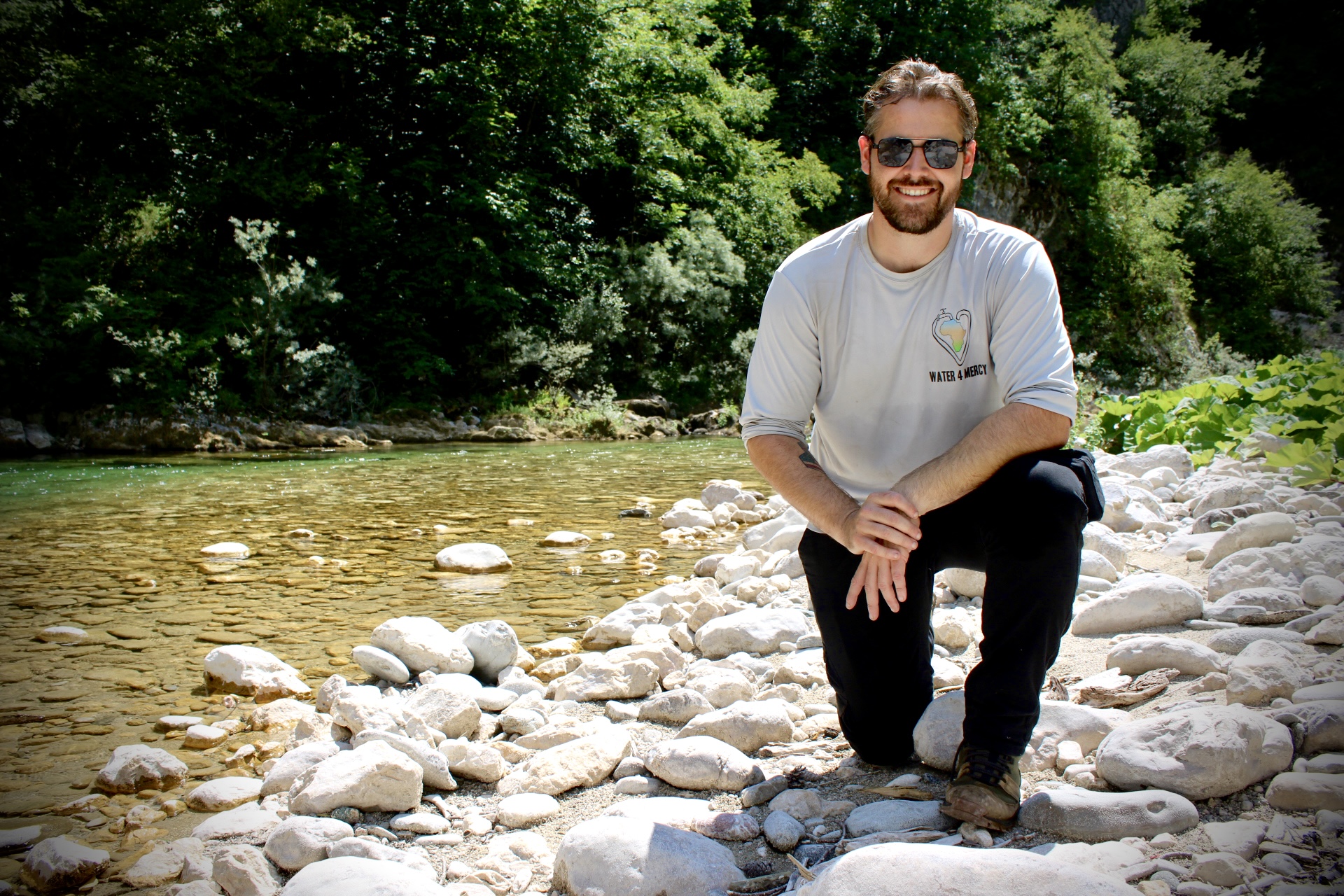
Since earning his M.S. degree in 2023 from the UF/IFAS Department of Soil, Water, and Ecosystem Sciences, Anthony Halcyon continues to deepen his understanding of diverse ecological settings. Recently, he joined an international research team working in Montenegro’s Komarnica Canyon. It’s a region of rich biodiversity and fragile landscapes. The project brought together scientists, students, and conservationists to study soils, map ecosystems, and raise awareness about the potential ecological impacts of a proposed hydroelectric dam. This is Anthony’s account of his journey into one of Europe’s last wild canyons.
By Anthony Halcyon
When speaking to Americans about Montenegro, I have noticed they often think of medieval towns or the dramatic cliffs of the Adriatic. However, nestled between towering limestone peaks lies a valley few outsiders have ever set foot in, Komarnica. This remote region on the fringe of the Durmitor Mountain Range is the setting for my most recent exploratory and scientific expedition.
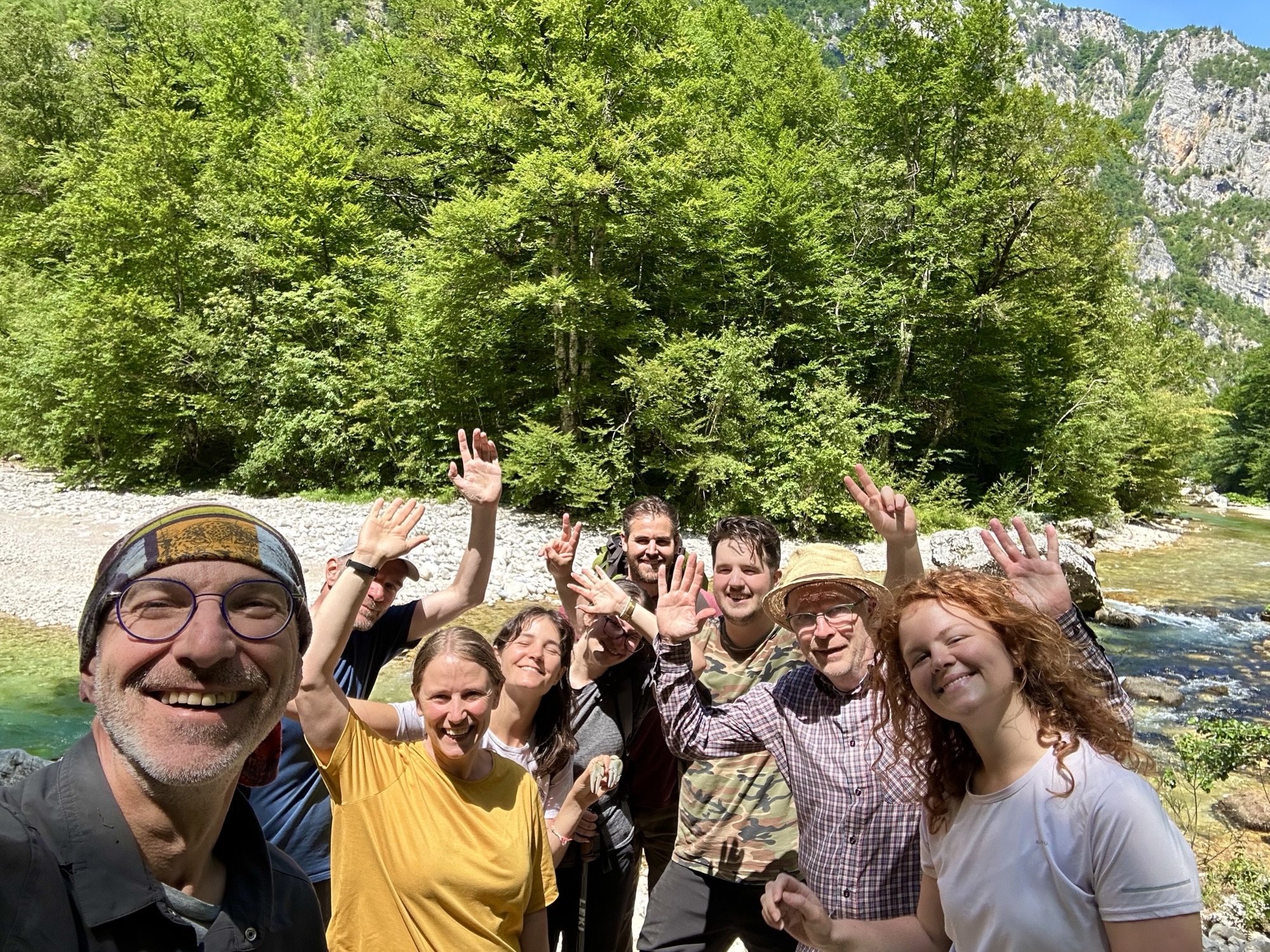
My journey to Komarnica was driven by both purpose and curiosity after speaking with National Geographic Explorer, Doctor Iva Njunjić and Doctor Menno Schilthuizen. These scientists lead expeditions into the Komarnica Canyon with their organization Taxon Expeditions. They told me about a proposed hydroelectric dam that threatened to flood the entire valley, wiping out endemic species and silencing one of Europe’s last untouched wilderness corridors. This wouldn’t just be an ecological loss, it would also be a loss of a precious library of natural and cultural history. So, I set off to be a part of the expedition, wanting to better understand the area, and possibly, to help protect it.
A Canyon of Secrets
Descending into the Komarnica Canyon felt like stepping back in time—or perhaps onto another planet. Towering walls and slopes thick with moss, leaves, and stone, greeted our research team each morning. Beneath our boots I observed Cambisols as the primary soil order in the region, one of the most productive soils on earth. These were quite rich in organic matter, or humus. Here, these soils cradle endemic species that have adapted to the valley’s unique climate and hydrology for millennia.
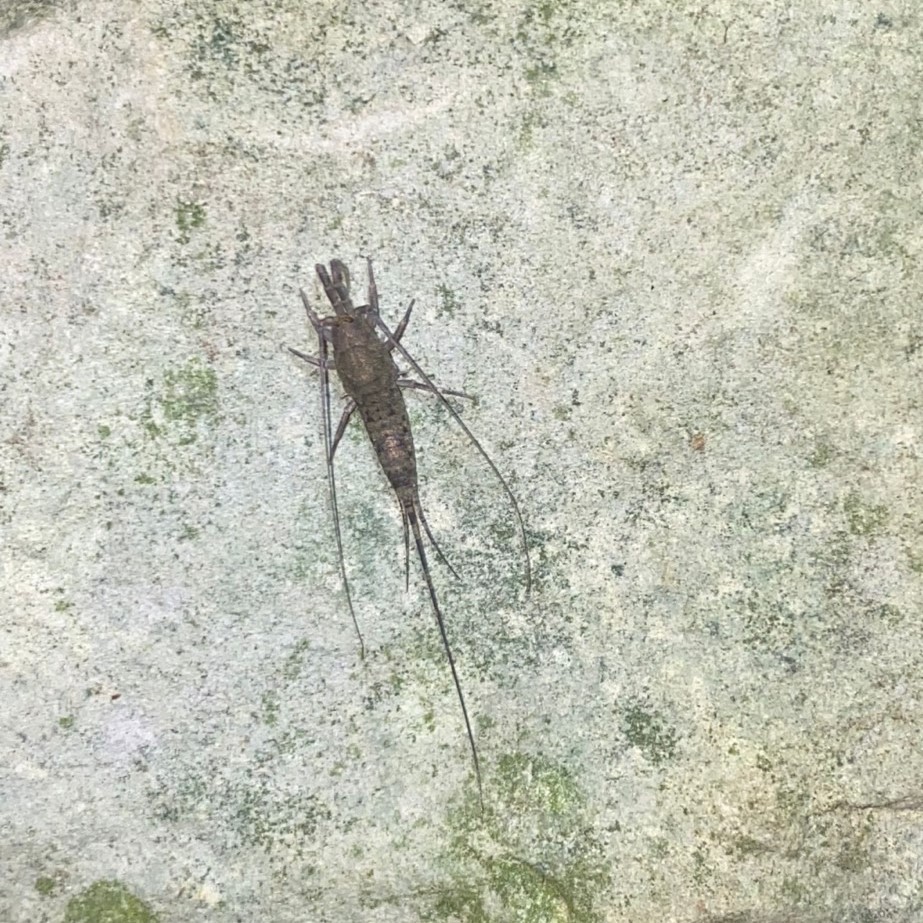
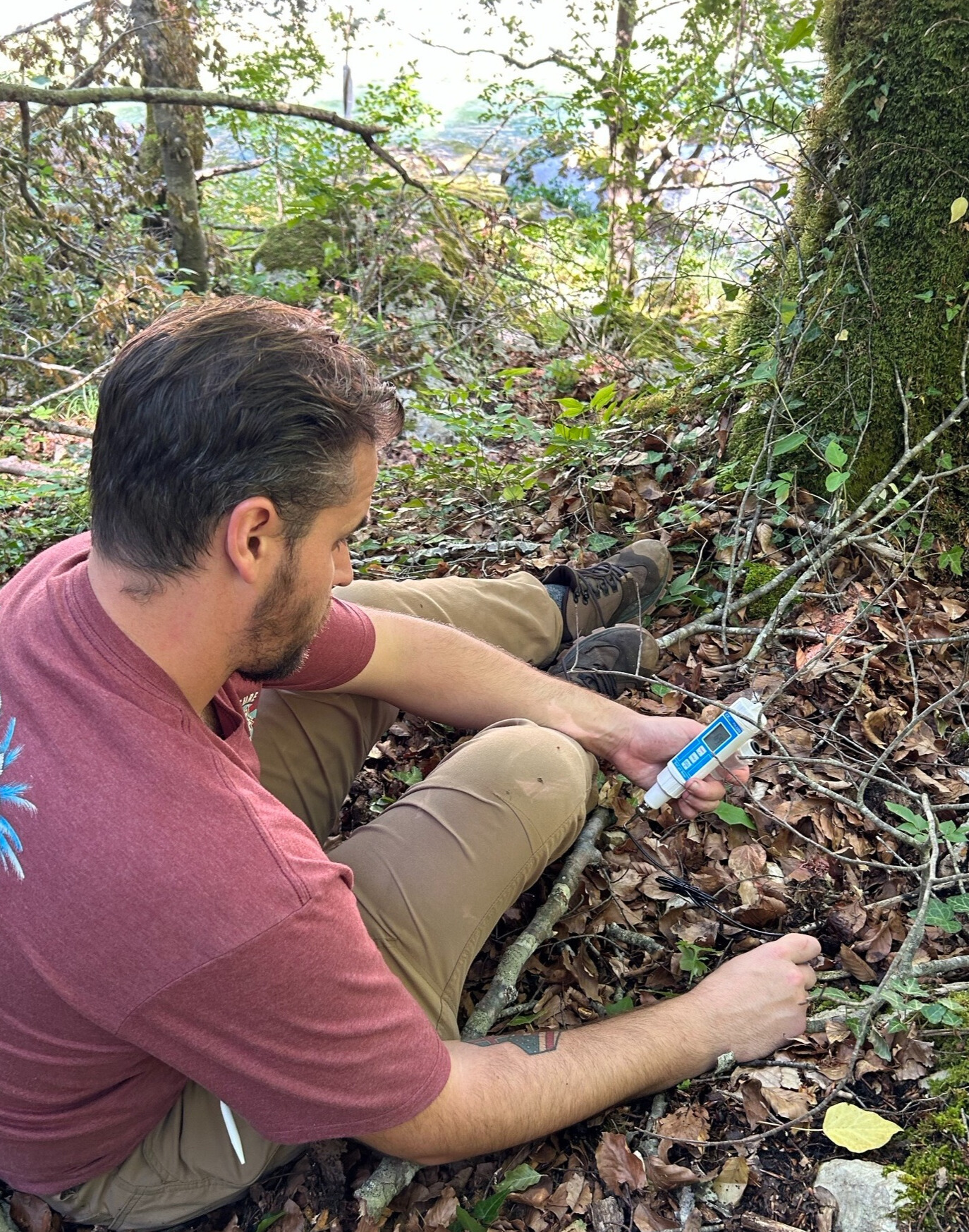
We collected entomological samples, streamflow data, and soil pH. However, one of the most exhilarating moments for me came deep inside an ice cave. Inside it, we came across Archeognatha – a primitive order of insect that thrives in dark, undisturbed environments. To my knowledge, these organisms are not well studied in the Balkans. If confirmed, this could even represent an undocumented species. Though this takes time and an expert to properly identify it.
Climbing, Crawling, and Learning
The expedition was intellectually stimulating but also was intensely physical for me living in a place like Florida with no major slopes or elevation. With my 65-liter pack loaded with gear, water, and emergency rations in tow, we hiked for hours each day. Some days we trekked around down a 365-meter (1,200-feet) canyon wall and back up again, often at a punishing 45-degree incline. These were not groomed trails, making this true fieldwork. It pushed my body to the limit at times, but the thrill made it more than worth it.
In those quiet moments after the hikes, standing on the shores of pristine, crystal-clear streams, crawling through narrow karst tunnels in an ice cave, or staring up at star-studded skies from the valley floor, I felt something I can only describe as alignment. It was here I realized this work wasn’t just about data points. No, this was about bearing witness to a place that isn’t just a natural wonder, but really should be a world heritage site, in my opinion. Moreover, this expedition was about ensuring everyone realizes what will be lost should this place be submerged, and how this place has more intrinsic value the way it is.
A Call to Protect
What makes Komarnica Canyon irreplaceable isn’t just its biology. It’s the living connection between people and place. I want to be transparent here: I am not against hydropower in totality, in fact, I often admire efforts to use alternative energy. However, I listened to the stories of Montenegrin locals, conservationists, and ecologists who live in harmony with the valley and canyon. They too, also want progress: but not at the cost of the obliteration of what is sacred.
That’s why I gladly took the time to get to know and learn from locals and the hard working individuals of the NGO, Save Komarnica, to help raise awareness. With the right vision, this place can become a truly unique site on this planet for sustainable tourism, scientific research, and cultural pride.
From Florida to the Frontier
As a Gator, I carry my UF education into every valley, summit, and river I explore. Whether it’s working in the labs of Florida or charting unknown terrain overseas, I believe science and stewardship must go hand in hand.
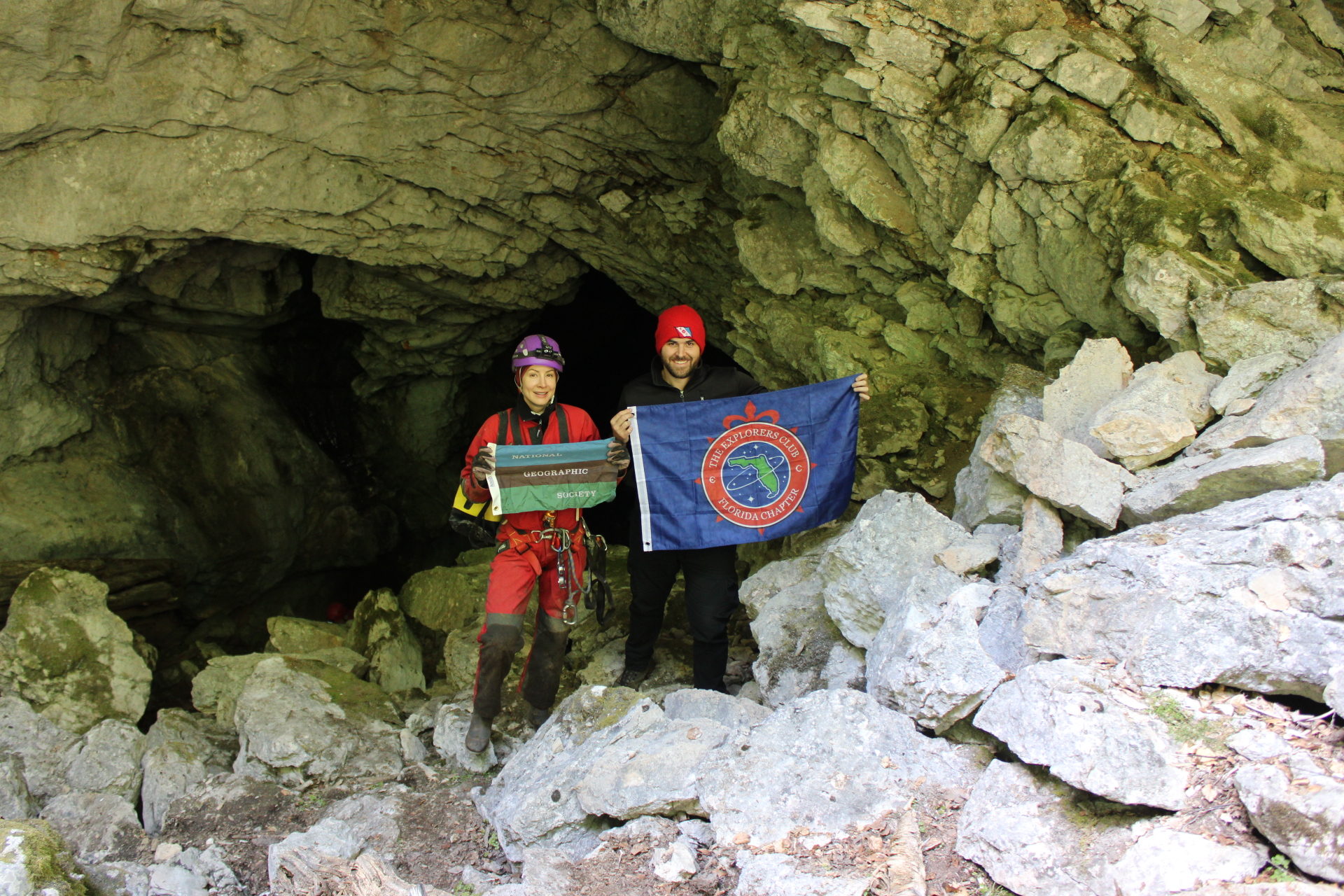
Komarnica taught me that even in remote corners of the world, the stakes are global. Conservation is not just about saving species, rather it is about saving stories, saving sovereignty, and preserving the raw places that remind us of our small yet special place in the natural order.
My hope is that the work done in Komarnica, as well as what we all continue to do through environmental diplomacy and exploration, will spark a deeper commitment to sustainability. Because once a valley like Komarnica is gone, no amount of power is worth what we’ve lost.
Acknowledgements
Anthony Halcyon received his B.S. degree in Environmental Management in Agriculture and Natural Resources and his M.S. degree in Soil and Water Sciences, both from the UF/IFAS Department of Soil, Water, and Ecosystem Sciences.
The featured image of the “Wild Canyon” provided by Anthony Halcyon. Mike Loizzo edited and published this blog post.
 4
4