As edible landscaping continues to gain momentum, many Central Florida homeowners are exploring the concept of growing a food forest. A food forest is a layered, productive forested containing various fruit trees in your own back yard. If you’re considering fruit trees, the loquat (Eriobotrya japonica) deserves consideration. Once established, this tree offers a bountiful harvest from February through May.
Why Choose Loquat?
Originating in China, it has since been cultivated into more than 20 unique varieties, each offering subtle differences in flavor and growth habit.
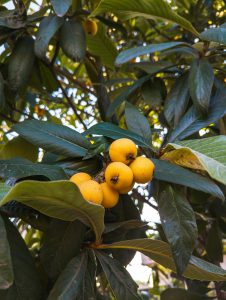
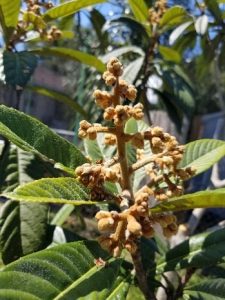
- Size: 20–35 ft tall
- Spacing: Plant at least 20–35 ft from buildings and power lines
- Fruit Yield: Mature trees can produce 35–300 pounds of fruit annually
- Edibility: Fruit is sweet and can be eaten whole but avoid the seeds, as they are inedible
While loquats can be propagated from seed, keep in mind that seedlings often take 6–8 years to bear fruit, and the resulting taste may vary from the parent variety.
Planting & Site Selection
Loquats thrive in full sun and tolerate a wide range of Florida soil types. Here’s how to get started:
- Dig your hole 2–3 times wider than the root ball
- Use best practices for root flare placement and mulching
- Avoid compacted or poorly draining soil to prevent root issues
Fertilization & Watering Guide
Year 1 (Young Trees):
- Fertilize every 6–8 weeks using a balanced 6-6-6 formula
- Water 1–2 times per week for the first 2–3 months, then reduce to once weekly
Mature Trees (Year 4+):
- Fertilize 2–3 times per year with 6-6-6 or 8-3-9
- Water only during fruit development or periods of drought
Note: Avoid overwatering—excess moisture can contribute to root decline and disease.
Common Health Issues to Watch For
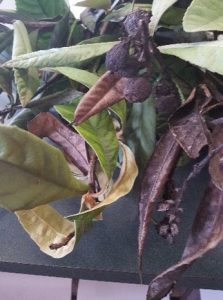
Loquats are relatively low-maintenance, but proper care helps prevent the following:
- Fire Blight: A serious bacterial infection that causes blackened, necrotic branch tips.
- Linked to excessive nitrogen
- Prune at least 12 inches below infected tissue
- Remove immediately—rain spreads infection
- Crown Rot & Root Cankers: Typically minor but exacerbated by poor drainage or overwatering.
Final Thoughts
Loquat trees offer more than just fruit, they provide shade, seasonal interest, and wildlife support. When incorporated into a Florida-Friendly food forest, they enrich your yard with both ecological and edible rewards. With the right planting strategy and a little ongoing care, your loquat will flourish for years to come.
For guidance on planting diagrams and soil testing, reach out to your local UF/IFAS Extension Office or explore the Florida-Friendly Landscaping™ Plant Directory.
Additional Resources:
https://edis.ifas.ufl.edu/publication/MG050
https://gardeningsolutions.ifas.ufl.edu/plants/trees-and-shrubs/trees/loquat/
https://edis.ifas.ufl.edu/publication/ST235
This article was edited with Co-Pilot
 0
0