Keystone species are critical because entire ecosystems rely on their presence to remain balanced. If removed, the ecological structure may collapse. They differ from indicator species, which reflect the health and maturity of an ecosystem rather than supporting it directly.
One such keystone species in Florida is the Longleaf Pine (Pinus palustris). This towering pine is a symbol of the Southeast’s once vast pine grassland ecosystems.
Historically, Longleaf Pine forests covered over 90 million acres across the southeastern United States. Today. As of 2024, just over 5 million acres remain. This is just approximately 5 % of the original forest coverage. As researchers and land managers recognize their ecological importance, restoration efforts are gaining momentum, bringing attention to this resilient species.
Amazing Fire Adaptations
Longleaf Pines are uniquely adapted to fire, a natural and necessary process in their native habitats. Their life cycle includes distinct stages designed to protect the tree’s growth point from heat damage:
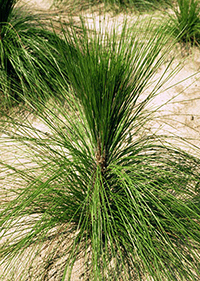
Grass Stage (Years 1–7):
Appears as a tuft of long needles
Focuses on building a deep root system
Needles insulate the apical meristem (growing tip) from fire
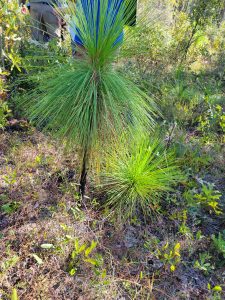
Broom Stage:
Rapid vertical growth pushes growing tissue above typical fire height
Allows the tree to mature without fire-related setbacks
Adult Stage:
Grows to heights of 60–125 feet
Reaches full maturity at 100–150 years
Bark becomes thick and flaky, shedding easily during fire events
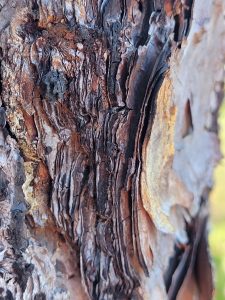
These adaptations not only help the tree survive, but also allow fire to clear underbrush—benefiting grasses, wildflowers, and wildlife that depend on open landscapes.
Plant Identification
Mature trees are irregular in uniformity with an overall oval habit.

Needles are 8-14 inches long with 3 needles per fascicle. Occasional groups of only 2 needed will be found.

Female cones are 6-12 inches long.
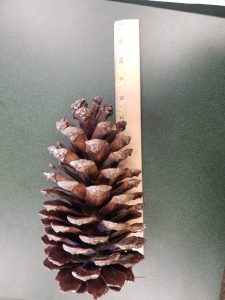
Bark color includes brows, grey and orange in scaly plates.

Red-Cockaded Woodpeckers Depend on Longleaf Pine trees
An iconic indicator species in mature Longleaf Pine forests is the Red-Cockaded Woodpecker (Picoides borealis). Endangered and highly selective in nesting habitat, this woodpecker prefers living trees—especially those over 80 years old. Older Longleaf Pines often host heart rot fungus, which softens the interior wood and allows the birds to carve out nesting cavities.
These primary cavities then support other species, such as small mammals and insects, making the Red-Cockaded Woodpecker a secondary keystone species within this habitat.
Why Keystone Species Matter
Protecting keystone species like the Longleaf Pine isn’t just about preserving individual trees—it’s about conserving entire ecosystems. Once lost, keystone species are difficult—and sometimes impossible—to reintroduce. Their absence can trigger cascading effects throughout the food chain and alter the landscape’s structure and function.
Restoring Longleaf Pine forests is essential for safeguarding Florida’s biodiversity, improving land resilience, and maintaining a healthy ecological legacy for future generations.
For planting or management advice, contact your local UF/IFAS Extension Office, and explore resources on ecosystem restoration through FFL Landscaping.
Additional Recourses: https://edis.ifas.ufl.edu/publication/ST469
https://gardeningsolutions.ifas.ufl.edu/plants/trees-and-shrubs/trees/longleaf-pine/
 1
1