The Inspiration
Floral Design Basics
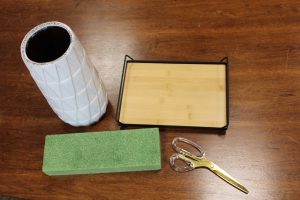
Gather Your Materials
-
- Vase
- Flowers & Greenery
- Green flower foam
- Wire Cutters or Scissors
The Four F’s of Floral Arranging

- Focal Flower: Your main attraction—the flower that draws attention.
- Filler Flowers: Smaller blooms that add texture and color without overshadowing the focal flower.
- Greenery/Foliage: Complements the colors and textures of your flowers.
- Form: How you arrange everything, so each element supports the other.
Arrange the flowers
-
- Gather your materials on a large, open, flat surface.
- Trim your flowers and greenery according to the height of your vase. Remember, they should be tall enough to stand out from the vase. Focal flowers should be the tallest, followed by filler flowers, and then greenery. It is best to cut the stems at an angle.
- Start building your arrangement in your hands. You will begin with focal flowers. Slowly add more focal flowers to your hands, keeping them level and facing out.
- Once you have a few of your focal flowers, how you want them, you will start to add filler flowers in and around your focal flowers. Ensure you are spacing them out; you don’t just want three clumps of flowers pushed together.
- Make changes if you need to!

Showcase your arrangement
Display your bouquet at home, in the office, or consider selling it!
The Budding Business: Starting a Floral Venture
If you are interested in building a business on floral arrangements, take a moment to explore what you will need.
Business structure
Choosing a business structure that makes the most sense for you is essential. Here are a few examples:
-
- DBA (Doing Business As)
- LLC (Limited Liability Company)
- Other legal entity of your choice
Permits or licenses
Check with your county or city for information about required permits or licenses needed for your business.
-
- Business licenses
- Sales tax permits
- Specific licenses for your county
- Approval for a home-based business
- Check with your county/city for additional information
Business Operations
Managing your business has many different factors. Here are a few things to consider as you build your business.
-
- Calculate profit margin
- Track expenses/income
- Track/Manage Orders
- Promote your business
Final Thoughts
Floral design blends art and agriculture. In 2022, floriculture made up 13.2% of Florida’s agricultural cash receipts (FDACS). From growing to arranging, flowers connect us to the land and industry. At the end of the day, have fun! Whether you start a business or simply enjoy a handcrafted bouquet, let your creativity bloom.
Featured Image by Katherine Westenhaver
This blog was cowritten by Hartley Spaulding a 4-H Youth Development Agent in Okaloosa County
 2
2