Have you ever spotted a tiny bug running across your counter and thought, “Oh no, it’s a baby cockroach!”? Don’t panic just yet; not every small brown insect is a cockroach. In fact, many insects go through stages that make them look completely different from the adults. Knowing how insects grow can help you tell what you’re really seeing.
How Insects Grow
All insects begin life as eggs, but how they reach adulthood varies. In fact, insects have two main types of life cycles:
-
Complete metamorphosis: These insects go through four distinct stages: egg → larva → pupa → adult. Think of butterflies, beetles, flies, and moths. Their larvae (like caterpillars or grubs) look nothing like the adults.
-
Incomplete metamorphosis: These insects develop through egg → nymph → adult, skipping the larval and pupal stages. Cockroaches, grasshoppers, and true bugs fall into this group. The nymph looks like a smaller version of the adult, just without wings.
Understanding the difference between complete and incomplete metamorphosis helps explain why insect identification can sometimes be confusing.
The Truth About Cockroaches
Cockroaches are often misunderstood, and their nymphs can easily fool even experienced homeowners. According to the UF/IFAS publication “Cockroaches and Their Management” (EDIS ENY-214 / IG082), roaches have incomplete metamorphosis, meaning their young, called nymphs, resemble adults but are smaller, wingless, and lighter in color.
For example:
-
German cockroach nymphs are dark with a light band on their back.
-
American cockroach nymphs are smaller and wingless but still have the flat, oval shape and long antennae.
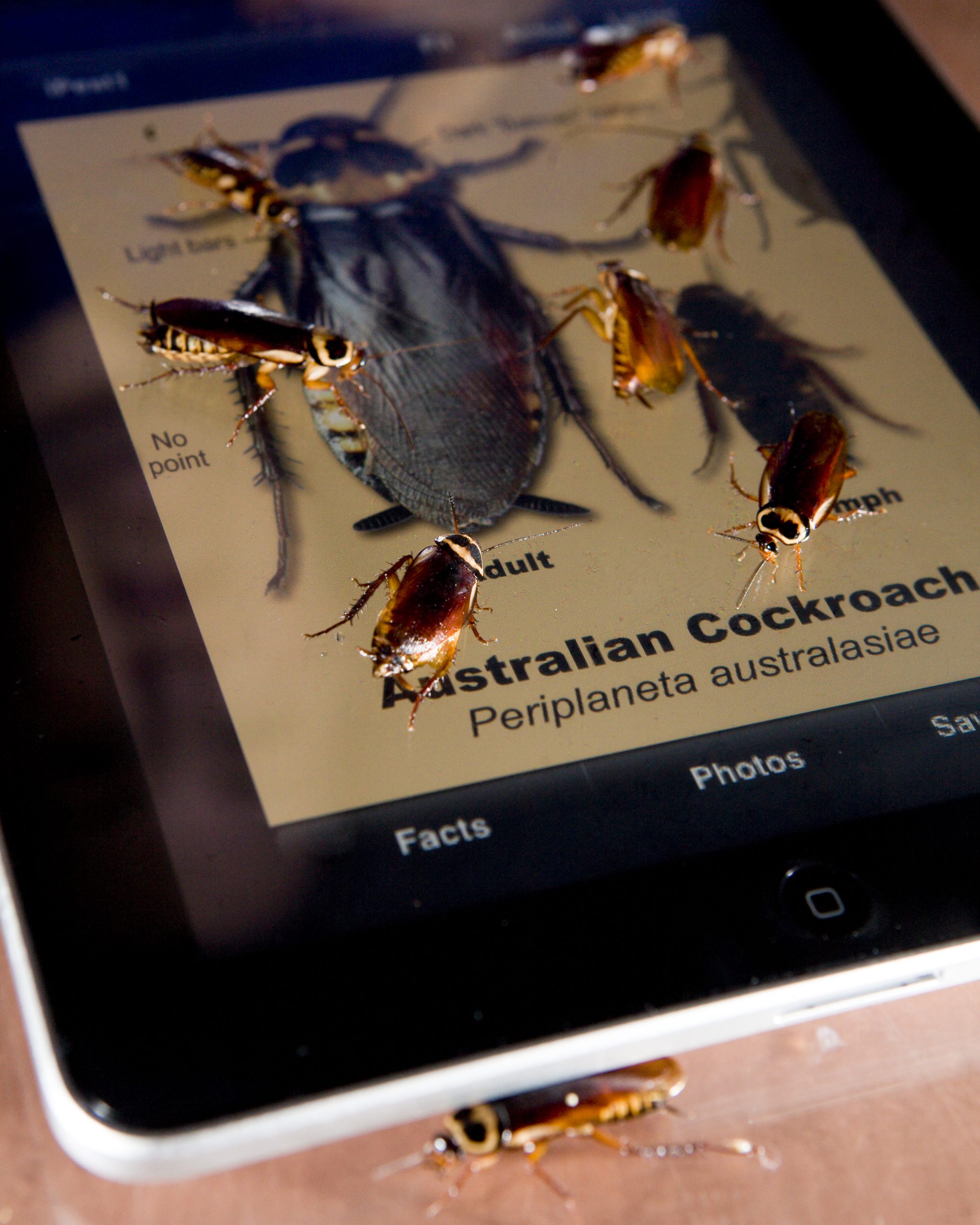
- Australian cockroach nymphs are reddish-brown with pale yellow markings along the edges of the thorax and wings.

Australian cockroaches
Because of these differences, people often mistake nymphs for beetle larvae, crickets, or “baby roaches” of another species.
How to Be Sure
If you’re not certain what you’re looking at:
-
Take a clear photo next to a coin or ruler.
-
Note where you found it, indoors, outside, in the bathroom, etc.
-
Reach out to the Help Desk at Morningside Branch Library on Tuesdays & Thursdays, 1:00 PM – 3:00 PM for assistance with insect identification.
Learning about insect life cycles not only makes you a better bug detective, but it also helps you focus on real pests and avoid unnecessary treatments. Sometimes, what looks alarming at first glance is just nature doing what it does best, growing and changing.
If you’re interested in learning more and attending classes about insect identification, please reach out to me sara.macdonald@ufl.edu
For more information visit: ENY-214/IG082: Cockroaches and Their Management
 3
3