Information
Banana spider mites (Tetranychus lambi) are a widespread pest of bananas, particularly during the summer months. Mites mostly feed on plant leaves.
Consuming plant cells damages them, making the leaf less functional. High amounts of mite damage might delay fruit growth and cause reddish discoloration around the cushion end. Early discovery and activities to reduce spider mite numbers can help manage this pest effectively.
Damage
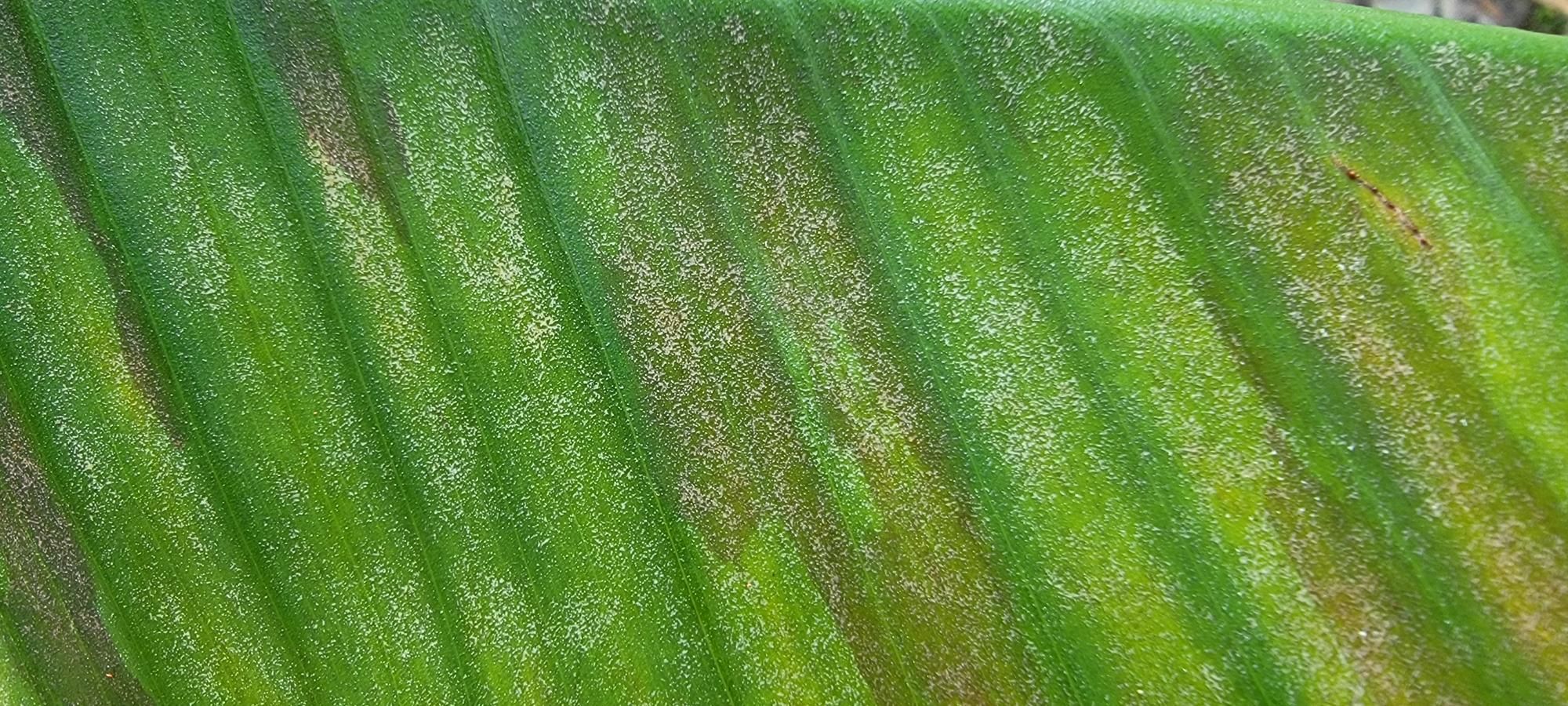
Mites suck out the cell contents, resulting in cell collapse. The harm is primarily limited to the underside of lower elder leaves; however, in extreme outbreaks, the mites can spread to the bunches and damage fruit. Leaf damage begins as isolated rusty patches, which eventually combine along the leaf veins as the infection spreads. Eventually, the entire leaf turns brown-grey, and in extreme cases, the leaves wilt, causing the leaf lamina to collapse partially or completely. Leaf wilting and collapse cause sunburned bunches and slow plant growth.
Banana spider mites cause fruit damage primarily on the cushion end of the fingers, near the bunch stem. Feeding in this area creates a dull red to purple-black discoloration on the fruit surface, which may eventually dry up and crack. A more severe infection will cause damage to spread across the entire finger.
What makes mites infestation
Even though specific tests haven’t been done on bananas to see how the following variables affect fruit, field tests on other crops and a lot of time spent observing bananas in the field have led to this list of things that are likely to make a mite problem more likely:
- Stress on plants in general
- Water stress
- High nitrogen rates
- Conditions with dust
- The use of chemicals and fungicides
- Weather that is warm and dry
- Spraying weed killer during hot weather because it takes away a different host that the mites can feed on, which makes them move to the banana plants.
Management and Control
Keeping spider mite numbers under control will be much easier if you avoid the situations listed above. Some other things that will help are:
- Getting predators and helpful insects to come in
- Keeping an eye on mite numbers
- Minimize the amount of dust on roads.
- Manage weeds well. Broad-leafed weeds harbor mites that can infest banana leaves after treatment.
- Plants can better resist mite damage with good water management, especially in dry conditions.
- Removing suckers, leaf cutting, and plant density care will improve spray coverage and miticide control.
- Apply spider miticide according to the directions on the label. Homeowners can use neem oil or insecticidal soap. Make sure the solution covers the whole leaf surface.
 1
1